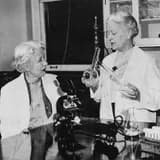
Hazen and Brown obtained patent protection for nystatin and assigned the rights and royalties to support the Brown-Hazen Fund.
In 1951, Elizabeth Lee Hazen and Rachel Fuller Brown secured patent protection and assigned the rights to nystatin, also known in early references as fungicidin. The exact filing or grant date is not specified in the sources provided, so this entry records the year with a placeholder date. Their decision to assign the rights and royalties was historically notable because it directed the financial benefits of a major biomedical discovery toward supporting further scientific work rather than personal enrichment.
The patenting of nystatin reflected the growing importance of intellectual property in mid-twentieth-century pharmaceutical development. More importantly, Hazen and Brown used the resulting royalties to establish what became the Brown-Hazen Fund, a philanthropic mechanism designed to encourage scientific research. That choice helped turn a laboratory breakthrough into a continuing institutional legacy.
This event also illustrates the barriers women scientists often faced in having their work fully recognized and rewarded. In an era when women were still underrepresented in senior scientific roles, Hazen and Brown not only produced a transformative antifungal drug but also shaped how its benefits would be distributed. Their patent action helped cement nystatin’s commercial and medical future while reinforcing their commitment to public scientific advancement.