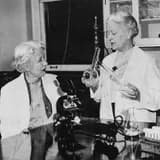
Birth of Elizabeth Lee Hazen in Rich, Mississippi; the future microbiologist would help develop nystatin, the first useful antifungal antibiotic.
Elizabeth Lee Hazen was born on August 24, 1885, in Rich, Mississippi, a rural community in the Mississippi Delta. Sources agree on the month and day, although some records differ on the year; the most widely used institutional biographies give 1885. She was orphaned at a young age and raised by relatives, circumstances that shaped the determination that later carried her into scientific work at a time when women faced steep educational and professional barriers.
Hazen’s early life belongs to the generation of American women who pursued higher education when scientific training for women was still uncommon and often undervalued. Her later success in microbiology and medicine became part of a larger story of women building careers in laboratories, hospitals, and public-health agencies despite limited access to prestige and authority. That background makes her birthday a useful marker for the life of a scientist whose work would profoundly affect antifungal treatment in the twentieth century.
Her birth in the late nineteenth-century South also contextualizes the scale of her later achievement. From a childhood marked by loss and relative scarcity, Hazen went on to earn advanced training and become a leading microbiologist. The contrast between those beginnings and her eventual role in developing nystatin highlights the social and institutional barriers she overcame.