← All women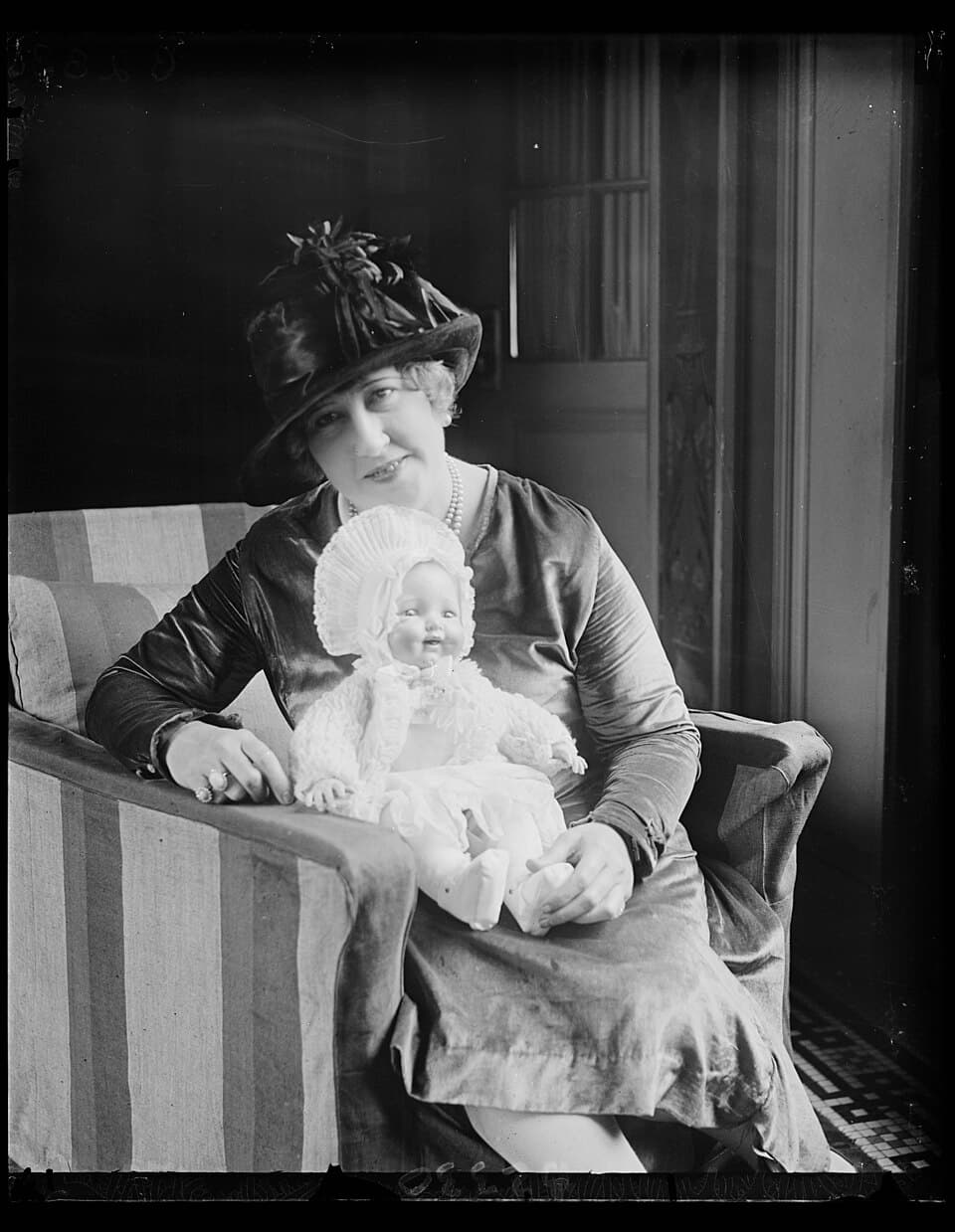
American · Science
Beulah Louise Henry
September 28, 1887 – February 1, 1973
Early Life and Background
Beulah Louise Henry was born on September 28, 1887, in Raleigh, North Carolina, into a family with deep Southern roots and, by family tradition, a distant connection to the Revolutionary-era statesman Patrick Henry. From childhood, she exhibited an extraordinary aptitude for visualizing mechanical devices and solutions, a trait that set her apart from her peers and would come to define her professional life. Unlike many inventors of her era, Henry had no formal training in engineering, physics, or mechanical drafting. She was educated at Elizabeth College in Charlotte, North Carolina, and later attended Handerson College, receiving an education typical of a well-to-do young Southern woman of the period — one that emphasized the liberal arts rather than technical subjects.
Despite this lack of formal technical education, Henry possessed what colleagues and journalists would later describe as a photographic, three-dimensional imagination. She claimed she could fully visualize an invention — its parts, mechanisms, and functioning — entirely in her mind before ever making a sketch. She would then work with hired draftsmen, model-makers, and engineers to translate her mental designs into technical drawings and working prototypes suitable for patent applications and manufacturing. This unusual method of invention, relying on pure mental visualization rather than hands-on tinkering or engineering calculation, became a hallmark of her public persona and a frequent subject of newspaper profiles throughout her career.
Career Beginnings
Henry's inventive career began in earnest in her early twenties. Her first patent, filed on her 24th birthday (September 28, 1911) and granted on September 3, 1912, was for a vacuum-insulated ice cream freezer (U.S. Patent 1,037,762) that required significantly less ice than conventional models and could double as a water cooler. This patent, though modest in scope, marked the beginning of a prolific inventing career and is specifically cited by the National Inventors Hall of Fame among the achievements underlying her induction.
She moved to New York City in the 1910s, immersing herself in the country's commercial and industrial hub, where she could more easily pursue manufacturing deals, licensing agreements, and business partnerships for her inventions. It was here that she developed what would become her first major commercial hit: the snap-on parasol, patented on November 18, 1913 (U.S. Patent 1,079,240). This telescoping parasol featured detachable, interchangeable fabric covers in a variety of colors, along with a fashionable vanity-case handle, allowing a single frame to be customized for different outfits and occasions. The invention proved highly popular and reportedly earned Henry approximately $50,000 — a substantial sum in the 1910s — establishing her financial independence and reputation as a commercially successful inventor.
Building a Business: The Henry Umbrella and Parasol Company
Buoyed by the success of the snap-on parasol, Henry founded the Henry Umbrella and Parasol Company in New York City in 1921, taking direct control of manufacturing and marketing her accessory inventions rather than solely licensing designs to other firms. This was an unusual and bold step for a woman in early 1920s American business, where female entrepreneurship, particularly in manufacturing, was rare and often met with skepticism from investors and industry figures. On May 6, 1924, she patented an improved version of the snap-on umbrella (U.S. Patent 1,492,725), assigned directly to her company, reflecting her hands-on role in refining and commercializing her own inventions.
Throughout the 1920s, Henry diversified her inventive output well beyond umbrellas and parasols. In 1929, she developed 'Dolly Dips,' soap-filled sponges designed for children's bath time, and notably also designed the manufacturing machine used to produce them — demonstrating her interest not just in consumer products but in the industrial processes behind their creation.
Major Inventions of the 1930s and 1940s
Henry's inventive range expanded dramatically during the 1930s and 1940s, touching office equipment, toys, and textile technology. On August 30, 1932, she patented the 'Protograph' (U.S. Patent 1,874,749), an attachment for typewriters that could produce an original document plus up to four copies without the use of carbon paper — a significant convenience in an era when offices relied heavily on messy carbon-copying methods. The USPTO has highlighted this invention as emblematic of her practical, problem-solving approach to everyday inconveniences.
She also made notable contributions to the toy industry. On November 26, 1935, she patented a mechanism (U.S. Patent 2,022,286) that caused a doll's eyes and eyelids to move in response to the position of its arm — technology used in her popular 'Miss Illusion' doll, whose eyes could open, close, and even appear to change color, delighting children during the Great Depression. Henry would go on to consult for the International Doll Company, applying her mechanical ingenuity to the toy industry throughout the following decades.
Perhaps her most technically significant achievement came on February 4, 1941, when she was granted U.S. Patent 2,230,896 for a 'Seam and Method of Forming Seams' — a double chain-stitch technique that eliminated the need for a bobbin in sewing machines. Filed in 1936, this invention is widely regarded as the first bobbinless sewing machine design, addressing a fundamental and persistent inconvenience in both home and industrial sewing: the need to frequently stop and rewind or replace an emptied bobbin. This innovation required a sophisticated understanding of stitch mechanics and thread tension, and it stands, alongside the ice cream freezer, as one of her two most historically celebrated inventions.
Later Career and Continued Innovation
From 1939 to 1955, Henry worked as an inventor for Nicholas Machine Works and served as a consultant for major industrial firms including Mergenthaler Linotype Company and the International Doll Company. Even into her later decades, she continued to generate new patents: in 1952, she developed a design for continuously-attached envelopes intended to streamline mass mailings, and in 1956 — at nearly 70 years old — she patented a can opener design. This sustained inventive output across more than four decades, touching nearly every category of household and office technology, distinguished her from most inventors of her generation, male or female, whose productivity typically waned much earlier in life.
Over the course of her career, Henry accumulated 49 U.S. patents and is credited with approximately 110 distinct inventions, a body of work that spanned vacuum insulation, fashion accessories, office duplication technology, children's toys, sewing machinery, and mail-handling systems. Her remarkable versatility earned her the enduring nickname 'Lady Edison,' a comparison to Thomas Edison that reflected both the scale of her output and the public fascination with a woman achieving such prolific technical success in a male-dominated field.
Personal Life
Henry never married and had no children, dedicating her life instead to her inventing career and business ventures. She was known to be a striking and stylish public figure, often photographed by the press as a curiosity — a fashionable, articulate woman who nonetheless possessed a formidable technical mind. Her public image, carefully cultivated through interviews and profiles, emphasized both her femininity and her intellectual capabilities, challenging contemporary assumptions that these traits were mutually exclusive. She lived and worked primarily in New York City for the bulk of her adult life, remaining active in invention and consulting well into her seventh decade.
Legacy and Historical Impact
Beulah Louise Henry's career stands as a powerful example of women's capacity for technical innovation at a time when such achievements were rarely recognized or encouraged. Working without formal engineering training, she nonetheless secured dozens of patents across an astonishing range of industries, proving that inventive genius could take unconventional paths — in her case, through vivid mental visualization rather than hands-on laboratory experimentation.
Her inventions had lasting practical impacts: modular consumer products like the snap-on parasol anticipated later trends in customizable fashion goods; the Protograph addressed real inefficiencies in early twentieth-century office work; and her bobbinless sewing machine technology contributed to the ongoing evolution of textile manufacturing equipment. Her sustained productivity across sewing, toys, cosmetics, office equipment, and mail technology illustrated a rare interdisciplinary inventive talent.
Death and Recognition
Beulah Louise Henry died on February 1, 1973, in New York City, at the age of 85, having spent nearly six decades as a working inventor. At the time of her death, she held 49 patents and was credited with roughly 110 inventions — an extraordinary output matched by very few inventors of any gender in American history.
More than three decades after her death, in 2006, Henry was inducted into the National Inventors Hall of Fame, a formal recognition of her lasting contributions to American innovation. Today, she is remembered and studied as one of the most prolific and versatile woman inventors in United States history, an inspirational figure for women pursuing careers in science, technology, engineering, and invention, and a testament to the idea that genuine inventive talent can flourish outside traditional technical education and training.
Dated achievements
8 indexed.
- Sep281887Science
Birth of Beulah Louise Henry in Raleigh, North Carolina
Born in Raleigh, North Carolina; later dubbed 'Lady Edison' for her prolific inventing career spanning decades.
View details Beulah Louise Henry - Wikipedia - Sep031912Science
First patent granted: vacuum ice cream freezer
Granted her first U.S. patent (US 1,037,762) for a vacuum-insulated ice cream freezer that doubled as a water cooler, requiring minimal ice.