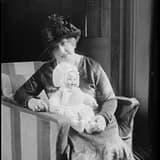
Granted US 2,230,896 for a double chain-stitch seam eliminating bobbins, widely credited as the first bobbinless sewing machine design.
On February 4, 1941, Beulah Louise Henry was granted U.S. Patent 2,230,896, titled 'Seam and Method of Forming Seams,' for a sewing innovation that eliminated the need for a bobbin altogether. Filed in 1936, the patent described a double chain stitch technique that removed one of the most persistent annoyances in sewing: the constant stopping to rewind or replace an emptied bobbin.
This invention is widely credited as the first bobbinless sewing machine design, a genuine first in textile and garment-manufacturing technology. By reworking the fundamental mechanics of stitch formation, Henry addressed a problem that had frustrated seamstresses and industrial machine operators for generations, offering continuous, uninterrupted stitching. It represented a significant technical achievement, requiring deep understanding of thread tension, stitch geometry, and mechanical feed systems — an impressive feat for someone without formal engineering training.
The bobbinless design's influence extended into later sewing machine technology, and it is frequently cited alongside her ice cream freezer patent as one of her two most historically significant inventions by organizations such as the Lemelson-MIT Program and the National Inventors Hall of Fame. Coming near the end of her most active inventing decades, this patent underscored that Henry's creativity had not diminished with age; if anything, it demonstrated an inventor at the height of her technical mastery, still producing genuinely novel, industry-changing mechanical solutions in her early fifties.