← All women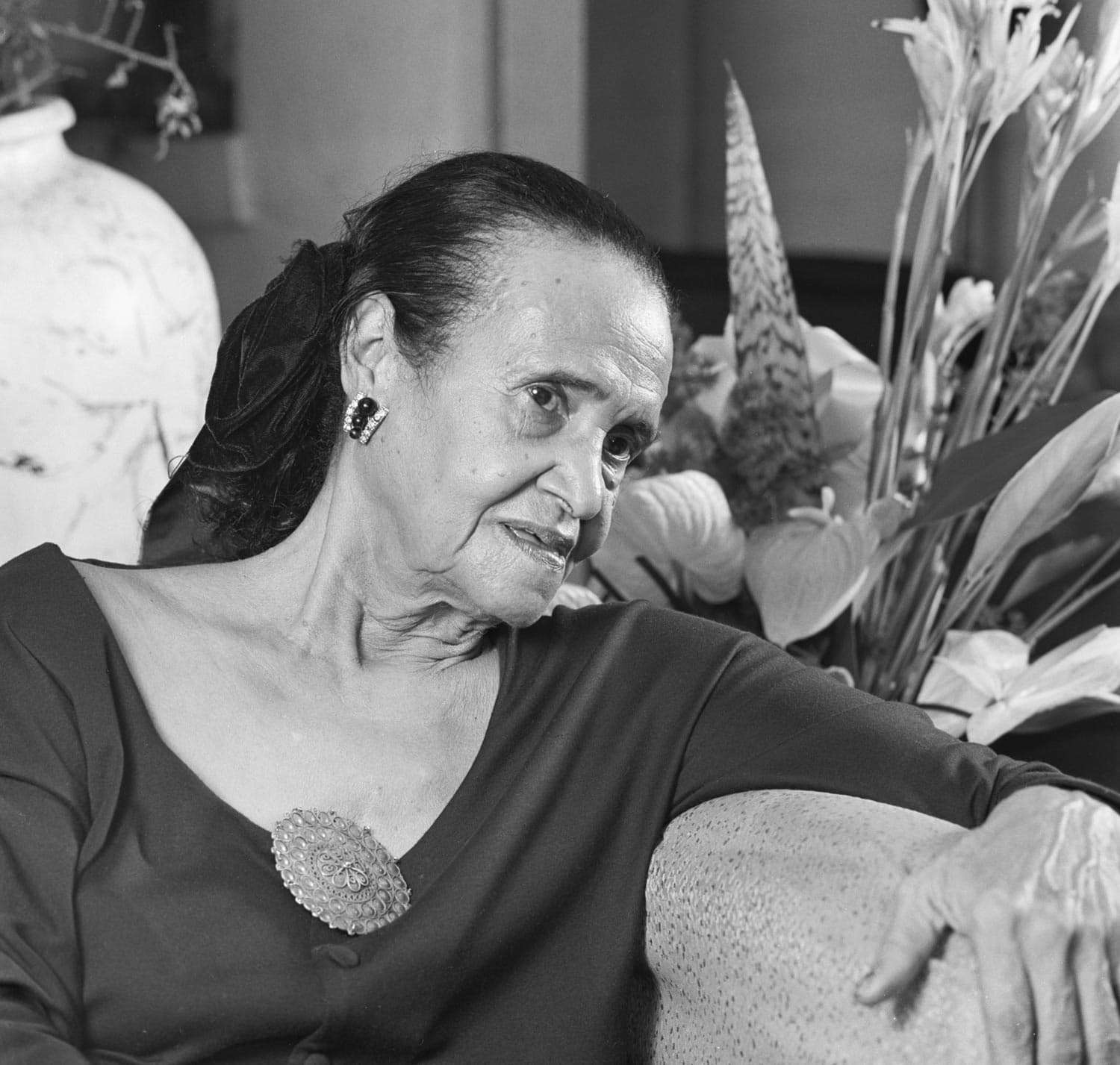
Trinidadian · Arts
Beryl McBurnie
November 2, 1913 – March 30, 2000
Early life and background
Beryl Eugenia McBurnie was born on 2 November 1913 in Trinidad. Sources consulted in the supplied material disagree on her birth year in some secondary accounts, but the strongest references identify 1913 as the correct year. She grew up in a Trinidadian environment shaped by music, dance, and the rich blending of African, Indian, European, and local cultural traditions that marked the island’s social life in the early twentieth century.
McBurnie’s early fascination with movement and performance became visible while she was still a child. Accounts of her life describe a girl who staged performances at home and who developed an early appreciation for the folk forms surrounding her. That upbringing mattered profoundly. She matured in a colonial society where European standards of culture often overshadowed local expression, and where Black Caribbean traditions were frequently treated as inferior, informal, or merely recreational. McBurnie’s later career would challenge those assumptions directly.
She attended school in Trinidad and continued her education with a view toward teaching and the arts. Later biographies note that she studied at the Teachers’ Training College and also spent time abroad to refine her dance training. Her formative years were therefore not those of a performer who emerged fully formed from a formal conservatory system, but of a Caribbean woman who built her artistic identity across local experience, classroom training, and sustained self-development.
Training and early career abroad
McBurnie left Trinidad in the late 1930s or early 1940s to further her studies in the United States and Britain. Sources in the supplied material indicate that she studied in New York and trained with major figures associated with modern and ballet dance, including Martha Graham, and that she also encountered the broader artistic worlds of the period. This phase of her life was important because it gave her technical polish while deepening her conviction that Caribbean folk forms deserved equal artistic respect.
During this period she performed under the stage name La Belle Rosette. Under that name she attracted attention in the New York press in the spring of 1941 and remained one of the city’s notable Black dancers through 1945. That success mattered in more than personal terms. In an era when Black women performers faced racial segregation, limited access to prestigious stages, and entrenched stereotypes about acceptable feminine artistry, McBurnie achieved visibility in a major international cultural center. She demonstrated that Caribbean-trained and Caribbean-rooted dance could command audiences outside the region.
Her time abroad also appears to have sharpened her interest in the relationship between performance and identity. Rather than remaining permanently within the metropolitan dance circuits of the United States, she chose to return to Trinidad and apply her training to the service of Caribbean culture. That decision became the turning point of her career and the basis of her lasting reputation.
Return to Trinidad and cultural leadership
McBurnie returned to Trinidad in 1947. In that year she founded the Little Carib Theatre in Woodbrook, Port of Spain, an institution that became the first theatre of its kind in Trinidad and a landmark in Caribbean cultural history. The theatre was intended as a home for folk dance, experimental performance, and the development of a distinctly Caribbean stage language. Some accounts also associate her work in this period with the West Indian Ballet Company, reflecting her wider efforts to organize and professionalize dance in the region.
The Little Carib was crucial because it gave McBurnie a permanent platform from which to present local material with dignity and artistic ambition. It helped transform the public understanding of Trinidadian folk dance by placing it in a theatre context rather than treating it as an informal or merely social practice. The institution also became a gathering place for artists across disciplines. In later years it supported and housed important theatrical activity, helping to nourish the careers of writers, dancers, and directors who shaped Caribbean performance culture.
McBurnie’s work at the Little Carib was also educational. She taught, organized, and mentored younger performers, helping ensure that local dances were transmitted with care and historical awareness. Her leadership combined artistry with a social mission: to preserve the dances of the region, to legitimate them within public life, and to assert that Caribbean culture could stand on its own terms.
Artistic methods and cultural research
McBurnie was not only a performer and founder; she was also a researcher and interpreter of Caribbean dance traditions. She studied movement forms associated with Trinidad and Tobago and with the wider Caribbean, especially those rooted in African-derived practice. Her choreography and teaching drew on these traditions while adapting them for stage presentation. That work required careful balancing: she sought to make folk dance visible to broader audiences without stripping it of cultural meaning.
Her approach reflected a larger intellectual and political current in mid-twentieth-century Caribbean life. As anti-colonial and nationalist movements gained strength, artists and writers increasingly argued that the region’s own traditions were sources of historical knowledge and national dignity. McBurnie’s dance practice contributed to that movement. By presenting folk forms as serious art, she helped counter the colonial idea that Caribbean culture was derivative or unsophisticated.
She also performed and promoted Caribbean dance internationally, including tours and demonstrations abroad. These activities expanded her influence and helped place Trinidadian dance within a wider diasporic conversation. Her work connected the local to the international, making her one of the Caribbean’s earliest and most important cultural ambassadors in the performing arts.
Awards and recognition
As her reputation grew, McBurnie received a series of honors that reflected both artistic excellence and cultural leadership. In 1959 she was awarded the Order of the British Empire for her contributions to Trinidad and Tobago’s cultural life. In 1966 she received Guyana’s Golden Arrow Crown. In 1969 she was awarded Trinidad and Tobago’s Humming Bird Gold Medal. In 1978 the Alvin Ailey Dance Company paid special tribute to her as one of three pioneers in Black dance. In 1979 the University of the West Indies conferred on her an honorary Doctor of Laws. In 1989 she received Trinidad and Tobago’s highest honor of the time, the Trinity Cross.
These honors were significant not merely because they marked a distinguished career, but because they reflected a long struggle for recognition. McBurnie worked in a cultural environment where women artists, particularly Black women, were often underfunded and underappreciated. Her awards therefore represent more than personal acclaim. They document the gradual official acceptance of Caribbean folk arts as central to national and regional identity.
Personal life
The supplied sources focus chiefly on McBurnie’s artistic career rather than on a conventional private life, and reliable detail about marriage or children is limited in the material provided here. What is clear is that she devoted much of her adult life to dance, cultural organization, and institutional development. She became widely regarded not only as a performer but as a mentor and cultural mother figure to younger artists.
That role matters historically because it points to one of the ways women shaped Caribbean cultural modernity. McBurnie’s authority did not rest solely on celebrity. It was built through teaching, care, and the creation of an artistic home. The Little Carib was both a theatre and a community of practice, and McBurnie’s personal identity became closely linked to that collective space.
Later life and death
McBurnie continued to be remembered and honored in her later years as one of the foundational figures of Trinidad and Tobago’s performing arts. Her career had already become part of the nation’s cultural memory by the time of her death. She died on 30 March 2000. The supplied sources indicate that some secondary accounts conflict on the exact date, but the preponderance of evidence supports 30 March rather than 3 March or 30 May.
Her death marked the end of a life that had spanned colonial Trinidad, the emergence of Caribbean nationalism, and the consolidation of national cultural institutions. Yet her influence did not end with her passing. The Little Carib Theatre remained part of the symbolic architecture of Trinidadian arts, and McBurnie’s name endured as shorthand for the struggle to affirm folk performance as serious cultural inheritance.
Legacy
Beryl McBurnie is remembered as a pioneering dancer, choreographer, teacher, and cultural organizer whose work changed how Trinidad and Tobago understood itself. She helped move folk dance from the margins to the center of national artistic life. By founding the Little Carib Theatre and building a career that joined local tradition with international recognition, she helped create a model for Caribbean cultural self-definition.
Her legacy is also feminist and diasporic. At a time when Black Caribbean women had limited access to institutional power, McBurnie created a stage, a school, and a public vocabulary for indigenous culture. She made Caribbean dance legible to broader audiences without surrendering its origins. For that reason, she remains one of the most important women in the cultural history of Trinidad and Tobago and a major figure in the history of Black performance across the Americas.
Dated achievements
9 indexed.
- Nov021913Arts
Birth of Beryl McBurnie
Birth of Beryl Eugenia McBurnie in Trinidad, later a pioneering Caribbean dancer and cultural advocate.
View details Encyclopedia.com: McBurnie, Beryl - Jan011947Arts
Founded the Little Carib Theatre
McBurnie founded the Little Carib Theatre, Trinidad’s first theatre of its kind and a landmark for Caribbean arts.