← All women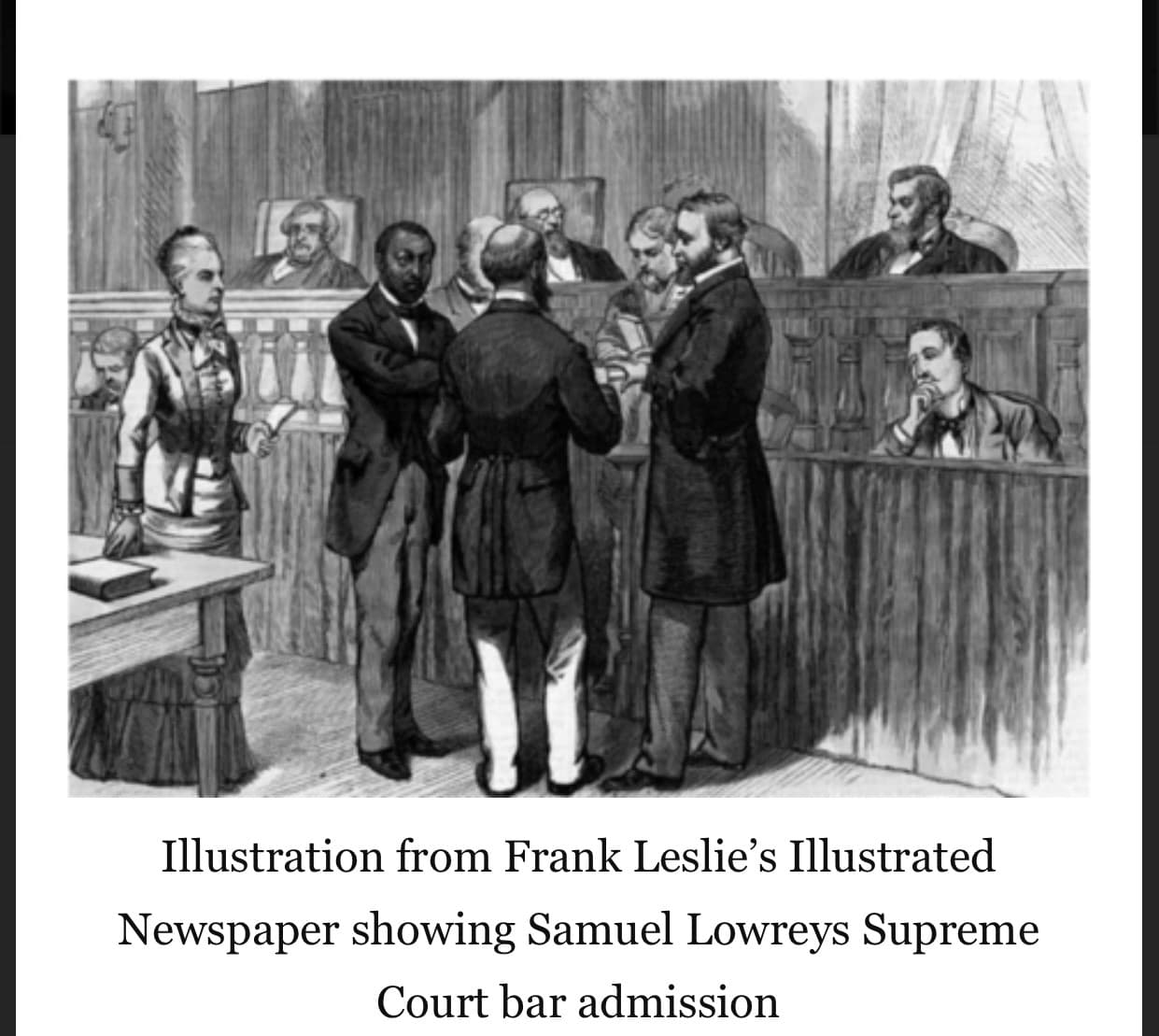
United States · Law · Politics · Activism
Belva Ann Lockwood
October 24, 1830 – May 19, 1917
Early Life and Education
Belva Ann Bennett was born on October 24, 1830, in Royalton, Niagara County, New York, to Lewis J. Bennett and Hannah Green Bennett, farmers of modest means. She was the second of five children in a household where formal education for girls was neither expected nor particularly valued beyond basic literacy. From childhood, however, Belva displayed an unusual intellectual ambition, excelling in her local schooling and expressing a desire to pursue education far beyond what was customary for a rural farm girl in antebellum New York.
At age fourteen, she began teaching in a local school, a common occupation for young women of the era — but she quickly discovered that she was paid only about half of what male teachers earned for identical work. This early, visceral encounter with wage discrimination left a lasting impression and is often cited by historians as a formative moment in her development as an advocate for women's equality.
In 1848, at age eighteen, she married Uriah McNall, a young farmer, and the couple had a daughter, Lura, in 1849. Uriah died in 1853, leaving Belva a young widow with a small child to support — a circumstance that reinforced her determination to secure real economic independence through education rather than relying on remarriage or family charity. Defying convention, she resumed her education, enrolling at the Gasport Academy and later Genesee Wesleyan Seminary, before gaining admission to Genesee College (which would later become Syracuse University). She graduated with honors in 1857, one of relatively few American women to hold a bachelor's degree at that time.
Early Career and Move to Washington
Following graduation, Lockwood worked as an educator and school administrator in New York, eventually becoming preceptress of the Lockport Union School. She was an early advocate of physical education and public speaking for girls, introducing curricular innovations that were considered progressive for the period. In 1866, seeking greater opportunity and drawn by the political ferment of the postwar capital, she relocated to Washington, D.C., where she continued teaching and became increasingly involved in reform circles, including the women's suffrage movement then coalescing around figures such as Susan B. Anthony and Elizabeth Cady Stanton.
In 1868, she married Dr. Ezekiel Lockwood, a dentist and Baptist minister considerably older than she, who supported her ambitions and cared for her daughter Lura while Belva pursued further education — an arrangement notably progressive for its time. The couple had a daughter together, Jessie, who died in infancy. Ezekiel Lockwood died in 1877, and Belva Lockwood never remarried, devoting the remainder of her long life to her legal career and reform activities.
Legal Education and Admission to the Bar
Determined to become a lawyer despite the near-total exclusion of women from the profession, Lockwood sought admission to law schools in Washington, D.C. Columbian College (now George Washington University) and Georgetown both refused her, citing concerns that her presence would distract male students. She eventually gained admission to the newly founded National University Law School in 1871, completing her coursework by May 1873. However, the school's administration, apparently reluctant to grant a woman a formal legal diploma, withheld her certificate even after she had fulfilled all requirements.
Refusing to accept this obstruction, Lockwood wrote directly to President Ulysses S. Grant on September 3, 1873, in his capacity as ex officio president of the university, demanding that her diploma be issued. The tactic succeeded, and her diploma, signed by Grant, arrived within days. Shortly thereafter, on September 24, 1873, she was admitted to the bar of the Supreme Court of the District of Columbia, becoming one of the first women lawyers in the United States.
Lockwood established a general law practice in Washington, handling pension claims, property disputes, probate matters, and — increasingly — cases involving the rights of women, African Americans, and Native American nations. Her practice was notable for its breadth and its engagement with clients who had little other access to competent legal representation.
The Fight for the Supreme Court Bar
In 1876, Lockwood sought admission to practice before the Supreme Court of the United States. The Court, under Chief Justice Morrison Waite, rejected her application, holding that "none but men are permitted to practice before us as attorneys and counsellors." Rather than accept this rebuff, Lockwood embarked on a five-year campaign to change federal law. She personally drafted legislation to remove the barrier, lobbied members of Congress across multiple sessions, cultivated press coverage, and mobilized allies within the suffrage and legal reform movements.
Her persistence bore fruit on February 15, 1879, when President Rutherford B. Hayes signed into law "An Act to relieve certain legal disabilities of women" — commonly called the Lockwood Bill — which permitted women who had practiced for three years in a state supreme court to be admitted to the U.S. Supreme Court bar. On March 3, 1879, on the motion of her colleague Albert G. Riddle, Lockwood was sworn in, becoming the first woman admitted to the United States Supreme Court bar.
She did not merely hold the credential symbolically. On February 2, 1880, she moved the admission of Samuel R. Lowery, a formerly enslaved Tennessee attorney, to the Supreme Court bar — an act generally recognized as securing the first admission of a Black lawyer from the American South to practice before the Court. Then, on November 30, 1880 (with argument continuing into December 1), she argued Kaiser v. Stickney (102 U.S. 176), becoming the first woman to deliver oral argument before the U.S. Supreme Court.
Presidential Campaigns
Beyond the courtroom, Lockwood became a prominent public figure through her involvement in electoral politics. In 1884, the National Equal Rights Party nominated her for President of the United States at a convention in San Francisco, with Marietta Stow as her running mate. Lockwood accepted the nomination and conducted a full national campaign — complete with speeches, published platforms, and campaign literature — despite the fact that women could not yet vote in most states and she herself was constitutionally ineligible to vote for herself in many jurisdictions. She received an estimated 4,100 to 5,000 popular votes, making her widely regarded as the first woman to run a complete, organized presidential campaign in American history (Victoria Woodhull's earlier 1872 candidacy was more nominal and legally complicated by her age). Lockwood ran again in 1888 on the Equal Rights Party ticket, though with a lower profile than her 1884 effort.
Her platform called for equal rights for women, civil service reform, temperance, and a more restrained U.S. foreign policy, reflecting her lifelong commitment to both women's rights and international peace.
Later Legal Career and Advocacy for Native Americans
Lockwood continued an active legal practice well into old age, taking on complex federal litigation, including extensive representation of Native American claimants seeking compensation from the federal government for treaty violations and land seizures. Her most significant late-career case was her representation of the Eastern Cherokee in claims against the United States, culminating in her argument before the Supreme Court in United States v. Cherokee Nation (202 U.S. 101) on January 16–18, 1906, when she was 75 years old. The case resulted in a settlement exceeding $5 million for Cherokee claimants — a substantial victory that capped her Supreme Court advocacy career. Later that year, Syracuse University awarded her an honorary doctorate of law in recognition of her legal accomplishments and her decades-earlier undergraduate degree from the university's predecessor institution.
Throughout her career, Lockwood was also a committed peace activist, serving as a delegate to international peace congresses and advocating for arbitration as an alternative to war. She was involved with organizations promoting international law and was reportedly considered for the Nobel Peace Prize, though she never received it.
Personal Life
Lockwood was widowed twice — first by Uriah McNall in 1853, and later by Ezekiel Lockwood in 1877 — and she raised her daughter Lura largely as a single working mother, an unusual arrangement for the period. She never remarried after Ezekiel's death, instead devoting the final four decades of her life almost entirely to her legal practice, activism, and public advocacy. She was known for her modest personal habits, tireless work ethic, and famously thick skin in the face of ridicule from a press and public often hostile to the idea of women as lawyers and political candidates.
Legacy and Death
Belva Lockwood died on May 19, 1917, in Washington, D.C., at the age of 86, and was buried in Congressional Cemetery. She did not live to see the ratification of the Nineteenth Amendment in 1920, but her legal victories had already permanently reshaped the profession she loved: she had forced open the doors of the Supreme Court bar to women, demonstrated that women could successfully argue before the nation's highest court, run credible national political campaigns decades before women's suffrage was achieved, and used her hard-won legal standing to advocate for other marginalized groups, including African American lawyers and Native American nations.
Today, Lockwood is remembered as one of the towering pioneering figures in the history of American women in law and politics. Schools, scholarships, and historical exhibitions — including a dedicated Supreme Court exhibition on early women lawyers — commemorate her achievements. Her life remains a touchstone example of how sustained, strategic advocacy by a single determined individual could dismantle entrenched institutional barriers, decades before broader legal and social change caught up with her example.
Dated achievements
9 indexed.
- Oct241830Science
Birth in Royalton, New York
Born Belva Ann Bennett in Royalton, Niagara County, New York, to a farming family.
View details Belva Lockwood | National Archives Prologue Magazine - Sep031873Science
Demands her diploma from President Grant
Wrote directly to President Ulysses S. Grant demanding her withheld LL.B. diploma from National University Law School.