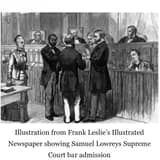
President Hayes signed the act admitting qualified women attorneys to practice before the U.S. Supreme Court.
On February 15, 1879, President Rutherford B. Hayes signed into law "An Act to relieve certain legal disabilities of women," popularly known as the 'Lockwood Bill.' The statute explicitly provided that any woman who had been a member of a state supreme court bar for three years and was of good moral character could be admitted to practice before the Supreme Court of the United States.
This legislative victory was the culmination of a five-year lobbying campaign led personally by Belva Lockwood, who had been refused admission to the Supreme Court bar in 1876 on the explicit ground that 'none but men are permitted to practice before us as attorneys and counsellors.' Undeterred, Lockwood drafted the bill herself, lobbied members of Congress relentlessly session after session, and mobilized public and press support to overcome repeated defeats in the House and Senate.
The signing of the bill marked a watershed in American legal history: it was one of the first pieces of federal legislation explicitly designed to dismantle a professional barrier facing women, and it directly paved the way for Lockwood's own historic admission to the Supreme Court bar weeks later. The act stands as a testament to the power of sustained, strategic advocacy in the face of official rejection.