← All women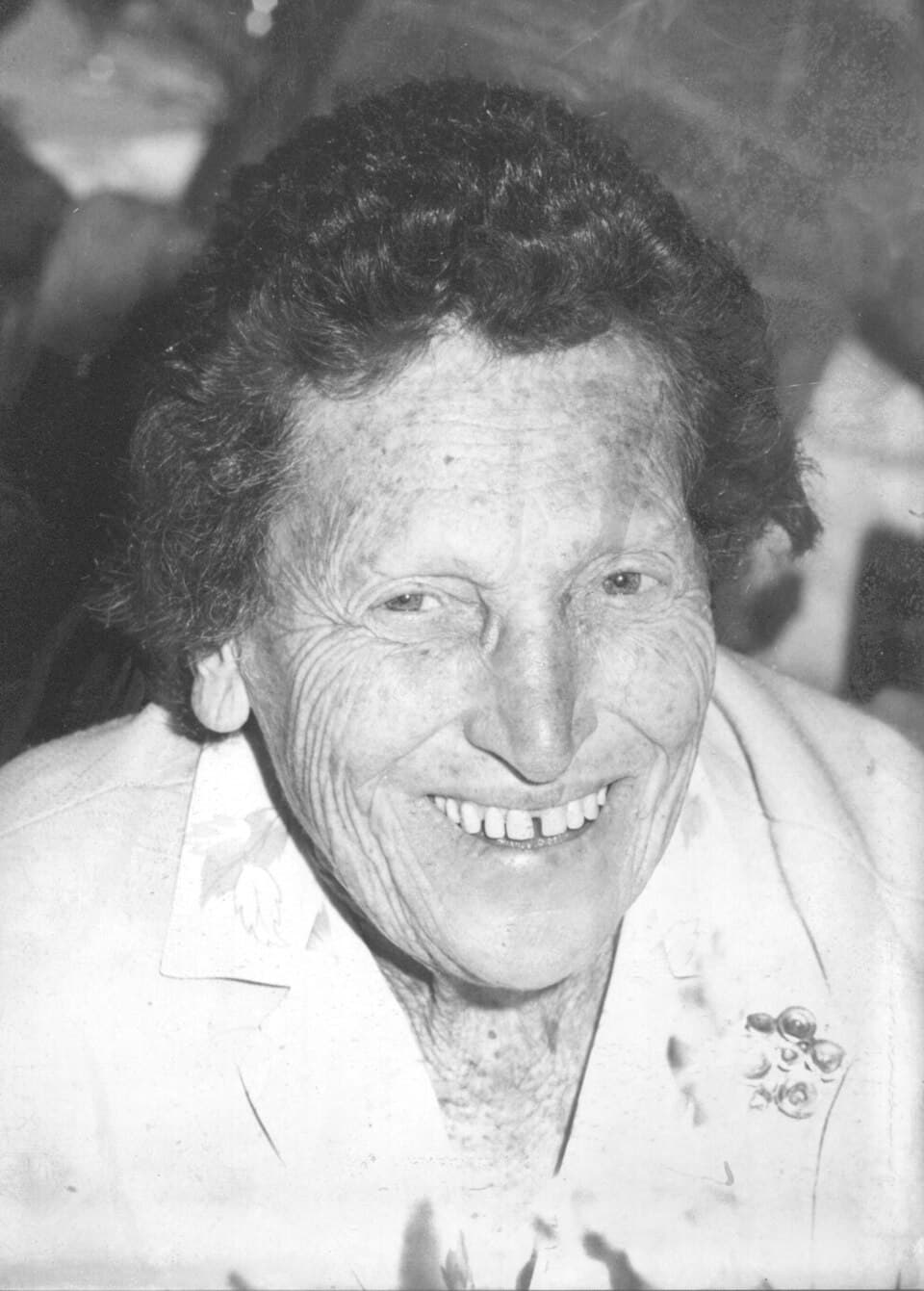
South African · Science · Activism
Tikvah Alper
January 22, 1909 – February 2, 1995
Early life and education
Tikvah Alper was born on 22 January 1909 in Wynberg, near Cape Town, South Africa, the youngest of four daughters in a family of Jewish refugees from Russia. Her background placed her at the intersection of migration, minority identity, and colonial South African society, all of which shaped the opportunities and constraints of her early life. She later became known internationally as a radiobiologist, but her path began in a setting where advanced scientific careers for women were rare and where social barriers were substantial.
Alper attended Durban Girls' High School, where she was described as exceptionally bright and graduated with distinction ahead of schedule. She then entered the University of Cape Town, from which she graduated with distinction in physics in 1929, earning a master’s degree. That accomplishment was a major step into the scientific profession at a time when women were still underrepresented in physics and experimental science. Her academic success established the foundation for later research in nuclear physics, radiobiology, and the study of infectious disease.
In the early 1930s Alper continued her training in Berlin, where she studied under Lise Meitner, one of the most important physicists of the period. She worked on delta rays produced by alpha particles and published a prize-winning paper on the subject in 1933. The Berlin years placed her at the center of European physics during a time of intense scientific innovation and political upheaval. They also exposed her to the networks and methods that would later inform her experimental work in biology and radiation research.
Return to South Africa and scientific partnership
In 1932, Alper returned to South Africa and married the bacteriologist Max Sterne. The marriage became both a personal partnership and a scientific collaboration. Because married women were often excluded from formal academic appointments in South Africa, Alper faced institutional barriers that limited where and how she could work. Rather than ending her scientific activity, this restriction pushed her into improvised research arrangements, including work in a private home laboratory with Sterne.
Her early career in South Africa was therefore marked by both achievement and constraint. She worked in a period when women in science were frequently expected to subordinate professional life to domestic roles. Yet Alper continued to pursue research, and her association with Sterne connected her to microbiological work that later resonated with her interest in the biological effects of radiation. The family also grew during this period; sources record the births of sons Jonathan and Michael in the mid-1930s. Her life at this stage illustrates how women scientists often had to combine family responsibilities with scientific labor under conditions that were far less favorable than those faced by their male colleagues.
Opposition to apartheid and emigration
Alper and Sterne were outspoken opponents of apartheid, and in 1951 she lost her position at South Africa’s National Physics Laboratory as a result of that stance. The political pressure that followed forced the family to leave South Africa for the United Kingdom. This was a defining moment in her life: she was displaced from her country and from the scientific environment in which she had built her early career.
Her emigration should be understood both as a political consequence and as a scientific turning point. In Britain she began work at Hammersmith Hospital as an unpaid researcher, eventually entering the field of radiobiology and radiopathology. That transition demonstrates the resilience with which she rebuilt her professional life after exclusion. It also shows how political conviction, especially anti-racist conviction, could reshape a woman scientist’s career in the mid-twentieth century. Her experience is central to histories of women’s activism because it connected scientific practice to opposition to racial injustice.
Radiobiology and leadership in Britain
Alper’s British career developed into her most influential scientific period. In 1962 she became director of the MRC Experimental Radiopathology Unit at Hammersmith Hospital, a position she held until her retirement in 1974. As a director, she led research on the effects of radiation on living tissues and on the cellular consequences of exposure. Her leadership made her one of the notable women in postwar British medical research, in a field that remained heavily dominated by men.
Her earlier physics training gave her a distinctive perspective on biological problems. At Hammersmith, she helped develop a rigorous experimental approach to radiobiology and contributed to understanding how radiation damages cells and tissues. She became widely recognized as a scholar who bridged physics and biology, bringing quantitative and experimental methods to medical questions. The appointment as unit director was itself an important professional milestone because it reflected recognition by the Medical Research Council of her expertise and judgment.
Alper also influenced younger scientists through teaching, mentoring, and scholarly example. Accounts of her career emphasize both her technical excellence and her willingness to support others in the field. In an era when women scientists often had to prove competence repeatedly and were denied access to top positions, her leadership at Hammersmith was a significant achievement in institutional science.
Scrapie research and the roots of prion theory
Alper’s most famous contribution came from her research on scrapie, a transmissible neurodegenerative disease of sheep and goats. During the 1960s and 1970s, she produced experimental evidence suggesting that the infectious agent in scrapie did not contain nucleic acid. This was a major scientific challenge to conventional ideas of infection, which assumed that viruses and other agents depended on DNA or RNA.
Her work became historically important because it helped lay the groundwork for prion theory, the idea that certain infectious neurodegenerative diseases are caused by misfolded proteins rather than nucleic-acid-bearing organisms. Although the prion concept was not universally accepted at the time, Alper’s findings were instrumental in forcing scientists to reconsider the molecular basis of infectious disease. Later developments in the study of bovine spongiform encephalopathy, kuru, and related transmissible spongiform encephalopathies confirmed the long-term importance of this line of inquiry.
Alper’s scrapie research was especially remarkable because it required intellectual independence in the face of skepticism. Challenging established assumptions about what a pathogen must be was difficult in any era, and it was made harder by the limited authority accorded to women in biomedical science. Her contribution is now recognized as one of the pivotal early steps toward understanding prion diseases. That legacy secured her place in the history of medicine and molecular biology.
Later recognition and publication
In 1979, Alper published Cellular Radiobiology, a major text that distilled her expertise and helped define the field for later researchers. The book extended her influence beyond experimental work, showing her ability to synthesize complex scientific problems into a durable scholarly framework. It also demonstrated that her authority remained strong in a period when radiobiology was becoming increasingly interdisciplinary.
Her scientific reputation remained active in later life. In 1992, at the age of 83, she delivered an invited lecture to the Radiation Research Society in Dallas, a sign that she was still regarded as a meaningful presence in her field. That late-career appearance underscored the longevity of her influence and the respect she commanded among researchers. It also reveals how women scientists, whose contributions were often under-credited in their prime, could continue to inspire younger generations even after retirement.
Personal life
Alper’s personal life was closely tied to her scientific work. Her marriage to Max Sterne in 1932 was both a domestic and professional partnership. Sterne became a noted bacteriologist, and the couple worked together under difficult conditions when institutional barriers limited Alper’s formal employment. Their family included sons Jonathan and Michael, and later grandchildren and great-grandchildren. The family history matters because it shows that her scientific career coexisted with motherhood and family life rather than replacing them.
Her relationship with Sterne also illustrates a broader pattern in the history of women’s science: collaborations at home sometimes substituted for access denied by universities and laboratories. Alper’s life therefore cannot be understood only as an individual accomplishment; it also reflects the social strategies women used to persist in science despite exclusion from formal power.
Legacy
Tikvah Alper died on 2 February 1995 in Sarisbury, Hampshire, England. By then, her reputation had become associated with two major historical legacies: her leadership in radiobiology and her early experimental challenge to nucleic-acid-centered explanations of scrapie transmission. The latter became especially significant as prion research developed and as public concern over bovine spongiform encephalopathy grew in the late twentieth century.
Her life is also remembered for its political and ethical dimensions. She opposed apartheid, suffered professional consequences for doing so, and rebuilt her career in another country. That trajectory places her among the scientifically accomplished women whose historical importance lies not only in discovery, but also in moral courage and persistence. In the history of women’s science, Alper stands out as a physicist turned radiobiologist whose work connected experimental rigor, social justice, and the long development of modern understandings of infectious disease.
Dated achievements
9 indexed.
- Jan221909Science
Birth of Tikvah Alper in Wynberg, South Africa
Born in Wynberg, South Africa, to a family of Jewish refugees from Russia; the youngest of four daughters and future pioneer in radiobiology.
View details Wikipedia: Tikvah Alper - Jan011929Science
Graduation in physics from the University of Cape Town
Graduated with distinction in physics from the University of Cape Town, earning a master’s degree and beginning her scientific career.