← All women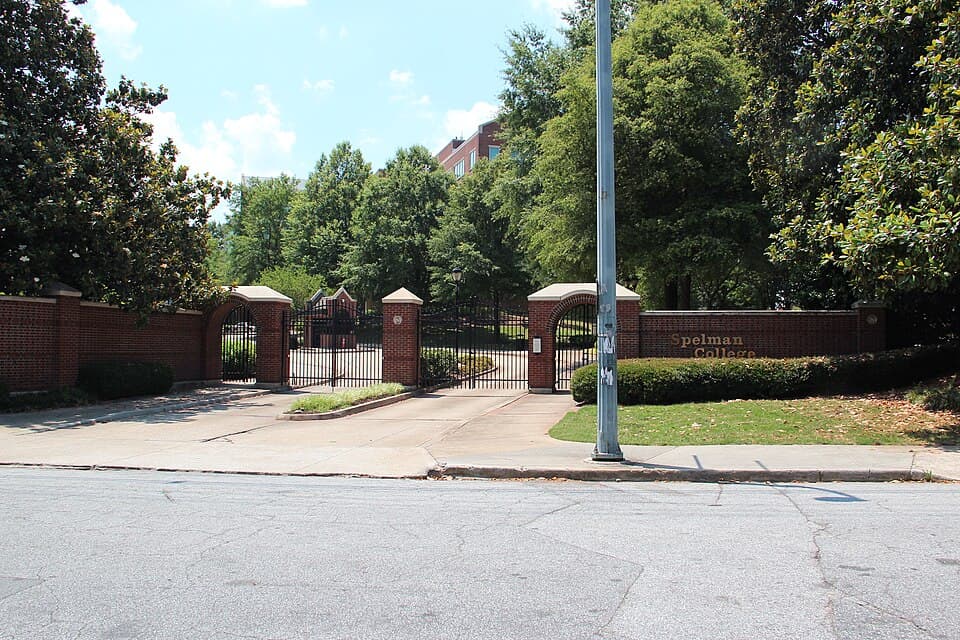
American · Activism
Spelman College
April 11, 1881 – present
Overview
Spelman College is a private, historically Black liberal arts college for women located in Atlanta, Georgia.[2][3][5] Founded in 1881 as the Atlanta Baptist Female Seminary, it is widely recognized as the oldest private historically Black institution of higher learning dedicated specifically to women.[2][3][5] Over more than a century, Spelman has become a leading center for the education of women of African descent, producing graduates who have shaped fields ranging from civil rights and public policy to medicine, the arts, and academia.[3][5]
Founding and Early Background
Spelman’s history begins on April 11, 1881, when New England schoolteachers and Baptist missionaries Sophia B. Packard and Harriet E. Giles opened a school for African American women and girls in the basement of Friendship Baptist Church in Atlanta.[1][2][3] Supported by the Woman’s American Baptist Home Mission Society, the institution was initially called the Atlanta Baptist Female Seminary.[1][3][4] Packard and Giles, both associated with the Oread Institute in Worcester, Massachusetts, were motivated by a conviction that freedwomen in the post–Civil War South needed access to quality education as a foundation for self-sufficiency and community leadership.[2][3]
Early funding was modest. The founders began their work with $100 from the First Baptist Church of Medford, Massachusetts, and relied heavily on the support of Friendship Baptist Church’s pastor, Frank Quarles, and the Baptist mission society.[3][4] The student body consisted largely of formerly enslaved women, many of whom arrived with limited literacy and had been barred from formal education under slavery and during Reconstruction.[3][4] The seminary’s curriculum focused initially on basic reading, writing, and arithmetic, combined with religious instruction and training for teaching and domestic work—skills thought essential for women’s economic survival in the era.
Institutional Development, 1880s–1924
In the years following its founding, the seminary grew rapidly. Additional teachers commissioned by the Woman’s American Baptist Home Mission Society joined Packard and Giles, expanding instruction beyond the original basement classroom.[1] In 1882, the founders were introduced to industrialist and philanthropist John D. Rockefeller, who pledged financial support to the school.[1][5] Rockefeller’s donations, supplemented by ongoing mission society funding, enabled the seminary to acquire land and construct its first buildings.
By 1883, the school had moved from the church basement to a nine-acre site with five frame buildings, on land that had formerly served as a Union training ground during the Civil War.[1][5][6] A "model school" was created to train student-teachers, reflecting Packard and Giles’s strategy of multiplying educational impact by preparing women to teach in Black communities across the South.[1][3]
On May 13, 1884, the institution was formally renamed Spelman Seminary in honor of Laura Spelman Rockefeller, John Rockefeller’s wife, and her parents, Harvey Buel and Lucy Henry Spelman, who were active abolitionists.[1][2][5][9] The new name acknowledged both the family’s anti-slavery activism and Rockefeller’s crucial financial support. In 1885, students produced the first issue of the Spelman Messenger, a campus publication that became an important forum for student expression.[1]
Spelman’s faculty also began to include pioneering figures. In 1885, Dr. Sophia Jones joined the seminary as its first Black female faculty member, teaching anatomy, physiology, and hygiene and establishing a health department.[1][3] Her appointment reflected an early recognition of the importance of health education for Black women in the South.
On June 6, 1887, Spelman Seminary held its first commencement, graduating an inaugural class of women who had completed programs designed primarily to prepare them as teachers and community leaders.[1] A year later, on October 2, 1888, the institution relocated to a permanent site that remains the college’s campus today, consolidating earlier land acquisitions and providing a more secure physical foundation for growth.[1][3]
Through the late nineteenth and early twentieth centuries, Spelman gradually expanded its curriculum from basic and normal school training to collegiate-level work. Donations from Rockefeller and other Northern supporters continued, and the seminary awarded its first college degrees in 1901.[2][5] While still called a "seminary," it was increasingly functioning as a college, offering programs in the liberal arts alongside teacher education.
Becoming Spelman College and the Atlanta University Center
In December 1924, the state of Georgia granted Spelman a charter officially recognizing it as Spelman College, a degree-granting institution of higher education.[1][2][5][9] This transition, which capped decades of curricular and institutional development, affirmed Spelman’s status within the American higher education system and underscored its role as a leading institution for Black women.
Spelman’s evolution into a college occurred amid broader debates about Black education in the early twentieth century, including tensions between industrial and liberal arts models. Spelman embraced a liberal arts orientation, stressing critical thinking, moral formation, and preparation for leadership.[3][5] In 1929, the college entered into an agreement with Morehouse College (for men) and Atlanta University that formed the nucleus of the Atlanta University Center (AUC).[2][5] This consortium, which eventually included several other historically Black institutions, allowed Spelman to share faculty, facilities, and curricula, and gave students access to cross-registration and collaborative academic programs.
Academic Programs and Mission
Spelman College today offers Bachelor of Arts and Bachelor of Science degrees in more than twenty fields, including the arts, natural sciences, social sciences, humanities, and interdisciplinary programs.[2][5][10] Majors range from biology, chemistry, and computer science to English, history, political science, psychology, and international studies.[5][8][11] The college emphasizes a liberal arts education grounded in critical inquiry, ethical reasoning, and social responsibility, with particular attention to the experiences and contributions of women of African descent.
Spelman’s mission, as articulated in its contemporary materials, is to prepare women "to engage the many cultures of the world and inspire a commitment to positive social change."[10] The curriculum includes a strong core focusing on African diaspora studies, gender studies, and civic engagement. The History Department, for example, offers coursework in U.S., African, Caribbean, and global history, supporting majors who pursue careers in law, public policy, education, and scholarship.[8][11]
Experiential learning, study abroad, and internships play significant roles in Spelman’s academic life, providing students with opportunities to connect classroom learning to community service and international engagement.[10] The college is also known for programs that support women in STEM fields, addressing longstanding underrepresentation of Black women in science and technology.
Leadership and Presidential Milestones
Spelman’s presidents, beginning with early leaders connected to the Baptist mission societies, have shaped its trajectory from seminary to nationally prominent college.[1][2][5] In 1987, Johnnetta Betsch Cole, an anthropologist and educator, became Spelman’s seventh president and its first Black woman president—a landmark in both the college’s and women’s higher-education history.[2][5] Cole’s tenure is credited with raising Spelman’s national profile, expanding its fundraising, and strengthening academic programs grounded in Black women’s experiences.
In 1997, Audrey Forbes Manley, a physician, public health leader, and Spelman alumna, became the college’s president, making history as the first alumna to lead the institution.[2] Her presidency underscored the strength of Spelman’s alumnae network and emphasized science education and health-related fields.
On August 1, 2015, Mary Schmidt Campbell, an arts administrator and scholar, began service as Spelman’s tenth president.[2] Under Campbell, the college continued to advance its arts and humanities programs, broaden global engagement, and enhance its reputation as a top historically Black college. On July 1, 2022, Helene D. Gayle, a public health physician and philanthropic leader, became Spelman’s eleventh president.[2] Gayle’s leadership has focused on student success, innovation in STEM and social sciences, and strengthening Spelman’s impact in public health, economic equity, and global development.
Alumnae and Wider Impact
Spelman College has produced a distinguished body of alumnae whose work has significantly impacted U.S. and global history. Notable graduates include civil-rights lawyer and Children’s Defense Fund founder Marian Wright Edelman; musician, historian, and activist Bernice Johnson Reagon; novelist Alice Walker; voting-rights advocate and political leader Stacey Abrams; Foreign Service officials Ruth A. Davis and Aurelia Brazeal; physicians Virginia Davis Floyd and Deborah Prothrow-Stith; writers Pearl Cleage and Tina McElroy Ansa; actress LaTanya Richardson; artist Varnette Honeywood; and opera singer Mattiwilda Dobbs, among many others.[3][5]
These alumnae have contributed to major social movements and cultural developments, including the civil-rights movement, Black feminist thought, public health initiatives, and contemporary African American literature and performance. Their achievements exemplify Spelman’s longstanding commitment to educating women who become leaders in social justice, cultural production, and public service.
Spelman’s impact also extends to economic and regional development. According to data cited by the United Negro College Fund, the college’s total economic impact is significant, contributing hundreds of millions of dollars to local and regional economies and generating substantial lifetime earnings for its graduates.[6] Its role within the Atlanta University Center further amplifies its influence, as Spelman students engage with peers from other HBCUs and participate in shared academic and social initiatives across the consortium.[2][5]
Campus Life and Culture
Spelman’s campus, located in southwest Atlanta, houses academic buildings, residence halls, and cultural spaces that support a vibrant student community.[2][6][10] Student organizations span academic clubs, service groups, performing arts ensembles, and advocacy organizations focused on issues such as racial justice, gender equity, public health, and environmental sustainability.[10]
Commencement ceremonies, which began in 1887, remain central rituals, celebrating graduating seniors and honoring alumnae and distinguished guests. The college also hosts lectures, conferences, and arts events that bring national and international figures to campus, reinforcing Spelman’s identity as an intellectual and cultural hub for women of African descent.[6][10]
Legacy in Women’s and Black Educational History
Spelman College occupies a singular position in the history of women’s education and African American higher education. As the oldest private historically Black liberal arts institution for women, it represents an enduring challenge to both racial and gender exclusion in academic life.[2][3][5] Its founding in a church basement in 1881 symbolized a radical commitment to educating Black women at a time when they faced compounded barriers due to racism and sexism.
Over the subsequent decades, Spelman’s evolution—from seminary to college, from local school to member of a major academic consortium—illustrates the power of education as a tool for social transformation. Its graduates have been at the forefront of struggles for civil rights, women’s rights, public health, and cultural expression. The college’s leadership, especially the presidencies of Johnnetta Betsch Cole, Audrey Forbes Manley, Mary Schmidt Campbell, and Helene D. Gayle, further underscores the centrality of Black women’s leadership in shaping academic institutions and public life.[2][3][5]
Spelman’s legacy is thus twofold: it is a premier liberal arts college with robust academic programs, and it is a historic institution whose very existence testifies to the resilience and aspirations of Black women in the United States. Its ongoing mission to educate women "to engage the many cultures of the world and inspire a commitment to positive social change" continues to build on that legacy.[10]
Continuity and Contemporary Significance
In the twenty-first century, Spelman College remains a "global leader in the education of women of African descent," as described in contemporary accounts.[6][10] With more than 2,100 students drawn from many U.S. states and foreign countries, Spelman combines a strong liberal arts foundation with attention to global issues, technological change, and evolving forms of social inequality.[6][10]
The college’s ongoing work—through its academic programs, community partnerships, and alumnae leadership—ensures that it continues to play a pivotal role in women’s history, Black history, and the story of higher education in the United States. From its basement-school origins in 1881 to its present status as a top-ranked HBCU, Spelman College stands as a testament to the transformative power of education for women of African descent and a cornerstone institution in the broader movement for racial and gender justice.
Dated achievements
9 indexed.
- Apr111881Activism
Founding of Atlanta Baptist Female Seminary (future Spelman College)
Atlanta Baptist Female Seminary, precursor to Spelman College, is founded in a church basement in Atlanta on April 11, 1881.
View details History in Brief | Spelman College - May131884Activism
Renaming to Spelman Seminary
On May 13, 1884, Atlanta Baptist Female Seminary is renamed Spelman Seminary, honoring Laura Spelman Rockefeller and her abolitionist family.