← All women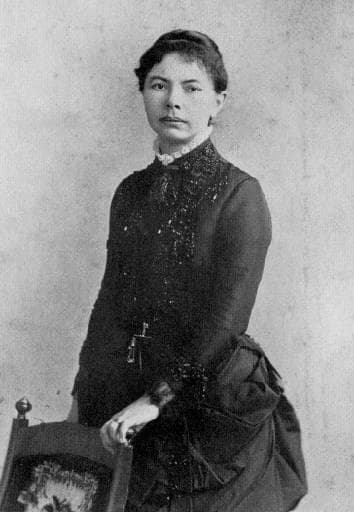
American · Science · Science
Sarah Frances Whiting
August 23, 1847 – September 12, 1927
Early Life and Background
Sarah Frances Whiting was born on August 23, 1847, in Wyoming, New York, USA. Growing up in a scholarly family, she was encouraged to pursue academics from an early age. Her father, Joel Whiting, was a Baptist minister who instilled in her the values of education and intellectual pursuit. Whiting's academic journey began at the Ingham University, the first collegiate institution for women in the United States, where she graduated with a B.A. in 1865.
Career Beginnings and Development
In the 1870s, Whiting moved to Boston, where she worked as a teacher before taking a decisive step into the field of higher education when she joined Wellesley College in 1876. At Wellesley, she founded the college's physics department, a remarkable achievement considering the few opportunities available to women at the time. She became known for her innovative teaching methods, which emphasized hands-on learning and experimentation.
Major Works, Discoveries, and Accomplishments
Whiting's influential role came as the first director of the Whitin Observatory at Wellesley College, established in 1900. Under her guidance, the observatory became a center for astronomical education and research, particularly for women. She also played a significant role in incorporating laboratory work in educational curricula, which was a groundbreaking approach in the late 19th century.
Awards, Honors, and Recognition
Over her lifetime, Whiting was recognized for her contributions to science and education. While specific awards during her lifetime might not have been extensively documented, her legacy lived on through the countless female scientists she mentored, including pioneering astronomer Annie Jump Cannon, who credited Whiting’s mentorship as influential.
Personal Life
Whiting never married, dedicating her life entirely to science and the advancement of women's education. Her dedication to her students and colleagues was well-respected, fostering an atmosphere of scientific inquiry and personal development at Wellesley.
Legacy and Historical Impact
Whiting's impact reached beyond her immediate academic environment. By pioneering women’s participation in the sciences, she was a central figure in the broader movement towards gender equality in education and the sciences. Her advocacy for women in physics was foundational for future generations of female scientists.
Later Life and Death
After an illustrious career, Whiting retired in 1916. She continued to be involved in educational endeavors until her death on September 12, 1927, in Wilbraham, Massachusetts. Her legacy as a pioneer in women's scientific education remains influential, inspiring subsequent generations to pursue careers in fields previously regarded as male-dominated.
Dated achievements
4 indexed.
- Aug231847Science
Born in Wyoming, New York
Sarah Frances Whiting was born on August 23, 1847, in Wyoming, New York, to Elizabeth Comstock and Joel Whiting.
View details Sarah Frances Whiting - Wikipedia - Sep011876Science
Founded the Physics Department at Wellesley College
Whiting established Wellesley College's physics department in 1876, one of the earliest collegiate physics programs led by a woman in the U.S.