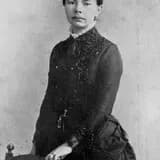
Whiting established Wellesley College's physics department in 1876, one of the earliest collegiate physics programs led by a woman in the U.S.
In 1876, Sarah Frances Whiting was recruited by Wellesley College founder Henry Fowle Durant to establish and lead the college's new physics department, making her one of the very first women in the United States to hold such a position at the collegiate level.
Whiting had prepared for this role by auditing physics lectures and laboratory sessions—since women were not permitted to enroll formally—at the Massachusetts Institute of Technology under Professor Edward C. Pickering, a pioneer of laboratory-based physics instruction. This mentorship equipped her with the practical, hands-on pedagogical approach that was still novel even at male-only institutions.
At Wellesley, Whiting introduced the second undergraduate physics laboratory course in the country—second only to MIT's own program—emphasizing direct student experimentation rather than pure lecture-based learning. This was a radical pedagogical departure that placed Wellesley at the forefront of science education for women.
Her department became a model for other women's colleges and helped legitimize the idea that women could not only learn science but teach and conduct original research in it. Many of her students went on to distinguished scientific careers, including astronomer Annie Jump Cannon, extending Whiting's influence across generations of American science.