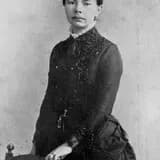
Whiting founded and directed the Whitin Observatory, establishing Wellesley's astronomy program and becoming one of America's first female astronomy professors.
Building on her success in physics, Sarah Frances Whiting expanded her scientific vision to astronomy, founding the Whitin Observatory at Wellesley College, funded by a gift from Mrs. John Whitin. The observatory, along with the academic program she built around it, made Whiting one of the first women in the United States to serve as a professor of astronomy.
Whiting personally selected the observatory's instruments after consulting with leading astronomers of the era, including Edward Pickering at the Harvard College Observatory, with whom she maintained a long scientific collaboration. She designed the astronomy curriculum to include not only theoretical study but hands-on observational work and later, pioneering use of spectroscopy and photography in astronomical research.
This was an extraordinary achievement for a woman of her era: astronomy departments and observatories in the United States were almost universally led by men, and access to research-grade telescopes was rarely extended to women, let alone placed under their direction. Whiting's stewardship of the observatory helped train a new generation of women astronomers.
Among her most notable students was Annie Jump Cannon, who would go on to develop the stellar classification system still used today. The Whitin Observatory remains an active teaching and research facility at Wellesley College, a lasting monument to Whiting's vision and legacy in American science education.