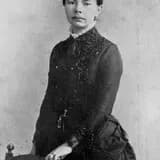
Sarah Frances Whiting died on September 6, 1927, in Wilton, New Hampshire, at age 79, leaving a lasting legacy in American science education.
Sarah Frances Whiting died on September 6, 1927, in Wilton, New Hampshire, at the age of 79. She had retired from active teaching at Wellesley College in 1916 after four decades of service, having built the institution's physics and astronomy programs essentially from nothing into respected academic departments.
By the time of her death, Whiting had trained hundreds of women in the physical sciences at a time when such education was rarely available to them, and she had personally mentored several who went on to notable scientific careers, most famously the astronomer Annie Jump Cannon.
Her death marked the close of a career that had spanned the entire emergence of women's higher education in the sciences in the United States—from her own informal, auditor status at MIT lectures in the 1870s to the establishment of fully staffed, well-equipped departments and an observatory bearing testament to her vision.
Whiting's legacy persisted through the Whitin Observatory, which continued to serve Wellesley College's astronomy program long after her death, and through the enduring precedent she set: that women could lead scientific departments, direct research facilities, and train future generations of scientists on equal intellectual footing with their male counterparts.