← All women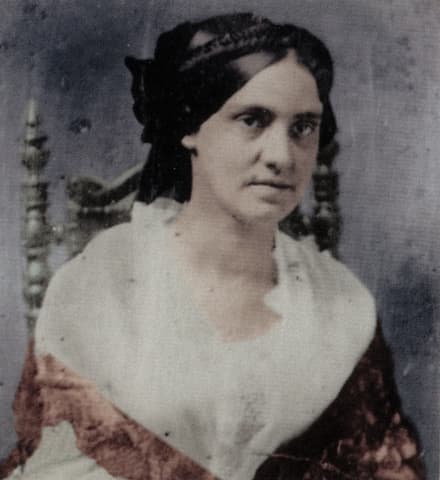
American · Medicine · Literature
Phoebe Pember
August 18, 1823 – March 4, 1913
Early Life and Background
Phoebe Yates Levy Pember (born August 18, 1823) emerged from the distinctive milieu of the antebellum Jewish South.[2][4][5][6] She was born in Charleston, South Carolina, into the prosperous Levy family, one of several Jewish merchant families that had achieved social and economic prominence in the city.[1][4][5][6] Her father, Jacob Clavius Levy, was a successful businessman, and her mother, Fanny Yates Levy, was socially active and sometimes described as an actress or cultured figure in local society.[1][5][7] Phoebe was one of numerous children—National Park Service records identify her as the fourth of seven—growing up surrounded by siblings and extended kin.[1][4][5][6]
Charleston in the 1820s and 1830s was a major port and cultural center, with a significant and well-established Jewish community. The Levys occupied an elite position in this world, socializing with the city’s leading families and participating in civic life.[1][6][11] Although detailed documentation of Pember’s formal education is scarce, the family’s wealth and cosmopolitan connections suggest that she enjoyed more educational and cultural opportunities than many Southern women of her generation.[1][4][6] Her upbringing instilled skills in household management, polite conversation, and social diplomacy—abilities she would later deploy in the crisis conditions of a wartime hospital.
In the 1850s, the Levy family relocated from Charleston to Savannah, Georgia, another important Southern port city with a growing Jewish population.[4] This move expanded Phoebe’s regional experience and social network, embedding her more deeply in the upper-tier society of the Deep South. Savannah would later become a key place of residence for her and the site of her eventual burial, symbolically anchoring her life within the broader geography of the Confederate home front.[1][4]
Marriage, Widowhood, and the Road to War
In 1856, at age thirty‑three, Phoebe Yates Levy married Thomas Pember, a Christian man from Boston, Massachusetts.[1][5][7][11][12] The union was noteworthy as an interfaith and cross‑regional marriage, linking a Southern Jewish woman to a New England Protestant merchant family. After their marriage, the couple lived in the North for a period, but soon Thomas developed tuberculosis.[1][7][12] Seeking a more congenial climate, they moved back to the South, with Phoebe assuming an increasingly demanding caregiving role as his health declined.[1][7][12]
Thomas Pember died in July 1861, in the first year of the American Civil War.[5][12] Phoebe, childless and now a widow, returned for a time to live with her family, then residing in Marietta, Georgia.[12] Shortly thereafter she relocated to Richmond, Virginia, capital of the Confederacy.[12] These transitions were critical in shaping her future: widowhood gave her a degree of personal autonomy unusual for married Southern women, and her experience nursing a husband with a chronic, fatal illness prepared her emotionally and practically for the rigors of wartime medical work.[1][7][9]
Her interfaith marriage and subsequent widowhood also placed her at a distinctive intersection of cultural identities. Pember’s later writings describe herself as a proud yet assimilated Jew, fully integrated into the tight‑knit elite circles of the Confederate South while maintaining a sense of Jewish heritage.[3][6] This dual positioning would later inform how she navigated the social politics of Richmond and the hospital environment at Chimborazo.
Appointment to Chimborazo Hospital and Career Beginnings
The turning point in Pember’s life came in late 1862. After moving to Richmond, she was approached by Mary Pope Randolph, wife of Confederate Secretary of War George W. Randolph, who invited her to serve as matron of the vast Chimborazo Hospital complex on the outskirts of the city.[6][11] Chimborazo, at its height, was the largest military hospital in the Confederacy and among the largest in the world, consisting of multiple divisions and treating tens of thousands of patients over the course of the war.[1][4][8][9][11]
In December 1862, Pember accepted the appointment and became the first female administrator at Chimborazo and chief matron of Hospital No. 2 (Second Division), making her the first woman on the hospital’s official staff.[1][3][4][9][11][14] Her responsibilities encompassed nursing operations, housekeeping, food preparation, and, critically, the distribution and control of medical whiskey for her division.[3][4][8][9] She managed diets for over 700 patients at a time and, over the course of the war, more than 15,000 soldiers came under her immediate care.[2][7][9]
Pember’s appointment represented a significant departure from prevailing gender norms. In the Confederate South, women’s service was often confined to informal nursing, sewing, or charitable relief. By contrast, she held a formally recognized, authoritative administrative position within a major military institution, supervising male orderlies and interacting as an equal with surgeons and officers.[3][4][9] Her Jewish background added another layer of novelty, making her among the first Jewish women documented as a high‑level hospital administrator in the Confederacy.[3][6][10]
Work and Accomplishments at Chimborazo Hospital
From December 1862 until the end of the war in 1865, Pember served continuously as chief matron of Hospital No. 2 at Chimborazo.[1][4][9][14] Daily life in the hospital was characterized by overcrowding, chronic supply shortages, and the grim realities of nineteenth‑century surgery and infectious disease. Pember’s duties ranged from overseeing bed assignments and meal preparation to assisting surgeons during operations, sometimes conducted with minimal or inadequate anesthesia.[3][6][8]
One of her most critical responsibilities involved the regulation of whiskey, then widely used as a stimulant and anesthetic adjunct. Confederate soldiers and even staff often attempted to divert whiskey for non‑medical use. Pember became famous for her strict enforcement of rules, including a widely cited incident in which she confronted a staff member attempting to steal whiskey and held him at gunpoint until he relinquished the contraband.[3][6][9] This episode, recounted in her memoir and repeated in later biographies, illustrates both the chaos of wartime hospitals and her determination to protect patient care from corruption and abuse.
Pember also engaged in extensive direct nursing. She prepared special diets, supervised the application and changing of dressings, and offered what modern observers would call palliative care to terminally ill soldiers.[3][6][8] She wrote letters home for dying patients, provided spiritual comfort regardless of denominational affiliation, and attempted to create a semblance of order and cleanliness in an environment where sanitation standards were often minimal by modern measures.[3][4][6][9]
Her administrative abilities were equally crucial. She managed storerooms, negotiated with quartermasters, and kept careful track of supplies, all while navigating military hierarchy and the expectations of Richmond’s civilian elite.[3][4][9] Accounts emphasize that her personal integrity and organizational skill won her the respect of surgeons and soldiers alike, even as she had to contend with occasional hostility from men unaccustomed to taking direction from a woman.[4][6][9]
Major Works: A Southern Woman’s Story
After the Confederate defeat and the end of her service at Chimborazo in 1865, Pember eventually turned her wartime experiences into a literary work. In 1879, she published A Southern Woman’s Story: Life in Confederate Richmond, her memoir of life in the capital and, especially, at Chimborazo Hospital.[1][3][4][6][13] The book first appeared in serial form and then as a complete volume, quickly attracting attention among veterans and historians.
The memoir offers an unusually candid and detailed portrayal of the Confederate home front. Pember describes the logistical challenges of running a large hospital, the moral dilemmas she faced in rationing scarce resources, and the personal struggles of soldiers facing amputations, infection, and death.[1][3][6][13] She balances humor and irony with an unflinching account of suffering, painting vivid scenes of ward life, Richmond society, and her own confrontations with hospital staff over discipline and alcohol.
Historians have praised the work for its realism and narrative power. The Jewish Virtual Library notes that eminent Civil War historian Douglas Southall Freeman rated A Southern Woman’s Story as "the most realistic treatment of the war" ever published.[6][13] The memoir has become a landmark text in women’s history because it documents the experiences of a woman not simply as a passive observer but as an active administrator and caregiver in a major military institution.[3][6]
The book also provides crucial insights into Jewish identity in the Confederate South. Pember reflects on her position as a Jewish woman who was both proud of her heritage and deeply integrated into the Southern elite.[3][6] Her observations about religious tolerance, social snobbery, and the complexities of loyalty add nuance to existing narratives of Southern Jewry and the Civil War.
Awards, Honors, and Later Recognition
During and after the war, Pember’s work earned her informal honors from those she served. Confederate veterans remembered her as a beloved caretaker, and postwar veterans’ organizations are reported to have honored her for her devotion and service, although specific dates and formal titles of these recognitions are not well documented in surviving sources.[4][6]
Over time, her memoir became a standard reference for scholars of Civil War medicine and women’s history, leading to renewed editions and inclusion in academic and popular accounts of the conflict.[1][3][4][13] Institutions such as the National Park Service and the Jewish Women’s Archive have produced biographical profiles highlighting her significance as a pioneering hospital matron.[1][3][4]
A notable twentieth‑century honor came in 1995, when the U.S. Postal Service issued a Civil War commemorative stamp featuring Pember’s portrait as part of its "Women on Stamps" series.[8] The National Postal Museum notes that the stamp recognized her work at Chimborazo Hospital and placed her in a broader narrative of women "saving lives and caring for the wounded" during the Civil War.[8] This federal recognition further cemented her status as a national figure in the history of military medicine.
Personal Life and Character
Pember’s personal life was marked by both privilege and hardship. As a young woman, her position in the Levy family afforded her comfort and access to elite social circles in Charleston and Savannah.[1][4][6] Her marriage to Thomas Pember introduced her to Northern society and challenged conventional expectations about endogamy in Southern Jewish communities.[1][5][6]
Widowhood, however, imposed emotional and practical burdens. Sources emphasize that she was childless and that the death of her husband left her with both grief and a degree of independence.[5][12] Her letters and later memoir indicate a strong sense of duty, resilience, and moral conviction. She was known for her firm yet compassionate manner, combining what contemporaries described as "feminine charms" with an uncompromising commitment to patient welfare.[3]
Pember’s writings and anecdotes preserved by others suggest a personality that was observant, ironic, and unafraid to challenge authority when necessary. Her famous confrontation over whiskey theft, her readiness to resist improper demands from surgeons or officers, and her capacity to navigate complex social hierarchies all point to a woman who used both wit and resolve to assert her authority in a male‑dominated environment.[3][6][9]
Legacy and Historical Impact
Phoebe Pember’s legacy rests on three intertwined contributions: her administrative and nursing workmemoirJewish woman in Confederate leadership
First, her service as chief matron of Hospital No. 2 demonstrated that women could effectively command complex medical operations in wartime. By managing logistics, enforcing discipline, and providing direct care, she broadened contemporary understandings of what women could do within military institutions.[3][4][9] Her example contributed to the gradual expansion of women’s roles in hospital administration and the professionalization of nursing in the late nineteenth and early twentieth centuries.
Second, A Southern Woman’s Story has had lasting historiographical influence. It remains one of the most frequently cited primary sources on Confederate Richmond and Civil War hospital conditions, used by scholars to reconstruct daily life, medical practices, and social relations in the Southern capital.[1][3][4][6][13] The memoir’s blend of vivid storytelling and detailed observation makes it valuable both as literature and as documentary evidence. It also helps correct earlier accounts that marginalized or romanticized women’s wartime experiences by showing the harsh realities faced by female caregivers.
Third, Pember’s life illuminates the experiences of Southern Jews and, specifically, Jewish women in the Civil War era. Her position within elite circles, her marriage across religious lines, and her central role in a Confederate institution complicate simplistic narratives about loyalty and identity.[3][6] She stands as a key figure in Jewish women’s history, embodying the ways in which minority women navigated, and sometimes led, within majority cultures.
Modern institutions have recognized these contributions through interpretive exhibits, biographical essays, and public programming. The Richmond National Battlefield Park includes her story in its narratives of Chimborazo Hospital, and the Jewish Women’s Archive situates her within a broader tradition of Jewish women’s activism and professional service.[1][3][4] The 1995 postal commemorative further broadened her visibility, introducing her to a national audience and visually embedding her in the iconography of American history.[8]
Later Life, Travel, and Death
In the decades following the Civil War, Pember did not return to hospital administration but remained active and mobile. Sources indicate that she traveled extensively
Her postwar life also included interactions with Confederate veterans’ organizations, which honored her contributions, though specific ceremonies and dates are not clearly documented in surviving accounts.[4][6] During these years, her memoir circulated among readers and scholars interested in Civil War remembrance, contributing to debates about the nature of Confederate sacrifice and the complexities of Southern society.
Phoebe Pember’s life came to an end on March 4, 1913, when she died of breast cancer while visiting Pittsburgh, Pennsylvania.[1][4][5] Her body was transported to Savannah, Georgia, where she was buried in Laurel Grove Cemetery, a resting place for many prominent local figures.[1][4] Her death at age eighty‑nine marked the passing of one of the last major female civilian leaders directly connected to Confederate medical institutions.
More than a century later, her name remains closely tied to Chimborazo Hospital and to the broader story of women in the Civil War. Through her administrative service, her memoir, and her later recognition in public history, Phoebe Yates Levy Pember continues to offer scholars and the public a nuanced, first‑hand perspective on war, gender, medicine, and identity in nineteenth‑century America.
Dated achievements
7 indexed.
- Aug181823Medicine
Birth of Phoebe Yates Levy (Pember) in Charleston, South Carolina
Born August 18, 1823, in Charleston, South Carolina, into the prominent Jewish Levy family, later becoming a pioneering Civil War hospital matron and memoirist.
View details Phoebe Yates Levy Pember – U.S. National Park Service - Jan011856Medicine
Marriage to Thomas Pember
Marries Bostonian Thomas Pember in 1856, a cross-regional and interfaith union that later shapes her path toward Civil War hospital work.