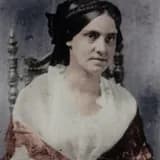
Honored on a 1995 U.S. Postal Service Civil War commemorative stamp recognizing her service as a Chimborazo Hospital matron and administrator.
In 1995, with the issuance of a Civil War commemorative stamp, the U.S. Postal Service honored Phoebe Pember for her work as a hospital matron and administrator at Chimborazo Hospital in Richmond, Virginia.[8] While the exact day of release is not specified in accessible sources, the stamp formed part of a series recognizing women who saved lives and cared for the wounded during the Civil War.[8]
The stamp’s design featured Pember’s portrait and visually linked her to other notable female caregivers, symbolically integrating her into a national narrative of humanitarian service.[8] This federal recognition came more than a century after her death, reflecting the growing twentieth‑century scholarly and public appreciation for women’s contributions to wartime medicine. By highlighting her management of diets for hundreds of patients and her strict regulation of whiskey for medical purposes only, the Postal Service foregrounded aspects of her work that had long been celebrated by historians of Civil War hospitals.[4][8][9]
The commemorative stamp had broader cultural significance. It brought a Jewish Southern woman, once embedded in Confederate Richmond, into the mainstream iconography of American history, reaching audiences who might never encounter her memoir.[3][6][8] It also signaled the institutionalization of women’s history within public memory—placing Pember alongside figures like Clara Barton and Dorothea Dix as part of a recognized pantheon of female medical pioneers. The stamp’s release helped spur renewed interest in A Southern Woman’s Story and in interpretive exhibits at sites such as Richmond National Battlefield Park and the National Postal Museum, ensuring that Pember’s Civil War service would continue to be studied, taught, and commemorated.[1][4][8]