← All women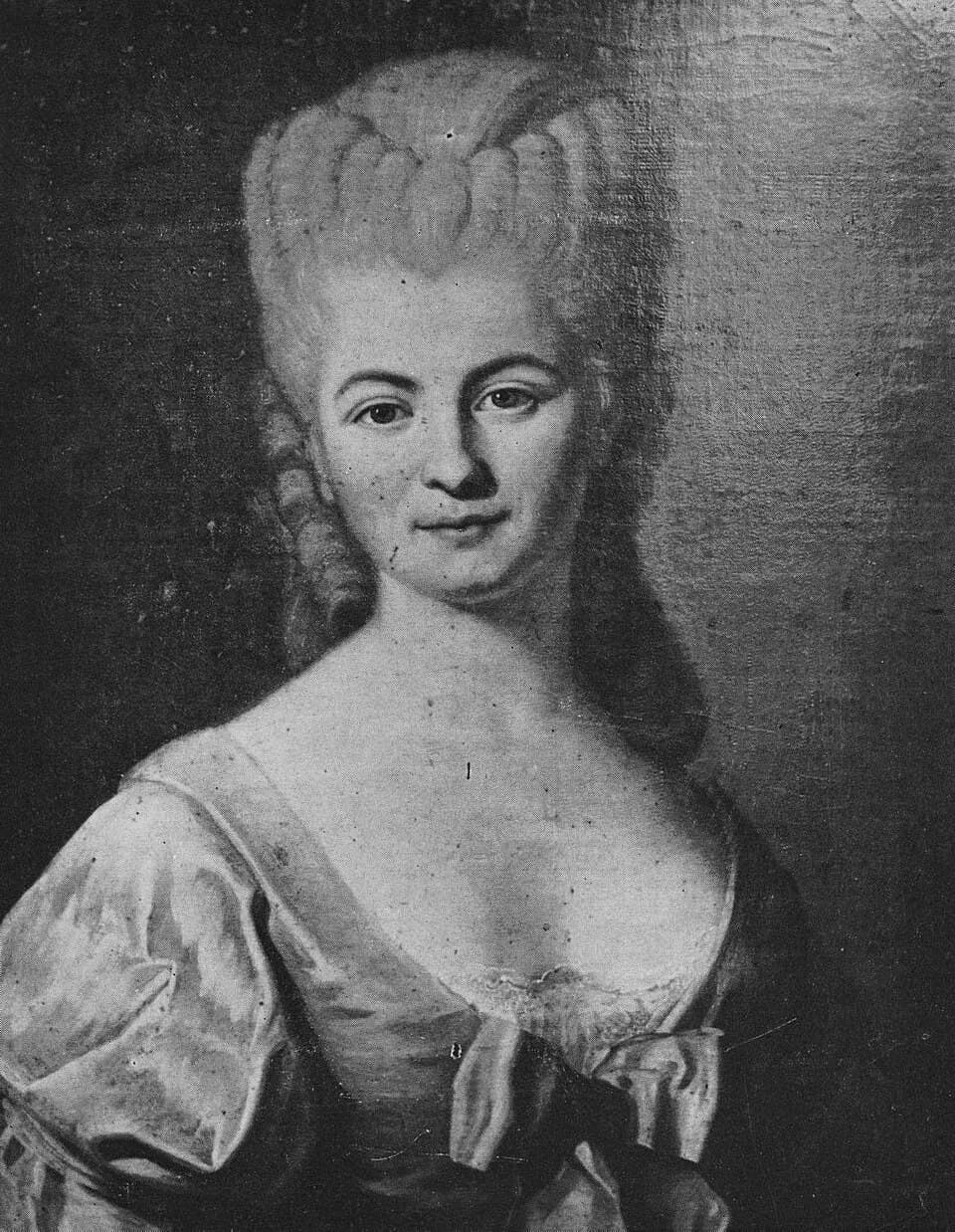
French · Science
Nicole-Reine Etable de la Brière Lepaute
January 5, 1723 – December 6, 1788
Early life and background
Nicole-Reine Étable de la Brière, later known as Nicole-Reine Lepaute, was born on 5 January 1723 in the Palais du Luxembourg in Paris.[1][7][13][14] Her father, Jean Étable de la Brière, served in the household of Elisabeth d’Orléans, the former Queen of Spain, which explains the family’s residence in the palace.[1][7][10][13] Although the family belonged to the lower ranks of the French nobility or to the upper servant class attached to the court, they did not enjoy the full educational advantages of the high aristocracy.[8][10][14]
Sources agree that Nicole-Reine showed an early aptitude for mathematics and related subjects.[7][13][16] Biographical sketches from the Bibliothèque nationale de France and later historians describe her as “animée par une très grande curiosité” and attracted to arithmetic, geometry, and astronomy from childhood, despite the absence of formal scientific schooling for girls.[13][16] Her education appears to have been largely self-directed, supplemented by reading and informal instruction within cultivated circles linked to the Luxembourg Palace.[14][16]
Growing up during the Enlightenment, she lived in a period when Newtonian gravitational theory and precision astronomical observation were rapidly transforming European science. Paris was a major intellectual centre, and the proximity of the royal court and emerging scientific institutions created an environment in which a gifted autodidact could occasionally cross rigid boundaries of gender and class, though usually only through personal patronage and collaboration.[7][13][17][19]
Marriage and entry into scientific circles
Around the age of twenty‑five, in 1749, Nicole-Reine married Jean-André Lepaute, a prominent horloger du roi (clockmaker to the king).[1][6][14][16] Jean-André Lepaute was known for installing important public clocks, including mechanisms at the Palais du Luxembourg itself.[1][9] Through this marriage, Nicole-Reine entered a professional milieu in which precision mechanics, timekeeping, and astronomy were closely intertwined.
The couple lived and worked together, and contemporary accounts indicate that Nicole-Reine quickly became an active collaborator in her husband’s technical projects.[4][7][13][16] While Jean-André designed and built clocks, she undertook the complex calculations needed to determine pendulum lengths and oscillation periods for different latitudes and gravitational conditions. This work connected practical horology to the theoretical frameworks of celestial mechanics and terrestrial gravity.
Her participation in these projects brought her to the attention of leading scientific figures. In particular, the astronomer Joseph-Jérôme Lefrançois de Lalande (usually cited as Jérôme Lalande) became a close friend and intellectual partner.[9][13][17][18] Lalande recognized her mathematical ability and later wrote about the extent of her contribution, noting both the rigour of her numerical work and the dedication with which she pursued long, repetitive computations.[7][13][18]
Early scientific work: pendulum tables and horology
One of Nicole-Reine Lepaute’s first identifiable scientific contributions appears in the realm of clockmaking. For her husband’s treatise, the Traité d’horlogerie, published in 1755, she computed detailed tables of pendulum oscillations and lengths.[4][7][13][14] These tables, used to design accurate clocks, linked everyday timekeeping to the gravitational constant and the length of the second as defined by astronomical observations.
In this work, Lepaute had to account for how small variations in pendulum length and local gravitational acceleration affected the period of oscillation. Although the treatise was published under Jean-André’s name, later historical analyses credit Nicole-Reine with much of the computational labour behind these tables.[4][7][13] The episode illustrates a recurrent pattern of the era: women’s scientific work was frequently embedded in publications attributed to male relatives or colleagues.
These horological calculations also served as a kind of gateway into formal astronomy. The problem of keeping accurate time was central to navigation and to the determination of longitude at sea; it depended on the comparison of mechanical clock time with celestial events such as transits of stars or eclipses of Jupiter’s moons. By mastering the mathematics of pendulums, Lepaute prepared herself for more advanced tasks in celestial mechanics and the construction of astronomical ephemerides.[7][13][17]
Collaboration with Lalande and Clairaut
By the late 1750s, Nicole-Reine Lepaute was working closely with Jérôme Lalande and the mathematician Alexis-Claude Clairaut on some of the most challenging problems of eighteenth‑century astronomy.[6][7][13][17] Around 1757 she began what sources describe as her first major astronomical collaboration, undertaking extensive computations needed for theoretical predictions and observational planning.[6][14]
Her role was that of a highly skilled human computer, a term used at the time for people who carried out long series of calculations by hand. Yet she did more than merely follow instructions; the complexity of the tasks, which involved iterative approximations and corrections, required understanding of the underlying physics and geometry. Lalande later emphasised her capacity to sustain months of intense numerical work with remarkable accuracy.[7][13][18]
Through these collaborations, Lepaute became embedded in networks connected to the Paris Observatory and the Académie des sciences, even though institutional membership generally remained closed to women.[13][17][19] Lalande used his position to ensure that her contributions were acknowledged in prefaces and reports, and he encouraged other astronomers to rely on her computations, strengthening her reputation within the community.
Halley’s Comet and the prediction of 1759
Lepaute is best known for her role in predicting the return of Halley’s Comet in the eighteenth century. Edward Halley had earlier suggested that a comet observed in 1682 would reappear around 1758, but his estimate did not fully account for the gravitational perturbations exerted by Jupiter and Saturn. In the mid‑1750s, Alexis-Claude Clairaut undertook to refine this prediction using Newtonian mechanics, an endeavor that demanded thousands of painstaking calculations.[6][7][13][17]
Clairaut enlisted Lalande and Nicole-Reine Lepaute to carry out these computations. Working together over many months, they calculated how the orbits of Jupiter and Saturn would alter the comet’s trajectory and timing.[6][7][13][14] According to later accounts, the work was so intense that Lepaute scarcely slept or ate during long periods of calculation, driven by the goal of achieving high precision.[14][19]
The team eventually predicted that the comet would reach perihelion in early 1759, a refinement of Halley’s original estimate.[6][13][19] When the comet did indeed return on a date close to their forecast, the result was widely hailed as a triumph of Newtonian gravitation and applied celestial mechanics. Although Clairaut’s name appeared most prominently in printed accounts, historians and some contemporaries acknowledged that Lepaute’s sustained computational labour was indispensable to the achievement.[7][13][17][19]
This episode not only demonstrated the predictive power of theoretical physics but also highlighted the crucial, if often invisible, role of human computers—among them women like Lepaute—in transforming equations into testable astronomical predictions.
Transit of Venus and eclipse predictions
Following the success of the Halley’s Comet project, Lepaute continued working with Lalande on other high‑profile astronomical problems. One major focus was the transit of Venus, a rare event in which Venus passes directly between the Earth and the Sun. Transits occur in pairs separated by more than a century, and observations of the 18th‑century transits were crucial for determining the astronomical unit, the average distance between the Earth and the Sun.
In connection with the transit visible in 1761, Lepaute contributed to the calculations and reduction of observations from different sites.[6][13][17] Sources report that she published or helped publish computations for all observations made during the transit, providing astronomers with the numerical data needed to apply triangulation methods to estimate the scale of the solar system.[6][1][17] These efforts integrated observational reports from multiple countries at a time when international scientific cooperation was emblematic of Enlightenment ideals.
Lepaute also became known for her work on solar eclipses. The best‑documented case is the annular solar eclipse of 1 April 1764, whose duration and apparent size she calculated for different European locations.[6][8][14] Predicting such events required detailed lunar and solar ephemerides and careful attention to parallax and refraction. Her results allowed observers to verify models of lunar motion and improved confidence in the ephemerides then in use.
The combination of transit and eclipse calculations positioned Lepaute at the centre of observational planning and data analysis for some of the century’s most important astronomical events, even though her contributions often remained in the background of official reports.
Ephemerides and the Connaissance des temps
Beyond discrete events like comets and eclipses, Nicole-Reine Lepaute’s enduring contribution lay in the ongoing production of astronomical ephemerides—tables listing the predicted positions of celestial bodies for each day of the year. Such tables were essential for navigation, timekeeping, and many branches of astronomy.
Lepaute worked extensively on the Connaissance des temps, the official French astronomical almanac published under the auspices of the Académie des sciences.[7][13][17][18] Together with Lalande, she calculated the positions of the Sun, Moon, and planets, as well as the predicted times of eclipses and occultations. This work involved long chains of computation and verification, updated year after year as observational data refined planetary theories.
In 1774, she began contributing to or producing the Éphémérides de l’Académie, a series of tables that extended and complemented the Connaissance des temps by providing more detailed positional data.[1][17] Her involvement continued until around 1784, by which time she had spent roughly a decade in this sustained enterprise of ephemeris production.[1] While exact dates of individual volumes and her specific share in each remain hard to disentangle, archival sources and later historians concur that her role was central, particularly for the Moon and inner planets.[7][13][17]
This work underpinned not only theoretical astronomy but also practical navigation and surveying. Ephemerides were used throughout Europe and in its maritime empires, meaning that Lepaute’s computations had global impact, even though her name seldom appeared on the title pages.
Recognition, Académie de Béziers, and honours
During her lifetime, Nicole-Reine Lepaute’s contributions were recognised within certain scientific circles, though institutional honours remained limited by gender norms. Lalande frequently praised her in prefaces and correspondence, and he is credited with helping secure her association with the Académie de Béziers, a provincial learned society more open to acknowledging women’s intellectual work.[17][18]
While details about her membership status and the date of her association with the Académie de Béziers are scarce, later commentators have highlighted it as evidence that at least some institutions were willing to publicly recognise a woman’s role in astronomy and mathematics in the mid‑eighteenth century.[17][18] Nonetheless, she did not become a member of the Paris Académie des sciences, reflecting the persistent exclusion of women from the most prestigious scientific bodies of the era.
Centuries later, her reputation was further solidified through astronomical naming. In 1935, the International Astronomical Union gave her name to a lunar crater, Lepaute, acknowledging her contributions to celestial mechanics and ephemerides.[1][11][12] Additionally, the asteroid 7720 Lepaute was named in her honour, linking her legacy to the minor planets whose orbits are now computed using methods descended from the work she helped pioneer.[11][12]
These posthumous honours reflect a broader twentieth‑century reassessment of women’s roles in the history of science. As historians examined the labour behind major achievements like the prediction of Halley’s Comet’s return, Lepaute emerged as a key figure in the lineage of women astronomers and human computers, alongside contemporaries such as Émilie du Châtelet and Caroline Herschel.[5][6][19]
Personal life and character
Information about Nicole-Reine Lepaute’s personal life is fragmentary, but available sources depict a woman of strong intellect, perseverance, and modesty. Her marriage to Jean-André Lepaute appears to have been both a personal partnership and a professional collaboration, grounded in shared interest in precision timekeeping and astronomical observation.[4][7][13][16]
Contemporary accounts and later biographies emphasise her extraordinary capacity for sustained, meticulous work. During the phase of calculations for Halley’s Comet, she was said to have devoted almost all her waking hours to computation, neglecting food and sleep in order to meet deadlines.[14][19] Such descriptions may be somewhat stylised, but they underline the scale of the labour involved and the devotion required to carry it out without mechanical aids.
There is little evidence regarding children or extended family life, a silence that reflects both the biases of the historical record—where women’s familial roles were often taken for granted and left unremarked—and the focus of later biographers on her scientific contributions. Some accounts suggest that she suffered from poor health in her later years, possibly aggravated by the intensity of her work, though specific diagnoses are not documented.[7][13]
Several modern writers have noted that her contemporaries sometimes referred to her as "Hortense", leading to confusion in later sources that list her as "Nicole-Reine Hortense Lepaute" or similar variants.[6][10][11] This onomastic tangle has required careful archival work to clarify that "Étable de la Brière" was her family name and that "Hortense" appears to have been an erroneous addition or secondary given name rather than a standard part of her identity.
Later life and death
In the final decade of her life, Nicole-Reine Lepaute continued to contribute to ephemerides and eclipse predictions, though at a somewhat reduced pace as her health declined.[7][13] She remained in contact with Lalande and other astronomers, and her expertise was still sought for complex calculations.
She died on 6 December 1788 in Saint-Cloud, just outside Paris.[7][11][13][14] The location reflects a modest social ascent from her birth in the service quarters of the Luxembourg Palace to a life on the outskirts of the capital’s elite spaces. Her husband Jean-André died only a few months later, closing a partnership that had spanned both personal and scientific domains.[14]
Her death occurred on the eve of the French Revolution, a turning point that would transform the structures of patronage, academies, and scientific institutions in which she had operated. The upheavals of the 1790s and early 1800s may partially explain why her contributions, embedded in collaborative works and institutional tables, remained relatively obscure in canonical histories of astronomy for many decades.
Legacy and historical impact
Nicole-Reine Lepaute’s legacy lies in her role as a pioneering woman astronomer and human computer during the Enlightenment and in the tangible impact of her computations on eighteenth‑century science. Her work on Halley’s Comet helped provide one of the most celebrated confirmations of Newtonian gravitational theory, demonstrating that the complex interactions of celestial bodies could be predicted with remarkable accuracy using mathematics and persistent calculation.[6][7][13][19]
Her predictions for eclipses and transits contributed to improved values of astronomical constants and supported global observational campaigns that were hallmarks of Enlightenment science. Through the Connaissance des temps and related ephemerides, her calculations circulated widely among navigators, surveyors, clockmakers, and astronomers, shaping how time and space were measured in practice.[7][13][17]
Historically, Lepaute also exemplifies the often-hidden labour of women in science. Much of her work appeared under the names of male collaborators or institutional compilations, and only careful historiography—drawing on memoirs, correspondence, and internal notes—has made it possible to reconstruct her role.[7][13][19] As a result, she has become a key figure in studies of gender and scientific work, illustrating how women contributed to major advances even when excluded from formal academies and professional posts.
Modern commemorations, including the naming of the Lepaute lunar crater and the asteroid 7720 Lepaute, serve both as recognition of her individual achievements and as symbolic correctives to historical neglect.[1][11][12] Exhibitions and essays from institutions such as the Paris Observatory, the French Senate archives, and national heritage organisations have further highlighted her as one of the central female figures of eighteenth‑century French astronomy.[1][17][19]
In the broader narrative of women’s history, Nicole-Reine Lepaute stands alongside other Enlightenment figures like Émilie du Châtelet and Caroline Herschel as evidence that women did not merely observe the scientific revolution from the sidelines. Instead, they participated in its most challenging theoretical and computational tasks, often under conditions that rendered their contributions fragile in the historical record. Recovering and documenting her life and work thus enriches both the history of astronomy and the history of women in science.
Dated achievements
3 indexed.
- Jan051723Science
Birth of Nicole-Reine Étable de la Brière at the Palais du Luxembourg
Born on 5 January 1723 in the Palais du Luxembourg in Paris, Nicole-Reine Étable de la Brière would become a pioneering French astronomical calculator.
View details Nicole-Reine Lepaute – MacTutor History of Mathematics - Apr011764