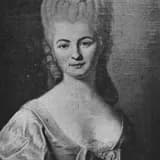
Nicole-Reine Lepaute died on 6 December 1788 in Saint-Cloud near Paris, after a pioneering career in astronomical calculation.
On 6 December 1788, Nicole-Reine Lepaute died in Saint-Cloud, near Paris, closing the life of one of the eighteenth century’s most accomplished women in astronomy and mathematical calculation. Her death came just months before that of her husband, the royal clockmaker Jean-André Lepaute, with whom she had long collaborated.
By the time of her passing at age sixty‑five, Nicole-Reine had helped compute the return of Halley’s Comet, contributed to the prediction of eclipses and transits of Venus, and produced extensive ephemerides for the Connaissance des temps and the Éphémérides de l’Académie. Her work, though often published under others’ names or in institutional compilations, was widely used by astronomers, navigators, and timekeepers across Europe.
Her final years were marked by declining health but continued recognition among scientific peers. The fact that she died in Saint-Cloud, rather than in the palace where she was born, symbolizes the social mobility she achieved through intellectual labour: from a servant’s daughter at the Palais du Luxembourg to a respected contributor in elite scientific circles.
The date of her death has since served historians as a marker for assessing women’s participation in Enlightenment science. Later honours—including the naming of a lunar crater and an asteroid—attest that her reputation outlived the era’s gendered conventions, securing her a lasting place in the history of astronomy.