← All women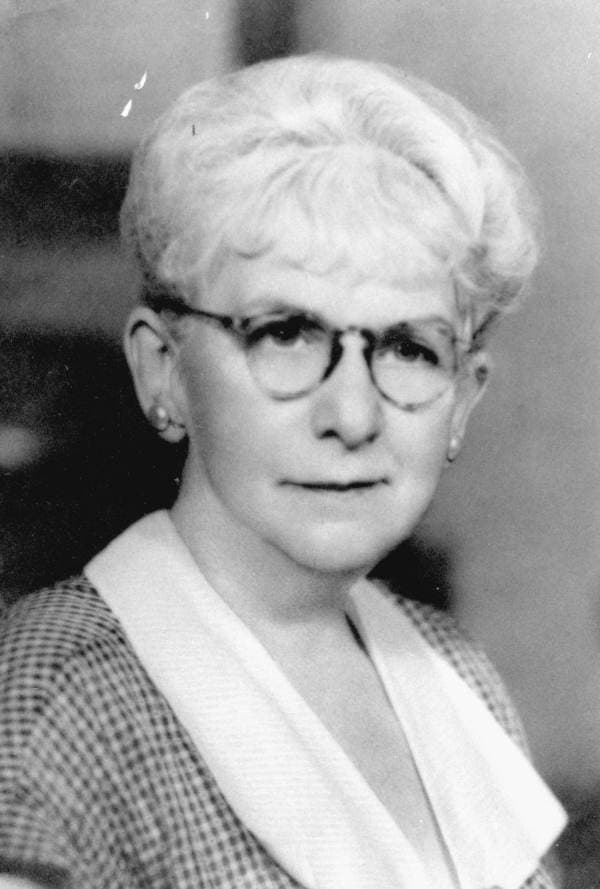
American · Activism · Literature
Marjory Stoneman Douglas
April 7, 1890 – May 14, 1998
Early Life and Family Background
Marjory Stoneman Douglas was born on April 7, 1890, in Minneapolis, Minnesota, to Frank Bryant Stoneman and Florence "Lillian" Trefethen Stoneman.[1][2][4][7][17] Her father was a newspaper editor who later became a judge, and her mother was a concert violinist.[1][2] This combination of journalistic engagement with public affairs and artistic sensibility deeply influenced Douglas’s intellectual development.
In 1893 the family moved from Minnesota to Providence, Rhode Island, and later to Massachusetts, where Douglas spent much of her childhood.[4][9][15] Her parents’ marriage was troubled, and they separated when she was young; Douglas was raised primarily by her mother and extended family near Boston.[1][9] She experienced periods of emotional strain in her youth, including time spent caring for her mother, who struggled with mental health issues.[1][9] These early challenges helped instill in her a sense of independence and resilience.
Douglas attended schools in Massachusetts and demonstrated strong literary and oratorical talents. She wrote a "Parting Ode" for her high school graduation in 1908, signaling an early aptitude for public expression.[17] She went on to study English literature at Wellesley College, one of the leading women’s colleges of the era. There she earned straight A’s and was elected Class Orator, an honor that recognized both her academic distinction and her speaking ability.[7][12][15] Her experience at Wellesley placed her within a network of educated, activist women and reinforced her belief in women’s capacity for public leadership.
Education and Early Adulthood
Douglas graduated from Wellesley College in 1912 with a degree in English.[7][12][15] Shortly afterward, she married Kenneth Douglas, a charismatic but unstable man who later proved to be involved in fraud.[1][9][16] The marriage quickly deteriorated and ended in divorce, an experience she later described as a painful but formative episode that sharpened her sense of judgment and self-reliance.[1][9][16] She resumed using her maiden name, adding "Douglas" to honor but not remain tethered to the brief marriage.
Following her divorce, Douglas sought a new start. In 1915 she moved to Miami, Florida, where her father had become editor of a fledgling newspaper, the Miami Herald.[2][9][15][16] At that time, Miami was still a relatively small "frontier" town compared to northern cities.[16] Douglas joined the Herald as a reporter and later as an assistant editor, quickly gaining a reputation for incisive writing and independent thinking.[9][11][14]
Career Beginnings at the Miami Herald
Douglas’s work at the Miami Herald in the 1910s and early 1920s provided her first major platform in public life. She covered a wide range of topics, from local politics and social issues to human-interest stories.[9][11][14] Her reporting style was direct and compassionate, often highlighting the experiences of marginalized communities, including immigrants and Black Floridians.
She also began writing short stories and essays, many of which were published in magazines and newspapers. Her fiction often explored themes of justice, nature, and human character. The publication of her story "The Peculiar Treasure of Kings" in The Saturday Evening Post on November 26, 1928, which received an O. Henry Award, marked a major milestone in her literary career and affirmed her national standing as a writer.[17]
During this period, Douglas became active in civic causes. She supported the women’s suffrage movement, speaking and organizing in favor of women’s right to vote in Florida.[1][11][15][18] She also expressed concern about racial inequality and other social injustices, reflecting a broad reformist outlook that would later inform her environmental advocacy.[11][16]
World War I Service and Expanding Public Roles
When the United States entered World War I on April 6, 1917, Douglas responded by enlisting in the U.S. Naval Reserve, becoming the first woman in Florida to do so.[1][15] The exact date of her enlistment is not documented, but sources emphasize that her decision came shortly after the war declaration and represented a significant break with gender norms of the time.[1][15] Her service was largely clerical, yet it signaled women’s growing participation in national defense roles and underscored her commitment to civic duty.
After the war, Douglas returned to Florida and continued her journalistic work while branching out as a freelance writer. She contributed fiction, essays, and reviews to regional and national publications. The skills she developed in reporting—clarity, curiosity, and the ability to translate complex issues into accessible prose—became central tools in her later environmental campaigns.
Turning Toward the Everglades
Douglas’s deep engagement with the Florida Everglades evolved gradually. In the 1920s and 1930s, she began to learn about south Florida’s hydrology and ecosystems through observation, reading, and conversations with scientists and conservationists.[9][15][20] She became aware that large-scale drainage schemes, canal construction, and agricultural expansion were damaging the wetlands and threatening wildlife and water supply.
In 1927 she served on the original committee advocating for the creation of Everglades National Park.[14] This involvement brought her into contact with national conservation networks and underscored the need for public education about the region. At the time, the Everglades were widely regarded as a "useless swamp" that should be drained for farming and development, a view she would spend much of her life contesting.[2][7][12]
Major Work: "The Everglades: River of Grass"
Douglas’s most influential work, The Everglades: River of Grass, was published in November 1947 as part of the Rivers of America series.[2][7][9][12][20] She spent about five years researching and writing the book, drawing on scientific studies, historical documents, and extensive travel throughout the region.[20] The book appeared just weeks before the official opening of Everglades National Park, giving the new park a powerful narrative framework.[9][20]
In River of Grass, Douglas advanced a revolutionary concept: the Everglades were not a static swamp but a slow-moving "river of grass", integral to the entire south Florida ecosystem.[2][7][12] She explained how water flowed from Lake Okeechobee southward through the marshes, supporting wildlife and replenishing aquifers, and how human efforts to drain and channel this water threatened ecological collapse.[9][20] Her prose blended science, history, and vivid description, making complex hydrological processes understandable to general readers.
The book quickly became a bestseller and has since been recognized as a classic of American environmental literature.[9][12] It transformed public perceptions of the Everglades, helping shift the region’s image from wasteland to ecological treasure. Conservationists, policymakers, and ordinary citizens drew on Douglas’s framing to argue for stronger protections and more sustainable water management.[7][9][12]
Environmental Activism and Friends of the Everglades
Following the publication of River of Grass, Douglas intensified her activism. She gave lectures, testified at public hearings, wrote articles, and organized grassroots opposition to projects that threatened the Everglades, such as new canals, drainage works, and large-scale real-estate developments.[1][9][12][15] Her stance frequently put her at odds with powerful economic and political interests, but she maintained a reputation for fearless, plain-spoken criticism.
In 1969, at age 79, Douglas founded Friends of the Everglades, a conservation organization dedicated to "preserve, protect, and restore the only Everglades in the world."[9][11][12][15] The group became a key voice in debates over water management and land use, mobilizing citizens to oppose environmentally damaging projects and support restoration initiatives. Douglas served as its president and remained closely involved in its work for many years.[9]
Throughout the latter half of the 20th century, Douglas’s activism contributed to major policy shifts. She opposed proposals for a massive jetport in the Big Cypress Swamp, criticized the operations of the Central and Southern Florida Flood Control District (later the South Florida Water Management District), and pressed for stricter pollution controls on agricultural runoff.[1][9][12] Her efforts often intersected with broader environmental movements, including opposition to wetlands destruction and recognition of ecosystems as integrated systems rather than isolated scenic locales.
Advocacy for Women’s Rights and Social Justice
In addition to environmental work, Douglas remained a committed advocate for women’s rights and social justice. She had supported woman suffrage as a young reporter and continued to speak for women’s political and economic equality throughout her life.[1][11][15][20] Her public persona—a forthright, elderly woman challenging officials and developers—became emblematic of women’s growing role in civic leadership.
Douglas also expressed concern about racial inequality and civil rights. Living in the American South during the era of segregation, she criticized discriminatory practices and supported reforms.[11][16] She recognized that environmental degradation often disproportionately affected poorer and minority communities and argued for conservation policies that considered human as well as ecological impacts.
Awards, Honors, and Recognition
Over the course of her long life, Douglas received numerous awards. Her early literary achievement, the O. Henry Award for "The Peculiar Treasure of Kings" published on November 26, 1928, highlighted her national stature as a writer.[17] As her environmental work gained prominence, she was honored by conservation and civic organizations across the country.
In 1991, the Florida Legislature passed the Marjory Stoneman Douglas Everglades Protection Act, a landmark law designed to restore and protect the Everglades.[17] Naming the statute after her acknowledged her central role in shaping public and legislative understanding of the region.
On September 29, 1993, President Bill Clinton awarded Douglas the Presidential Medal of Freedom, the highest civilian honor in the United States.[2][8][9][11] The citation recognized her "lifetime of work to preserve the Florida Everglades" and her status as one of the nation’s leading conservationists. She received the medal at age 103, symbolizing both her longevity and the sustained impact of her advocacy.
Douglas has also been honored posthumously through induction into the National Women’s Hall of Fame[12], designation as a notable figure in the Florida Artists Hall of Fame[3], and tributes by the U.S. Fish and Wildlife Service and other agencies.[3][9][12] Schools, state buildings, and environmental awards bearing her name further attest to her lasting influence.[3][14]
Personal Life and Character
Douglas’s personal life was marked by both hardship and fierce independence. Her brief and troubled marriage to Kenneth Douglas ended early, and she never remarried.[1][9][16] She had no children, though she maintained close friendships and mentoring relationships with younger activists, writers, and conservationists.
She lived for many decades in a modest house in Coconut Grove, Miami, which she purchased and began building in 1924.[17][20] The home later became a site of historical interest, as it was where she wrote The Everglades: River of Grass and hosted countless meetings and interviews related to Everglades activism.[20] Her lifestyle was relatively simple; she was known for her sharp wit, direct speech, and refusal to be intimidated by authority.
Physically, Douglas was slight, but her presence was formidable. She was often described as wearing large glasses and speaking in a strong, clear voice. Into advanced age she continued to address public meetings and scold officials who, in her view, endangered the Everglades. Her personality combined literary sensitivity with uncompromising moral conviction, making her a memorable figure in Florida and national public life.[1][9][13]
Later Life and Continued Advocacy
Douglas remained active well into her 90s and beyond. Even as her health declined, she continued to give interviews, write letters, and lend her name to environmental campaigns.[1][9] Friends of the Everglades and other organizations frequently consulted her, and she served as a symbolic elder stateswoman of conservation.
Her later years coincided with growing national and global concern about environmental issues, including water pollution, habitat loss, and climate change. Douglas’s long-standing arguments about the importance of ecosystems and the dangers of shortsighted development found new resonance in these discussions. Large-scale Everglades restoration initiatives undertaken in the 1990s and beyond owe much to the awareness she helped create.[9][12][18]
Douglas died on May 14, 1998, at her home in Coconut Grove, Florida, at the age of 108.[1][2][5][8][20] Obituaries and tributes hailed her as the "Mother of the Everglades" and "Guardian of the Glades," emphasizing both her persistence and her success in transforming public attitudes toward the region.[1][2][3][9]
Legacy and Historical Impact
Marjory Stoneman Douglas’s legacy is multifaceted. As a writer, she created one of the foundational texts of American environmental literature in The Everglades: River of Grass, a book that remains in print and continues to inform public understanding of wetlands and water management.[2][7][9][12][20] As an activist, she helped prevent or mitigate numerous destructive projects and inspired generations of conservationists to view the Everglades as a system requiring holistic restoration.
Her impact on policy is evident in the creation and evolution of Everglades National Park, the passage of the Marjory Stoneman Douglas Everglades Protection Act, and ongoing restoration programs that treat the region as an integrated watershed rather than isolated parcels of land.[9][12][17][20] Her framing of the Everglades as a "river of grass" has entered both scientific and popular vocabulary.
For women’s history, Douglas stands as a powerful example of a woman who, without holding formal political office, reshaped public agendas through writing, organizing, and moral leadership. She challenged gender norms by enlisting in the Naval Reserve during World War I, by serving as a prominent editorial voice in a major newspaper, and by leading a large conservation organization well into her later years.[1][11][15] Her recognition with the Presidential Medal of Freedom underscores the national significance of her contributions.
Douglas’s life also illustrates the long arc of social change. Born in the 19th century, she lived to see women gain the vote, the civil rights movement, and the emergence of modern environmentalism. Her work helped link these movements, emphasizing that ecological health and social justice are intertwined. Today, schools, buildings, and awards bearing her name, together with ongoing efforts by Friends of the Everglades and other groups, ensure that her vision of a protected, restored Everglades continues to shape policy and public imagination.
In sum, Marjory Stoneman Douglas occupies a central place in the history of American conservation and women’s activism. Her combination of literary skill, scientific insight, and unwavering courage made her one of the most influential voices in 20th-century environmental thought, and her legacy endures in the landscapes and laws she helped transform.
Dated achievements
7 indexed.
- Apr071890Activism
Birth of Marjory Stoneman Douglas
Born April 7, 1890, in Minneapolis, Minnesota, to editor Frank Bryant Stoneman and violinist Florence "Lillian" Trefethen Stoneman.
View details National Women's History Museum – Marjory Stoneman Douglas - Apr061917