← All women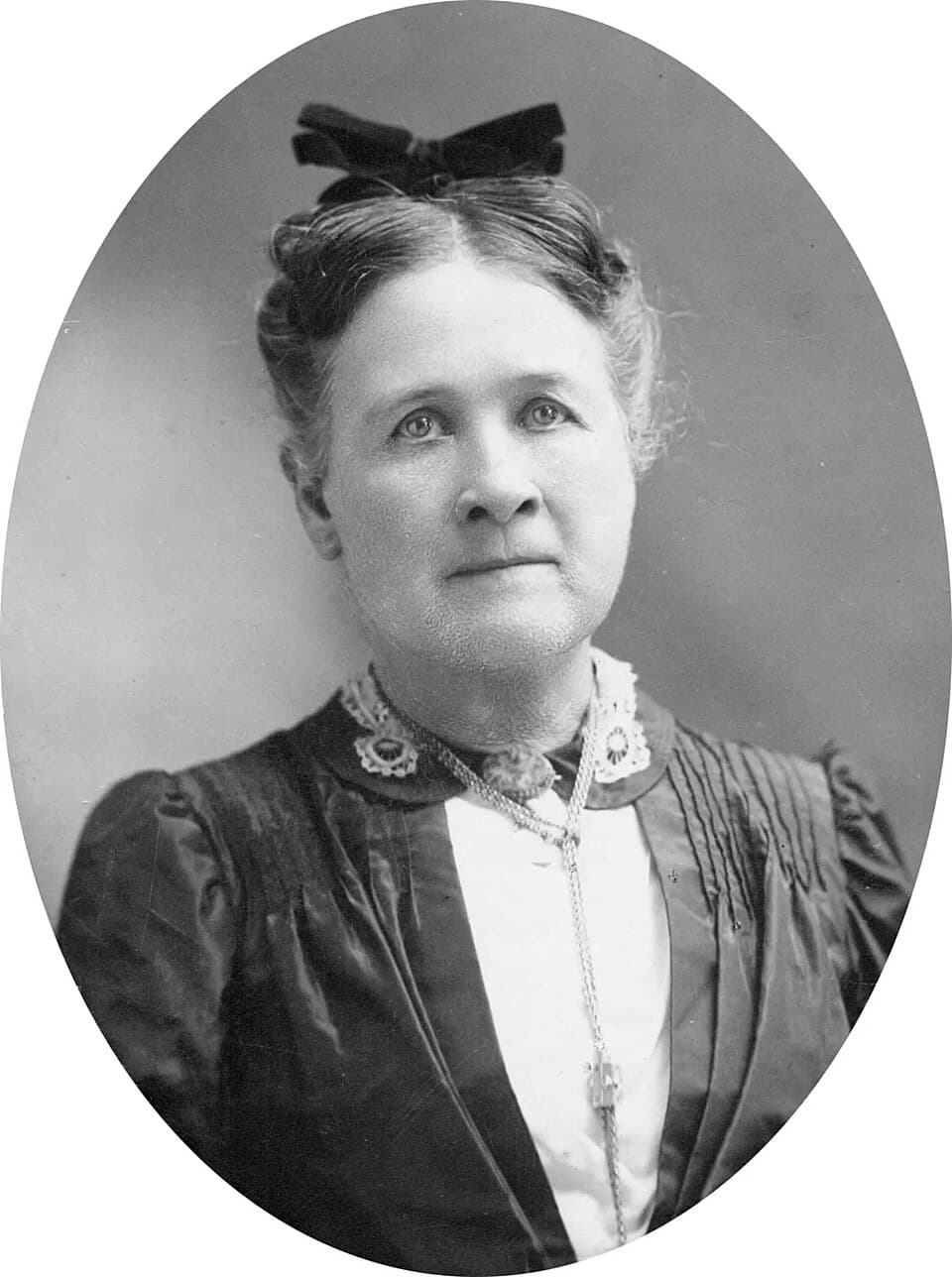
American · Medicine · Science · Activism
Lucy Hobbs Taylor
March 14, 1833 – October 3, 1910
Early Life and Background
Lucy Beaman Hobbs, later known as Lucy Hobbs Taylor, was born on March 14, 1833, probably in Franklin County, New York, near the small town of Constable in the state’s northern border region.[1][11] Her parents were Lucy (Beaman) Hobbs and Benjamin Hobbs, who farmed in rural upstate New York.[7][11] Biographical research suggests that she spent parts of her childhood in Constable and Ellenburg and later attended school in Malone, reflecting the mobility of a modest farming family in search of opportunity.[7][11]
Hobbs’s early education took place at Franklin Academy in Malone, which she attended between about 1845 and 1849.[11] Access to a secondary academy was unusual for girls of her background in the mid‑nineteenth century. This schooling exposed her to a broader curriculum and likely nurtured her interest in science and health. After her studies she supported herself as a schoolteacher, working in the Midwest, including Michigan, a common occupation for educated women seeking respectable paid work.[11][12]
From a young age, Hobbs reportedly dreamed of becoming a physician.[4][6] However, in the 1850s American medical schools categorically refused female applicants. Her ambition collided with entrenched gender norms that relegated women to domestic roles and a narrow range of occupations such as teaching and sewing. These early frustrations with exclusion from medical education shaped the determination that later characterized her path into dentistry.
Barriers to Medical and Dental Education
When Hobbs attempted to pursue formal medical training, she was rejected solely on the basis of her sex.[11][13] Turning from medicine to dentistry, she encountered similar resistance. Dental schools, including the Ohio College of Dental Surgery in Cincinnati, denied her admission when she first applied around 1859, despite her evident academic ability.[8][9][13] At that time dentistry was only beginning to professionalize, and many practitioners were trained through apprenticeship rather than college degrees.
Instead of abandoning her plans, Hobbs sought alternative routes. She arranged to study privately under an Ohio dentist, often identified as Dr. Samuel Wardle, who taught her the practical art of extracting teeth and making dentures.[4][9][13] This apprenticeship model, while common for men, was one of the few avenues open to a woman barred from formal education. Her persistence in securing technical training despite institutional rejection signaled the resolve that would later transform her into a pioneer.
Early Dental Practice Without a Degree
By 1861, Hobbs had gained enough skill to open an independent dental practice in Cincinnati, Ohio, despite lacking a formal license or degree.[11] That same year she moved west and established practice in Bellevue, Iowa, continuing to build a reputation for competence and compassion.[11] In 1863 she opened a practice in McGregor, Iowa, where her work further impressed both patients and local dentists.[11][7]
Because dentistry was not yet fully regulated, it was acceptable, though uncommon, for a practitioner without a degree to operate a practice. Hobbs reluctantly embraced this path, understanding that it was the only way to pursue her vocation under existing constraints.[13] Over roughly four years she practiced across Ohio and Iowa, winning respect from colleagues who came to see her as a skilled professional despite her exclusion from college.
Her growing reputation attracted the attention of the Iowa State Dental Society. Dentists who observed her work recognized that institutional barriers, not lack of merit, kept her out of college. Their support would prove crucial in changing her fortunes and advancing the cause of women in dentistry.[11][13]
Admission to the Iowa State Dental Society and College Entry
In January 1865, the Iowa State Dental Society formally invited Hobbs to attend its Fourth Annual Meeting in Dubuque. The society then amended its constitution and bylaws so that a woman could be admitted to full membership, making Hobbs the first woman in American history to be recognized by a statewide dental body.[11] This was a major institutional breakthrough, signaling that at least one professional organization was prepared to judge a woman dentist by her skills rather than her sex.
Following her admission, the society actively advocated for Hobbs to receive formal education. It used its influence to press the Ohio College of Dental Surgery to reconsider its earlier rejection.[11][13] By late 1864, she had matriculated at the college, reportedly passing through a full course of study and missing only two lectures.[9][11] In November 1865, after four years of practice, she was formally admitted to the senior class at the Ohio College of Dental Surgery.[1] This unusual entry directly into the advanced class reflected recognition of her experience and competence.
Historic Graduation: First Woman Dental Graduate
On February 21, 1866, Hobbs completed her studies and graduated from the Ohio College of Dental Surgery, receiving the degree of Doctor of Dental Surgery (D.D.S.).[1][4] This achievement made her the first woman in the world to graduate from a dental college and the first woman to earn a dental degree.[5][11][13] Contemporary and later accounts describe her as the "first woman dentist" and "first woman in the world to receive a dental degree," emphasizing the symbolic significance of her accomplishment for women in the profession.[13][14]
Her graduation occurred at a time when virtually all medical and dental schools were closed to women. A handful of women physicians had begun to emerge in the United States, trained at newly founded women’s medical colleges, but dentistry had no parallel institutions. Hobbs’s degree therefore represented a unique incursion into a male preserve, achieved not through separation but through admission into an existing mainstream college. Historians argue that her success helped demonstrate that women could meet the same rigorous standards demanded of male students.[5][13]
Professional Society Contributions and Multiple Memberships
Hobbs’s pioneering role did not end with her graduation. In July 1866, she delivered a scientific paper titled "The Use of the Mallet" before the Iowa State Dental Society, becoming the first woman to present a scientific paper to a state dental society in the United States.[11] Her lecture addressed technical aspects of operative dentistry, specifically the use of mallets in condensing gold fillings, showing that she was not merely a symbolic figure but an active contributor to clinical discourse.
By mid‑1866, Hobbs had also been elected to membership in both the Iowa and Illinois State Dental Societies.[5][11] After graduation she moved to Chicago, Illinois, opened a practice, and was elected to the Illinois society, making her the first woman recognized by multiple statewide dental organizations.[5][11] These memberships allowed her to participate fully in the professional networks that shaped standards and ethics in dentistry.
Move to Kansas and Practice in Lawrence
In December 1867, Hobbs—by then Lucy Hobbs Taylor—moved to Lawrence, Kansas, where she opened a dental practice and became known as "Dr. Lucy".[4][11] She is recognized as the first licensed woman dentist to practice in Kansas.[4][11] Lawrence, a town heavily affected by Civil War violence and Reconstruction, was developing rapidly. Taylor’s presence there as a woman with a formal degree symbolized new possibilities for professional roles on the western frontier.
From 1867 onward, Lucy and her husband operated a joint practice that served Lawrence’s growing population.[13] Municipal accounts describe her as a prominent figure in the community, with patients showing high regard for her skill and dedication.[4] Her office at 809 Vermont Street became both a site of dental care and a center of local engagement, and she continued to practice there for decades.
Marriage and Personal Life
Hobbs’s personal life intertwined closely with her professional career. According to biographical research, she married James Myrtle Taylor, a Civil War veteran and railroad car painter, in Chicago, Illinois, on April 24, 1867
Sources agree that Lucy and James Taylor had no children.[11] Their partnership in practice illustrates a reversal of typical gender dynamics of the era: a woman with advanced professional training instructing her husband in a scientific trade and co‑running a business. James’s death on December 14, 1886 left Lucy a widow.[5][11] After his passing, she continued to practice intermittently and became more deeply involved in civic and political activities, including women’s rights. Beyond her dental work, Taylor participated in fraternal and civic organizations that connected her to wider social networks. In 1871, she joined the Rebekah Lodge of the Independent Order of Odd Fellows, a mixed‑sex fraternal order that provided mutual aid and community engagement.[11] In 1875, she joined Adah Chapter of the Order of the Eastern Star in Lawrence, another organization that admitted women and promoted charitable work.[11] Participation in these organizations positioned her among local leaders and offered platforms for public speaking and organizing. They also reflected a broader trend in which women leveraged fraternal orders to extend their influence beyond the home, laying groundwork for suffrage and reform campaigns. Later in life, Taylor became increasingly active in political efforts for women’s rights. Local histories of Lawrence report that she took part in women’s suffrage campaigns, hosting rallies with Susan B. Anthony and participating in organizing for equal voting rights and broader educational and professional opportunities for women.[6][11] Her activism linked her pioneering professional status to the larger movement for gender equality. She is described as having become "a significant figure in the women’s suffrage movement," advocating not only for women’s access to dentistry but for broader equal rights.[6][9] Statements attributed to her emphasize that she believed her journey was complete when women could be recognized in the dental profession on equal terms with men.[8][13] Her dual identity as dentist and activist exemplified the way some professional women used their visibility to argue for systemic change. Taylor gradually reduced her clinical workload in the late nineteenth century. Around 1886, after her husband’s death, she entered semi‑retirement from dentistry, although she continued to treat patients intermittently.[11] In 1907 she fully retired from active practice, having spent more than four decades in the profession.[11] Municipal accounts from Lawrence note that she was "not happy in retirement" and in 1895 moved her home and office back into the building at 809 Vermont Street, continuing a limited practice until near the end of her life.[4] Even in advanced age she remained engaged with the community, maintaining her professional identity as "Dr. Lucy" and sustaining her involvement in organizations and rights advocacy. Lucy Hobbs Taylor died of a stroke on October 3, 1910, in Lawrence, Kansas.[1][4][11] She was 77 years oldOak Hill Cemetery in Lawrence, where her grave remains a point of historical interest for those studying women in dentistry and the suffrage movement.[11] By the time of her death, dentistry had changed markedly from the unregulated environment of her early practice. Formal education had become standard, state dental boards had been established, and a growing number of women had entered dental schools, following the path she opened. Dental history scholarship notes that after her acceptance into the Ohio college, other women were admitted, suggesting a direct line from her breakthrough to broader inclusion.[13][14] Although Taylor did not receive major national awards during her lifetime, her legacy has been honored extensively after her death. Dental historians in journals such as the Journal of the American Dental Association and the American Journal of Dentistry have profiled her as the first woman dentist and the first woman to receive a dental degree, underscoring her importance in professional history.[13][14] In 1983, the American Association of Women Dentists (AAWD) established the Lucy Hobbs Taylor Award, presented annually to an AAWD member in recognition of professional excellence and contributions to advancing women in dentistry.[8] This award institutionalizes her memory within organized dentistry and connects contemporary women’s achievements to her pioneering path. In the twenty‑first century, she has been featured in museum exhibits, municipal plaques, and educational materials highlighting trailblazing women in science and health.[4][5][6] Taylor’s legacy rests on several intertwined achievements. First, she was the first woman in the world to graduate from a dental college and receive a D.D.S., a fact documented in multiple scholarly sources and museum accounts.[5][11][13][14] This milestone challenged gender barriers in higher education and proved that women could succeed in rigorous scientific training. Second, she became the first woman admitted to a statewide dental society and later the first woman recognized by multiple such societies, integrating women into the professional bodies that governed dentistry.[5][11] Third, her presentation of a scientific paper to a state dental society in 1866 demonstrated that women could contribute substantively to clinical knowledge, not merely occupy symbolic roles.[11] Her influence extended beyond dentistry. As an advocate for women’s suffrage and rights in Lawrence, she linked professional advancement to political equality, illustrating how individual breakthroughs could fuel broader movements. Contemporary commentators and later historians credit her with "single‑handedly" opening the door for women in dentistry and inspiring others to follow.[5][13] Her story is frequently used in educational materials to encourage perseverance and highlight the importance of inclusive institutions. Today, Taylor is remembered as a quintessential trailblazer in women’s history. Her journey from a rural New York farm to the lecture halls of a dental college and the professional societies of multiple states exemplifies the transformation of American dentistry and the slow opening of the professions to women. Her name lives on through awards, museum exhibits, and scholarly articles that continue to explore the barriers she confronted and the paths she forged for those who came after her.[1][4][5][6][13][14]Fraternal and Civic Engagement
Women’s Rights and Suffrage Activity
Retirement and Later Life
Death
Awards, Honors, and Posthumous Recognition
Legacy and Historical Impact
Dated achievements
8 indexed.
- Mar141833Science
Birth of Lucy Beaman Hobbs
Lucy Beaman Hobbs, who would become the first woman dentist in the world, was born in Franklin County, New York.
View details Lucy Hobbs Taylor - Wikipedia - Jan011865Science
First woman admitted to a statewide dental society (Iowa State Dental Society)
Lucy Hobbs was invited to the Iowa State Dental Society's Fourth Annual Meeting, which amended its bylaws to admit her as the first woman member of any statewide dental body.