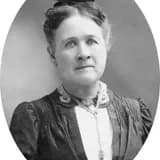
After years of rejection due to her sex, Lucy Hobbs was admitted to the senior class of the Ohio College of Dental Surgery in Cincinnati in November 1865.
In November 1865, after four years of running her own dental practices without a formal degree, Lucy Hobbs was finally admitted to the senior class of the Ohio College of Dental Surgery in Cincinnati. This was a hard-won victory: she had previously matriculated there in the fall of 1864 and completed nearly an entire course of study, missing only two lectures, all while facing institutional resistance rooted purely in her gender.
Dental colleges in this era, like most professional schools, operated under the assumption that medicine and dentistry were male domains. Hobbs had already been rejected outright from other institutions and had been forced to build her professional reputation informally—first in Cincinnati, then in Bellevue and McGregor, Iowa—relying on mentorship from sympathetic male dentists and her own self-directed study.
Her admission to the senior class in November 1865 was made possible in part by the credibility she had gained through her recognition by the Iowa State Dental Society earlier that year, as well as by advocacy from Iowa dentists who had witnessed her competence firsthand. This admission set the stage for her graduation just months later, in February 1866, when she would become the first woman in the world to earn a Doctor of Dental Surgery degree.
The event stands as a critical turning point demonstrating how professional recognition and sheer persistence could gradually erode institutional barriers against women in STEM-adjacent fields.