← All women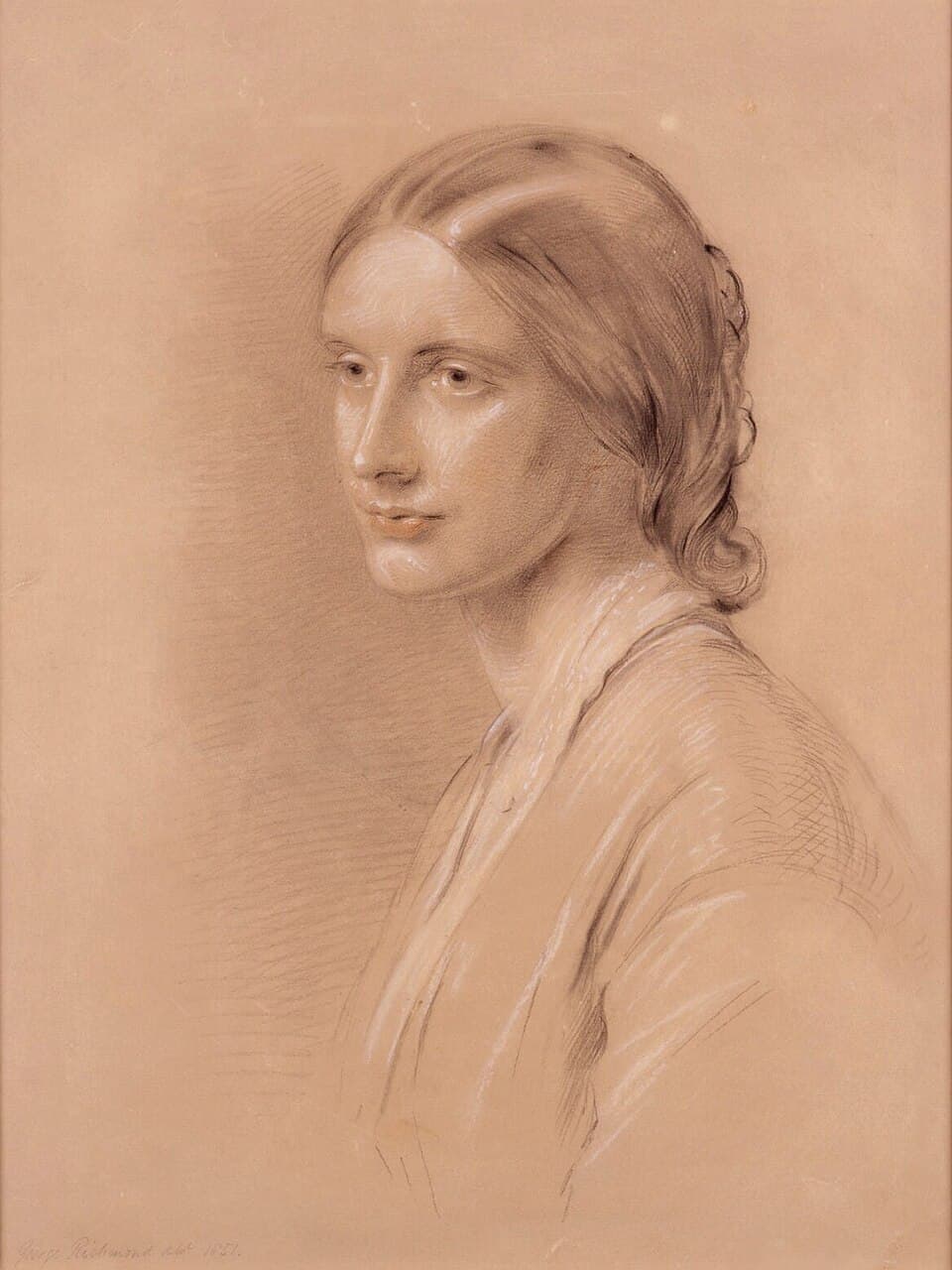
British · Activism · Law · Politics
Josephine Butler
April 13, 1828 – December 30, 1906
Early life and background
Josephine Elizabeth Butler (née Grey) was born on 13 April 1828 at Milfield Hill, Glendale, in Northumberland, England.[1][8] She was the seventh of ten children of John Grey (1785–1868), a well-known agricultural reformer and manager of the Greenwich Hospital estates at Dilston, and his wife Hannah Eliza Grey (née Annett).[1][4][8] The Greys were cousins of the Whig statesman Earl Grey, prime minister at the time of the 1832 Reform Act, and the family moved in liberal political circles concerned with parliamentary reform, abolition of slavery, and economic modernisation.[4][8]
Josephine’s childhood home was marked by a combination of evangelical Anglican piety and progressive politics. Her father supported the abolition of slavery and other humanitarian causes, and he encouraged his daughters as well as his sons to follow current affairs and to think critically about injustice.[2][4][8] Educated mainly at home, Josephine read English and Italian literature and religious texts, including translations of the Church Fathers, developing a strong moral sensibility and intellectual independence.[12]
Formative experiences deepened her identification with oppressed people. She later recalled visiting poor families on her father’s estates and hearing of the sufferings of enslaved people and industrial workers.[2][8] The combination of rural Northumbrian surroundings, liberal political discussion, and serious religious instruction shaped a worldview in which Christianity demanded active engagement with social wrongs. This upbringing would prove crucial when she later confronted the treatment of prostitutes and the legal status of women.
Marriage and personal losses
In 1852, Josephine married George Butler, an Anglican clergyman, classicist, and tutor at Oxford, who later became vice-principal and then principal of Liverpool College.[1][2][10][12] Contemporary accounts suggest that the marriage was intellectually companionate by Victorian standards: Josephine and George shared evangelical beliefs, a commitment to education, and concern for social reform.[1][2] George respected his wife’s conscience and supported her unorthodox public work, even when it attracted criticism that could damage his clerical and academic standing.[2][12]
The couple had several children, but their family life was scarred by tragedy. In 1864 their young daughter Eva died after falling from a staircase, an event that Josephine experienced as a profound spiritual and emotional crisis.[1][2] Seeking an outlet for her grief and a way to identify with those who suffered, she threw herself into charitable work among the poor and particularly among prostitutes and women leaving prostitution.[2][12] This personal bereavement thus acted as a catalyst, transforming a general commitment to philanthropy into a radical vocation to work with the most marginalised women in Victorian society.
Move to Liverpool and early social work
In 1866 the Butlers moved to Liverpool when George was appointed principal of Liverpool College.[1][2] Liverpool was then a booming port city with severe poverty, overcrowding, and a large population of destitute women and girls. The city’s docks, military connections, and transient population made it a centre of prostitution and sexual exploitation.[14] In this harsh urban environment, Josephine intensified her social work.
Rejecting the conventional middle-class model of distance philanthropy, Butler sought direct contact with "fallen" women. She visited workhouses, prisons, and brothels, inviting women into her own home and helping to establish hostels and employment opportunities for those trying to leave prostitution.[1][2][12] She insisted on the moral and spiritual equality of these women, challenging prevailing assumptions that labeled them as irredeemable moral failures. Her approach reflected both evangelical compassion and a growing political awareness that women’s economic dependence and legal disabilities drove many into prostitution.
During these years she also became active in campaigns for women’s education. She worked to open up university-level instruction to women and contributed to the influential collection Woman’s Work and Woman’s Culture (1869), which argued that women’s intellects deserved full development and that women’s moral insights were urgently needed in public life.[12] The Liverpool period thus laid the foundations for her later emergence as a national figure, combining practical rescue work, educational reform, and increasingly sharp critiques of the legal and social framework governing women’s lives.
Campaigns for women’s education and civil rights
Beyond her work among poor women, Butler was deeply committed to advancing women’s access to education. In the late 1860s and early 1870s she allied with reformers seeking to open university curricula and examinations to women. In 1867 she became president of the North of England Council for the Higher Education of Women, a body that promoted lectures, examinations, and eventually institutional footholds for women within the higher education system.[2]
Butler lobbied Cambridge University authorities and participated in initiatives that contributed to the establishment of women’s colleges such as Newnham College, Cambridge, founded in 1871.[2] While she was not the sole founder, her advocacy for women’s intellectual development and moral influence in public affairs contributed to growing acceptance of women in academic spaces previously reserved for men.
In the sphere of civil rights, Butler campaigned against the legal doctrine of coverture, which subsumed a married woman’s legal identity into that of her husband. She supported efforts to secure married women’s rights to their own property and earnings, arguing that economic dependence reinforced women’s vulnerability to sexual exploitation and domestic abuse.[1][18] Her activism fed into the broader movement that produced a series of Married Women’s Property Acts, culminating in the Married Women’s Property Act 1882, which received Royal Assent on 18 August 1882 and recognised wives as separate legal persons able to own and control property.[18]
The Contagious Diseases Acts and the Ladies National Association
Butler is most famous for her leadership in the campaign against the Contagious Diseases Acts
In 1869–1870, Butler became the leading figure in a new organisation, the Ladies National Association for the Repeal of the Contagious Diseases Acts (LNA).[1][17] The LNA was extraordinary in Victorian Britain: it was organised, financed, and led by women at a time when women lacked the vote and were expected to avoid public discussion of sexual matters.[1][17] Butler, chosen as its public face, travelled extensively across Britain, addressing large and often hostile mixed audiences, gathering signatures for petitions, and building alliances with Nonconformist ministers, some doctors, and radical and liberal MPs.[1][2] The campaign combined constitutional arguments with moral theology. Butler and her colleagues denounced the Acts as violations of habeas corpus and civil liberty, as they allowed the detention of women without normal legal safeguards. They argued that the law entrenched a "sexual double standard" by treating prostitutes as a medically managed class of women servicing male vice while leaving male clients untouched.[1][2][7] They also criticised the state for effectively condoning prostitution to protect the health of soldiers and sailors, rather than addressing the underlying social and economic causes. Historians have increasingly come to see the LNA as the first major, sustained political pressure campaign in Britain to be organised and led by women, and Butler as its central strategist and orator.[1][17] Through pamphlets, public meetings, and a sophisticated use of the press, she helped to redefine prostitution as a social and economic issue rather than simply a moral failing. From the mid-1870s, Butler extended her activism beyond Britain. Alarmed by similar systems of regulated prostitution on the Continent, she launched a Europe-wide campaign against state regulation and the so-called "morals police" in countries such as France, Belgium, and Switzerland.[7][3] She travelled, corresponded, and collaborated with foreign reformers, encouraging them to form national associations modeled on the LNA. In Belgium, she became involved in exposing networks that trafficked young women and girls, often under false pretences, into brothels in Brussels and other cities. Her efforts helped to bring public and parliamentary attention to these abuses and contributed to prosecutions against brothel owners and traffickers in the late 1870s.[7][3] These activities anticipated later international campaigns against what would come to be called "white slavery" and human trafficking. By the early 1880s, Butler played a central role in the formation of international abolitionist structures. Her work inspired the creation of the International Abolitionist Federation (Fédération abolitionniste internationale), formally established in 1875 and reorganised in 1902, which united national groups opposed to state regulation of prostitution.[3][7] Within this transnational network, Butler argued that systems of licensed prostitution inevitably led to coercion, corruption, and the acceptance of male sexual privilege, and that genuine protection of women required broader reforms in law, education, and economic opportunity. After more than a decade of campaigning, the British movement achieved its central goal. In 1883 the compulsory clauses of the Contagious Diseases Acts were suspended, and in 1886 Parliament finally repealed the Acts.[1][12][15] Butler and the LNA had maintained pressure through petitions, public meetings, and alliances with Nonconformist and radical MPs, framing repeal as a test of the nation’s commitment to civil liberties and Christian morality. The repeal, reached in 1886 after prolonged parliamentary debate, is widely regarded as the first significant legislative victory secured by a women-led pressure group in Britain.[1][15][17] It demonstrated that disenfranchised women, acting collectively and strategically, could shape national law. The campaign challenged not only a specific set of statutes but also broader assumptions about gender, sexuality, and the role of the state in regulating intimate life. In the aftermath, Butler continued to oppose other forms of state regulation and to support women affected by prostitution and disease. She insisted that the abolitionist movement had to address the economic and social conditions that made women vulnerable, including low wages, lack of property rights, and limited educational and professional options.[1][2] In the 1880s, Butler increasingly turned her attention to the sexual exploitation of children. She helped to galvanise public opinion against child prostitution and trafficking, working alongside journalists and reformers who revealed the scale of abuse in British cities and abroad.[1][2][7] Her experiences in Belgium and other European countries had convinced her that an international market in young girls flourished where the law was weak or complicit. Butler supported efforts to strengthen the criminal law against procurers and to raise the age at which girls were legally able to consent to sexual activity. She argued that the existing age of 13 left young working-class girls almost entirely exposed to seduction, coercion, and abduction, and she linked this vulnerability to broader patterns of poverty and gender inequality.[2][8] These campaigns contributed to the passage of the Criminal Law Amendment Act 1885, which received Royal Assent on 14 August 1885 and raised the age of consent from 13 to 16 while introducing new offences targeting procurers and others involved in child prostitution and trafficking.[1][19] Although the Act also contained provisions that later fuelled controversy, notably the clause used to prosecute male homosexuals, it represented a significant advance in the legal protection of minors and a partial realisation of Butler’s long-argued demands. Throughout her life, Butler understood her activism in explicitly Christian terms. Raised in an evangelical Anglican milieu, she developed a theology in which Christ’s identification with the oppressed demanded that believers seek out those most despised by respectable society.[1][2][12] She was particularly drawn to Gospel stories of Jesus’ encounters with marginalized women, seeing in them a mandate to challenge social and legal structures that condemned "fallen" women while excusing male sin. Her writings combined religious reflection, moral philosophy, and political analysis. Among her best-known works is Personal Reminiscences of a Great Crusade (1896), a memoir of the anti–Contagious Diseases Acts campaign that offers insight into her motivations, strategy, and the hostility she faced.[2][8] She also wrote biographies, tracts, and essays on women’s work, education, and social purity. These texts circulated widely in Britain and abroad, shaping public debate on prostitution, women’s rights, and the responsibilities of Christian states. Butler’s thought was distinctive in that it combined a critique of state power and male privilege with an insistence on individual moral responsibility and conversion. She opposed purely punitive measures against men involved in prostitution, arguing that sustainable change required transformation of social attitudes, economic structures, and male sexual behaviour, as well as legal reform.[1][7][8] In her later years, Butler’s health was often fragile, but she continued to write, correspond, and advise younger activists. She remained involved in the international abolitionist movement and maintained links with reformers across Europe and beyond.[3][7] She also supported emerging campaigns that connected women’s political rights with broader questions of peace, imperial responsibility, and social welfare. During the 1890s she lived for a time in London; an English Heritage blue plaque now marks her residence in Kensington, recording her as a "Champion of Women’s Rights".[15] Even as newer generations of feminists, including suffragettes, adopted different tactics and emphases, many acknowledged Butler’s pioneering role in bringing sexual politics into public debate and in demonstrating that women could organise at a national and international scale. Her husband George Butler died in 1890, after which Josephine spent periods living with relatives and friends, including time back in Northumberland.[1][12] Widowed and increasingly frail, she nonetheless continued to write letters of encouragement and counsel to activists, and she remained a moral reference point for the abolitionist cause. Josephine Butler died on 30 December 1906 in Wooler, Northumberland, not far from her birthplace.[1][2][8] She was 78 years old. Obituaries and memorials, even from some who had opposed aspects of her work, often praised her courage, sincerity, and devotion to the most despised members of society.[2][8] She was buried in the churchyard of Kirknewton, Northumberland, in the landscape that had shaped her early life. Her death came just as the women’s suffrage movement in Britain was entering a more militant phase and as debates about sexual morality, public health, and the role of the state were intensifying in new ways. Although she did not live to see women granted the parliamentary vote, many suffragists and social reformers acknowledged her as a forerunner whose campaigns had enlarged the space for women’s political action and had forced legislators to confront the gendered implications of their policies.[1][2] Josephine Butler’s legacy spans several overlapping fields: feminism, civil liberties, sexual politics, and international human-rights activism. In Britain, her leadership of the campaign against the Contagious Diseases Acts demonstrated that women, even without the vote, could form national organisations, mobilise public opinion, and achieve legislative change.[1][15][17] This achievement helped pave the way for later women’s movements, including suffrage campaigns and twentieth-century feminist struggles for reproductive and sexual rights. Legally, her work contributed to the repeal of a system that treated poor women’s bodies as instruments for protecting male health. It also fed into reforms such as the Married Women’s Property Acts and the Criminal Law Amendment Act 1885, which enhanced women’s civil status and strengthened protections for children.[1][18][19] These measures, though limited and shaped by the moral assumptions of their time, marked significant steps towards recognising women and children as rights-bearing individuals. Internationally, Butler is remembered as a key figure in the development of the abolitionist movement that opposed state-regulated prostitution and trafficking. Her influence helped to inspire abolitionist federations and to shape early international discussions of what would later be framed as "trafficking in persons" and "sexual exploitation".[3][7] Her insistence that legal systems and public health policies be judged by their impact on the most vulnerable remains a touchstone in contemporary debates on sex work, public health, and human rights. Historians have also highlighted Butler’s importance as a religious thinker and as a woman who expanded the accepted boundaries of female public speech in Victorian Britain. By speaking openly about sexual abuse, venereal disease, and male responsibility, she challenged both prudish silence and the stigmatisation of women involved in prostitution. Her example helped to legitimise women’s right to speak in public on matters of sexuality, law, and national policy. Modern scholarship and public history projects—ranging from entries in major encyclopedias to digital archives and dedicated websites—now present Butler as one of the most significant Englishwomen of the nineteenth century.[1][4][8][17] Her life illustrates how personal grief, religious conviction, and political intelligence could combine to produce a sustained and far-reaching challenge to entrenched systems of gendered power.International abolitionism and campaigns against trafficking
Repeal of the Contagious Diseases Acts
Campaigns for the protection of children and the age of consent
Religious convictions, writings, and thought
Later life and continuing activism
Death
Legacy and historical impact
Dated achievements
8 indexed.
- Apr131828Activism
Birth of Josephine Butler
Josephine Elizabeth Grey was born at Milfield Hill, Northumberland, England, into a politically engaged, reform-minded family.
View details Josephine Butler - Wikipedia - Jan011852Activism
Marriage to George Butler
Josephine Grey married Anglican clergyman and academic George Butler, forming a partnership that would support her later reform work.