← All women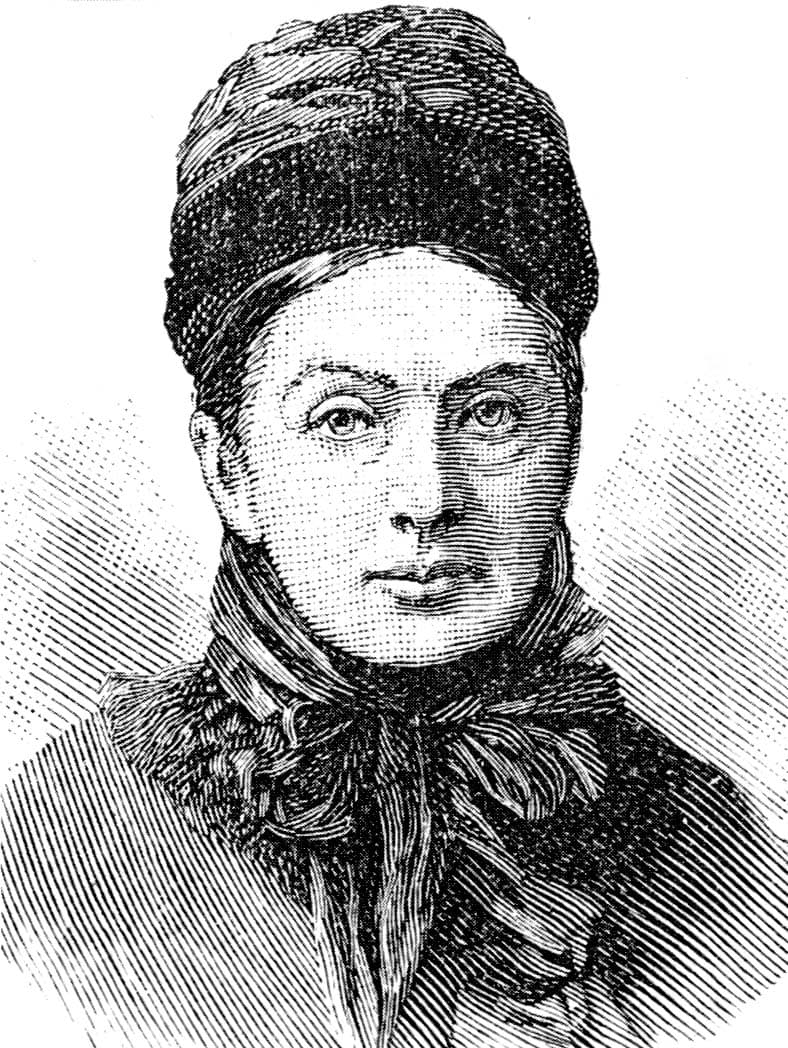
British, English · Exploration · Literature
Isabella Bird
October 15, 1831 – October 7, 1904
Early life and background
Isabella Lucy Bird (later Bishop) was born on 15 October 1831 at Boroughbridge Hall in Boroughbridge, Yorkshire, England, the home of her maternal grandmother.[1][2][5][11] Her father, the Reverend Edward Bird, was an Anglican clergyman, and her mother, Dora (Dorothea) Lawson, was the daughter of a clergyman, giving Isabella a background steeped in the Church of England and in literate, middle‑class culture.[1][2][5] In 1834 her father became rector of Tattenhall in Cheshire, and the family moved as his clerical appointments changed, spending time in various rural parishes.[2]
Bird was a sickly child and young woman, suffering from spinal problems, nervous ailments, and recurrent insomnia that limited her formal schooling but encouraged extensive reading.[5][13][17] Her parents supported intellectual curiosity; she read widely in history, travel, and religious literature, and her father took an active interest in public affairs and church reform, influences that shaped her later interest in missionary work and social conditions abroad.[2][5] From an early age she wrote letters and short pieces, developing the descriptive and observant prose style that would later make her travel books popular.
Victorian medical practice played a pivotal role in her life trajectory. Doctors repeatedly advised fresh air, outdoor exercise, and eventually long sea voyages as remedies for her chronic ill health.[5][13] In 1854 her father gave her £100 and encouraged her to travel to improve her condition, an unusual license for a young unmarried woman at the time.[13] This recommendation, intended as a health measure, became the catalyst for her transformation from an invalid clergyman’s daughter into an internationally known traveller and author.
Early travels and the beginnings of a writing career
Bird’s first significant journey abroad was to North America in the mid‑1850s. She sailed to Canada and the United States, visiting cities and rural communities and observing religious life, politics, and social customs.[1][5] Drawing on her detailed letters home, she published her first book, The Englishwoman in America, in 1856.[1][6] The work offered a critical but lively account of American society from a British female perspective and quickly established her reputation as an engaging travel writer.
Her second book, Aspects of Religion in the United States of America (1859), grew out of the same journey and reflected Bird’s upbringing in a clerical household.[6] The volume examined the diversity of American religious denominations and practices, including revivalism and dissenting congregations, and was received as a serious and perceptive study by contemporary readers concerned with transatlantic religious debates. These early publications demonstrated her ability to combine personal narrative with social and institutional analysis, a pattern that characterized much of her later work.
For a period in the 1860s Bird remained largely in Britain, caring for her parents and plagued by recurrent illness.[2][5] She wrote occasional articles and continued to read and correspond, but her life appeared likely to follow the constrained path of many middle‑class Victorian women. The deaths of her parents and the persistence of her health problems, however, opened space for renewed travel. Medical advice again suggested that foreign travel might provide relief, and Bird—now in middle age and financially supported by her writing—was increasingly prepared to undertake long journeys unchaperoned by male relatives.
Major journeys and travel writings
Australia and the Pacific: Hawaii and the Rocky Mountains
In the early 1870s Bird embarked on the sequence of journeys that made her famous. She travelled to Australia, where she found the climate trying and was critical of aspects of colonial society, and then on to the Hawaiian Islands, then widely referred to in English as the Sandwich Islands.[5][11][13] In 1872 she undertook arduous expeditions on horseback across the islands, including an ascent of Mauna Loa and explorations of volcanic landscapes.[11][12][14] Her letters from this period, later published as Six Months in the Sandwich Islands (1875), offered vivid descriptions of lava fields, tropical vegetation, and Hawaiian royal and everyday life, and helped establish her reputation for physical courage and keen observation.
From Hawaii, Bird continued to North America. In 1873 she travelled extensively through the Rocky Mountains of Colorado Territory, often riding alone or with small parties across rough country.[11][12][13] She stayed in the emerging resort area of Estes Park, undertook long horseback journeys exceeding 3,000 miles across the Front Range, and climbed Longs Peak, one of Colorado’s major summits.[6][9][13] Her letters from Colorado eventually became A Lady’s Life in the Rocky Mountains (1879), a book that combined adventure narrative with social commentary on frontier life, mining settlements, and gender roles in the American West.[1][13] The work was a commercial success and remains one of her most widely read books.
Japan and East Asia
In 1878 Bird embarked on her first major journey in East Asia, travelling to Japan at a time when the country was undergoing rapid modernization under the Meiji government.[1][5] Rather than remaining near treaty ports and Western enclaves, she travelled deep into rural and northern regions, visiting Ainu communities in Hokkaido and remote villages rarely seen by Westerners.[1][5] These journeys, often undertaken on horseback or in kago (palanquins) under challenging conditions, formed the basis of Unbeaten Tracks in Japan (1880), which combined travel narrative with careful ethnographic and linguistic observations. The book introduced English‑speaking readers to aspects of Japanese and Ainu life that went beyond the usual diplomatic or commercial perspectives.
Subsequently Bird expanded her travels to China and Korea, traveling through treaty ports, river systems, and inland towns.[1][14] Her account The Yangtze Valley and Beyond (1899) described Chinese landscapes, trade networks, and social conditions during a turbulent period of late‑Qing history, while also reflecting the limitations and biases of a Victorian traveler embedded in imperial networks.[1] Bird’s observations nonetheless provided contemporary readers with firsthand descriptions of regions and groups little represented in British print.
India, the Himalayas, and Central Asia
Bird’s interest in Asia extended beyond East Asia to the Indian subcontinent and Himalayan borderlands. She travelled in India and the then princely state of Kashmir, often in connection with missionary and medical projects.[1][4] With the physician Fanny Jane Butler she helped establish the John Bishop Memorial Hospital in Srinagar, Kashmir, named in memory of her husband and designed to provide medical care to local women who had limited access to male doctors.[1][4] This work reflected Bird’s growing commitment to the intersection of exploration, medicine, and women’s welfare.
In the 1890s she undertook demanding travels in Tibet, Persia (Iran), Kurdistan, and what is now eastern Turkey, journeys later described in volumes such as Journeys in Persia and Kurdistan (1891) and The Yangtze Valley and Beyond.[1][14] She travelled with local guides and small caravans, often through politically sensitive or sparsely mapped areas, recording place names, routes, and conditions that were of interest to geographers and imperial administrators as well as the general public. These journeys, occurring at an age when many Victorian women had already retreated into domestic life, reinforced her reputation as an indefatigable traveler.
Writing style, themes, and contribution to knowledge
Bird’s travel books were typically composed from letters written to her sister Henrietta and other family members, later edited into coherent narratives.[1][5] This epistolary origin gave her prose immediacy and intimacy; she addressed readers as confidants while blending personal anecdote with detailed description of landscapes, flora and fauna, architecture, and social customs. Her style balanced moral reflection, often grounded in Anglican sensibilities, with a journalist’s eye for vivid incident.
She contributed to geographical and ethnographic knowledge by recording routes, altitudes, and environmental conditions, and by describing the material culture, religious practices, and daily life of the communities she visited.[1][2][14] Her accounts often included sketches of local economies and gender roles, offering British readers both information and a framework—sometimes sympathetic, sometimes paternalistic—for understanding non‑European societies. While her work reflected the assumptions of her class and era, it also challenged stereotypes by presenting individual personalities and complex social situations rather than reductive caricatures.
Bird’s books were widely read in Britain and the United States, going through multiple editions and translations.[1][5][13] They appealed to readers fascinated by exploration, empire, and the idea of the world as both knowable and increasingly interconnected. Her success demonstrated that a woman could achieve commercial and critical recognition in a field dominated by male adventurers and professional geographers.
Awards, honors, and institutional recognition
Bird’s extensive travels and publications brought her significant recognition from geographical societies and learned bodies. In 1890 she became the first woman to be awarded an Honorary Fellowship of the Royal Scottish Geographical Society (RSGS) in Edinburgh, a notable departure from the society’s previous all‑male fellowship.[7][10][15] The appointment acknowledged her contributions to the geographical understanding of regions from the American West to East and Central Asia, and her prominent role in popularizing geography among general readers.
In 1892 she was elected the first woman Fellow of the Royal Geographical Society (RGS) in London, one of the most prestigious geographical institutions in the world.[1][6][14][17] This decision followed debate within the RGS over whether women should be admitted as fellows. Bird’s election—alongside a small number of other women shortly thereafter—signaled a gradual shift in institutional attitudes toward women’s participation in scientific and exploratory work.
Bird also received honors from outside Britain. In the early 1890s she was awarded the Royal Order of Kapiʻolani by King Kalākaua of Hawaii, in recognition of her sympathetic writings about the islands and the publicity she brought to the Hawaiian kingdom.[4] Her candid but generally appreciative portrayal of Hawaiian society in Six Months in the Sandwich Islands had helped shape Victorian perceptions of the Pacific kingdom at a time when its political autonomy was under pressure.
In addition to formal honors, Bird’s legacy has been recognized through later commemorations. She has been inducted into the Colorado Women’s Hall of Fame for her contributions to the history and image of Colorado through A Lady’s Life in the Rocky Mountains and her wider influence as an adventurous female traveler.[6] Modern geographical and historical scholarship continues to discuss her as a key figure in the history of women’s exploration and in the cultural history of the British Empire.[2][14][17]
Personal life and relationships
Bird’s personal life was shaped by close family ties and by the tension between domestic expectations and her desire for travel. She was particularly attached to her younger sister Henrietta, to whom she addressed many of her travel letters.[1][5] Henrietta’s role as confidante and first reader helped shape Bird’s narrative voice, though Henrietta herself led a more conventionally domestic life in Britain.
In 1881 Bird married Dr. John Bishop, an Edinburgh physician who had previously treated her.[1][5] She was in her late forties at the time, and the marriage was relatively brief; Bishop died only a few years later.[1] After his death she adopted the surname Bird‑Bishop in some contexts, though she continued to publish primarily as Isabella Bird. The marriage did not produce children, and following Bishop’s death she resumed extensive travel, often spending years away from Britain.
Her personal correspondence and published writings suggest deep emotional investments in family and in a few close friendships, but also a strong sense of independence and vocation tied to travel, writing, and philanthropic work.[2][5] She remained devoutly Anglican, frequently engaging with missionary communities abroad and supporting medical and educational initiatives, particularly those aimed at women and children.[1][4]
Philanthropy and medical work
Bird’s philanthropy was closely linked to her travels and her awareness of the limited medical resources available to women in many of the places she visited. Together with the doctor and medical missionary Fanny Jane Butler, she helped to establish the John Bishop Memorial Hospital in Srinagar, Kashmir, named in memory of her late husband.[1][4][11] The hospital was intended to provide medical care to local women who, because of cultural norms, were reluctant or forbidden to be treated by male physicians. Bird contributed funds and used her public profile to raise awareness and support for the project.
This initiative reflected broader Victorian debates about women’s access to medical care and women’s participation in medicine as a profession. Bird’s involvement, though not as a physician, aligned her with the growing movement of women medical missionaries and doctors working in colonial and semi‑colonial settings.[4] Her hospital project exemplified the intersection of imperial humanitarianism, religious motivation, and gender politics that characterized much late‑nineteenth‑century missionary medicine.
Legacy and historical impact
Isabella Bird’s legacy operates on several interconnected levels: as a travel writer, as a popularizer of geography, as a symbol of women’s mobility in the Victorian era, and as a figure in the institutional history of geography and exploration.
As an author, she produced a series of books that remain in print and continue to be read by historians, geographers, and general readers. Works such as The Englishwoman in America, Six Months in the Sandwich Islands, A Lady’s Life in the Rocky Mountains, Unbeaten Tracks in Japan, Journeys in Persia and Kurdistan, and The Yangtze Valley and Beyond provide rich primary sources for the study of nineteenth‑century travel, imperial culture, and cross‑cultural encounters.[1][5][13][14] Her detailed accounts of landscapes, settlements, and routes have also been used by historical geographers to reconstruct patterns of mobility and environmental change.
In terms of gender history, Bird is often cited as a pioneering female explorer who challenged expectations that respectable women should remain in the domestic sphere. Her ability to travel largely unaccompanied by male relatives, to ride astride rather than side‑saddle, and to engage with male guides, traders, and officials across multiple continents made her a powerful model for later women travellers.[2][9][17] At the same time, her work illustrates the complexities of operating within the structures of the British Empire; she benefited from imperial networks of security and transport even as she sometimes critiqued aspects of colonial societies.
Institutionally, Bird’s election as the first woman Fellow of the Royal Geographical Society in 1892 and as the first woman Honorary Fellow of the Royal Scottish Geographical Society in 1890 marked key steps in opening geographical societies to women.[1][6][7][10][17] Her acceptance into these bodies helped undermine the notion that scientific and exploratory achievement were inherently masculine domains, encouraging later generations of women geographers and explorers to seek similar recognition.
Bird has also become an important subject in modern scholarship on disability and travel. Historians of geography and medicine have noted that her chronic spinal condition and nervous complaints both constrained her and provided the original impetus for her voyages, demonstrating how illness and medical advice shaped patterns of mobility in the nineteenth century.[5][13][17] Her case has been used to explore the ways in which health, gender, and empire intersected in Victorian travel culture.
Later life and final journeys
In her later years Bird showed little inclination to retire from active travel. Well into her sixties she undertook demanding expeditions to Persia, Kurdistan, and the Middle East, frequently traveling in regions with limited infrastructure and significant political tensions.[1][2][14] She continued to lecture on her journeys to audiences in Britain, using lantern slides and photographs to illustrate her talks. Photography, which she had taken up during her travels, became an increasingly important part of her documentation of people and places.[1]
Bird’s later writings reflect both her accumulated experience and the changing global context of the 1890s, including shifts in imperial rivalries and local resistance. She commented on the spread of railways and telegraphs, on the impact of missionary activity, and on the transformations of local economies. Her work remained in demand, and she retained a public profile as one of the era’s most intrepid women travellers.
Yet the strains of prolonged travel and a lifetime of intermittent ill health took their toll. In the early twentieth century her health deteriorated, and plans for further journeys—to China and other destinations—remained unrealized.[7] She died at her home on Neville Street, Edinburgh, on 7 October 1904, just short of her seventy‑third birthday.[1][5][7][11] She was buried in Dean Cemetery, Edinburgh, a city that had served as her base between journeys and the site of key relationships and institutional affiliations.
By the time of her death, Bird had travelled on every continent except Antarctica and authored a body of work that secured her a place in the history of exploration and women’s history.[1][17] Subsequent generations have continued to reinterpret her writings, both celebrating her courage and interrogating the imperial and cultural assumptions embedded in her narratives. Her life story remains a powerful example of how a nineteenth‑century woman could negotiate, exploit, and at times transcend the constraints of her era.
Dated achievements
4 indexed.
- Oct151831Science
Birth of Isabella Bird
Isabella Lucy Bird was born in Boroughbridge, North Yorkshire, England, later becoming a pioneering explorer, travel writer, and photographer.
View details Isabella Bird - Wikipedia - Jan011890Exploration
First Woman Honorary Fellow of the Royal Scottish Geographical Society
Isabella Bird became the first woman awarded an Honorary Fellowship of the Royal Scottish Geographical Society, a landmark for women in geography.