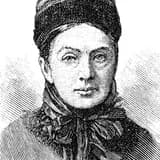
Isabella Bird died at age 72 in Edinburgh, Scotland, having lived an extraordinary life of travel, writing, and geographical achievement.
Isabella Bird died on 7 October 1904 at the age of 72, just eight days before what would have been her 73rd birthday. Her death marked the end of a remarkable life defined by relentless travel, prolific writing, and the breaking of numerous barriers for women in exploration and geography.
In her final years, despite ongoing health struggles that had plagued her since childhood, Bird continued to travel and write, undertaking a journey to Morocco in 1901 at nearly seventy years of age, riding on horseback through the Atlas Mountains. Even in old age, she remained committed to her lifelong pursuit of documenting distant lands and cultures.
By the time of her death, Bird had authored numerous influential travel books, including The Englishwoman in America, Six Months in the Sandwich Islands, A Lady's Life in the Rocky Mountains, Unbeaten Tracks in Japan, and Among the Tibetans. She had become the first woman Fellow of the Royal Geographical Society and the first woman Honorary Fellow of the Royal Scottish Geographical Society, cementing her legacy as a pioneer for women in exploration.
Bird's death was widely noted in the press and scientific community of the time, and her legacy has only grown in the century since, as later generations of historians and feminist scholars have recognized her as one of the most significant Victorian women travelers, whose work challenged contemporary assumptions about women's capabilities and roles.