← All women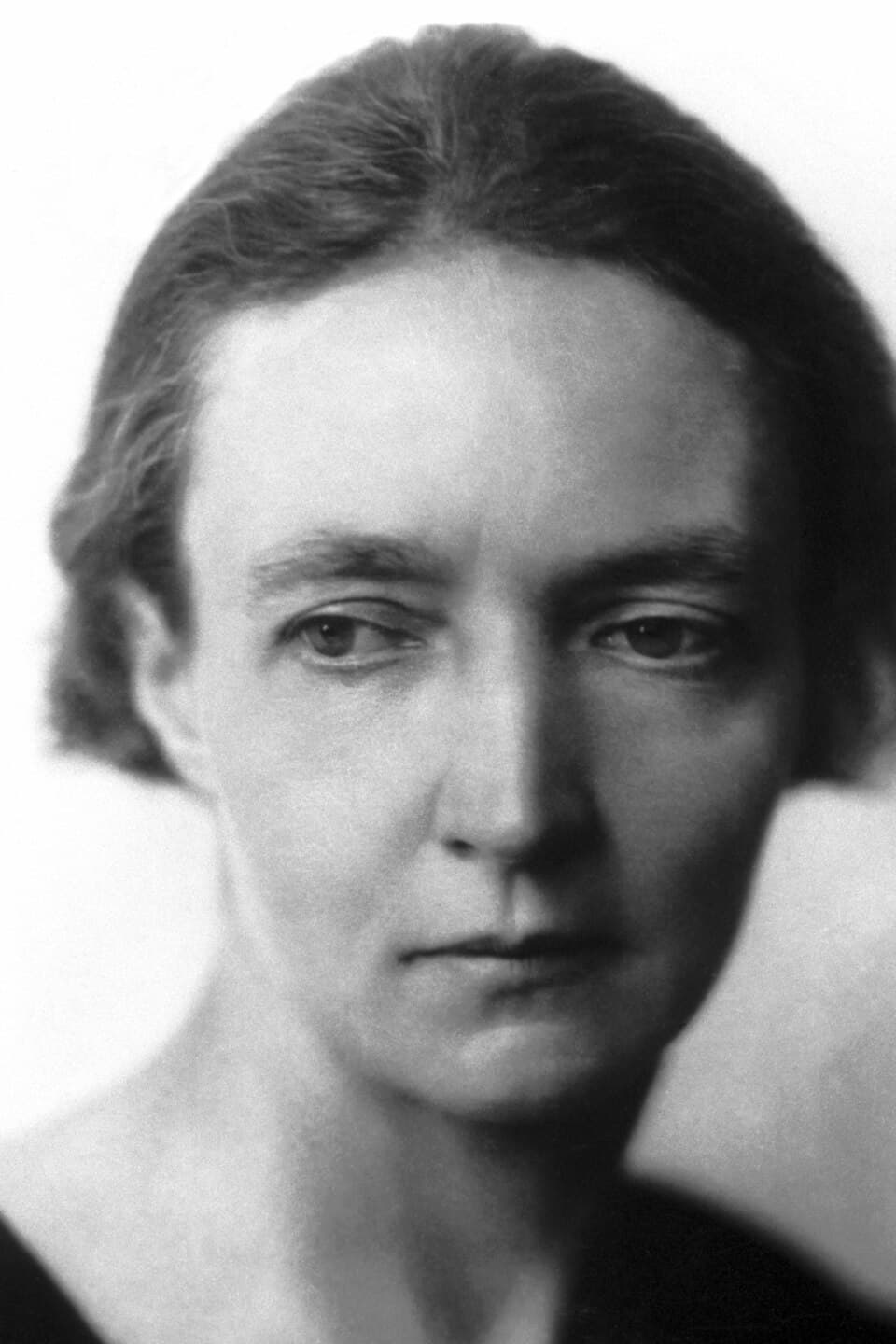
French · Science · Politics
Irène Joliot-Curie
September 12, 1897 – March 17, 1956
Early Life and Family Background
Irène Joliot-Curie, born Irène Curie on 12 September 1897 in Paris, was the elder daughter of the famed physicists Marie Curie and Pierre Curie.[4][5][11][14][15][16] She grew up in an environment uniquely steeped in scientific inquiry. Her parents’ pioneering work on radioactivity—culminating in Nobel Prizes in Physics (1903) and Chemistry (1911) for Marie—shaped both the intellectual atmosphere of her childhood and the practical realities of everyday life, which included exposure to unexplored radioactive materials.[4][5][10][12][16]
After Pierre Curie’s death in 1906, Marie Curie assumed full responsibility for Irène and her younger sister Éve Curie, while continuing her demanding research. Irène’s education was unconventional: Marie enrolled her in the famous "Cooperative" or "Société des conférences" group of progressive educators, where scientists and intellectuals—including Paul Langevin and Jean Perrin—provided advanced instruction in mathematics, physics, and other subjects to a small circle of children.[4][11][12][18] This fostered rigorous scientific thinking at a time when girls rarely received such training.
During World War I, Irène assisted her mother in establishing mobile X-ray units, the "petites Curie," which were used to diagnose battlefield injuries. As a teenager, she learned radiology and helped operate equipment near the front, gaining both technical skills and a deep sense of the humanitarian potential of physics and medicine.[4][10][11][12][18] This experience reinforced her commitment to applying science for social good, a theme that would persist throughout her career.
Education and Early Career
After the war, Irène pursued formal studies at the University of Paris, focusing on mathematics and physical sciences.[4][11][12][16] She then joined the Radium Institute (Institut du Radium) in Paris—founded by her parents—as a research assistant under Marie Curie’s supervision. Working in the laboratory that had grown out of her parents’ discoveries, Irène began her own investigations into the properties of radioactive substances and nuclear emissions.[4][11][12][16][18]
In 1925, she defended her doctoral thesis on the alpha rays of polonium, consolidating her reputation as an independent researcher in nuclear physics and chemistry.[11][12][18] Her thesis work improved understanding of alpha particle behavior and helped refine experimental techniques for studying nuclear emissions, which were crucial for later advances in nuclear science. Through this research, she established herself not simply as "Marie Curie’s daughter" but as a capable scientist in her own right.
Irène’s early publications demonstrated a careful experimental style and a willingness to tackle technically demanding problems. She became an integral part of the Radium Institute’s research program, collaborating with visiting scientists and contributing to the Institute’s growing international prestige.[4][11][12][16]
Partnership with Frédéric Joliot and Marriage
In the mid‑1920s, Irène met Frédéric Joliot, a young chemical engineer who had begun working at the Radium Institute as a laboratory assistant to Marie Curie.[4][11][14][16] Their shared interests in nuclear phenomena and experimental chemistry quickly led to scientific collaboration, and their partnership expanded into a personal relationship. On 9 October 1926, Irène Curie and Frédéric Joliot married, both later adopting the composite surname Joliot-Curie as an emblem of their intellectual and personal union.[11][12][14][16]
The couple had two children, Hélène Joliot-Curie (later Hélène Langevin-Joliot) and Pierre Joliot-Curie, both of whom became physicists, extending the Curie family’s scientific legacy into a third generation.[11][12][16] Irène and Frédéric’s marriage was notable not only for its familial continuity but also for its professional equality: they worked as close collaborators, co‑authoring papers, sharing laboratory responsibilities, and jointly conceiving experiments in nuclear chemistry and physics.[4][11][12][14]
Path to the Discovery of Artificial Radioactivity
By the early 1930s, nuclear physics was rapidly evolving. James Chadwick had identified the neutron, and positrons had been observed in cosmic rays. In this context, Irène and Frédéric Joliot-Curie began exploring nuclear reactions induced by alpha particle bombardment. Starting around 1933, they undertook experiments in which they directed alpha particles from polonium sources onto light elements such as aluminium, magnesium, and boron, meticulously measuring the emitted radiation and charged particles.[3][4][10][12][15][16][18]
In 1933, the Joliot-Curies contributed to clarifying the conditions of positron emission and helped refine calculations of the neutron’s mass, presenting their insights to the Seventh Solvay Conference in Brussels.[3][12][18] These conferences were among the most prestigious gatherings in physics, and Irène’s presence there signaled her integration into the international community of leading nuclear scientists.
Their crucial breakthrough came in early 1934. After bombarding aluminium with alpha particles, Frédéric observed that the sample continued to emit positrons even after the source was removed. Together, Irène and Frédéric interpreted this as evidence that the aluminium had been transmuted into a radioactive isotope of phosphorus, produced artificially by the nuclear reaction.[3][4][10][12][15][16][18] Recognizing the importance of this result, they prepared a communication to the French Academy of Sciences.
On 15 January 1934, they announced the discovery of induced (artificial) radioactivity, reporting that previously stable elements could be made radioactive through nuclear bombardment and that the resulting isotopes persisted after irradiation.[3][4][10][12][16][18] This was the first clear demonstration that human intervention could synthesize radioactive elements in the laboratory, marking a decisive turning point in nuclear science.
Discovery of Artificial Radioactivity and Scientific Impact
The Joliot-Curies’ work showed that when aluminium is bombarded with alpha particles, it can be transformed into a radioactive isotope of phosphorus, emitting positrons as it decays. They extended this technique to other elements, systematically demonstrating that artificial radioactivity was a general phenomenon, not an isolated curiosity.[3][4][10][12][15][16]
This discovery had profound implications. It provided a practical method for producing radioactive isotopes on demand, which could be used as tracers in chemical and biological systems, enabling researchers to follow metabolic processes and study complex reactions with unprecedented precision.[4][10][12][16] The work also laid conceptual foundations for later developments in nuclear reactors and the chain reactions studied by Enrico Fermi and others.
Irène’s role was central, from designing experiments to interpreting results. Her rigorous approach helped ensure that the phenomenon was thoroughly understood and reproducible. The recognition that radioactivity could be made, not just found, transformed nuclear physics and medical research, and the Joliot-Curies immediately became prominent figures in the international scientific community.[3][4][10][12][15][16][18]
Nobel Prize in Chemistry
In 1935, the cumulative impact of their research was formally acknowledged when the Nobel Prize in Chemistry was awarded jointly to Irène Joliot-Curie and Frédéric Joliot-Curie "in recognition of their synthesis of new radioactive elements."[4][5][9][14][15][16] The prize recognized both the conceptual breakthrough of artificial radioactivity and the practical possibilities their method opened.
On 10 December 1935, Irène received the Nobel Prize in Stockholm. She was the second woman ever to win a Nobel Prize in a scientific discipline, following her mother, and she and Frédéric became the second married couple to be honored with a Nobel award.[5][6][9][16] This unique familial and marital distinction underscored the Curie family’s extraordinary contributions to science.
At the time of the award, Irène’s affiliation was listed as the Institut du Radium in Paris, where she continued to conduct research.[5][14][16] The Nobel brought further visibility to the Radium Institute and strengthened France’s position in the rapidly advancing field of nuclear physics.
Scientific Leadership and Institutional Roles
Beyond her laboratory achievements, Irène Joliot-Curie played a major role in shaping French scientific institutions. In 1937, she succeeded Marie Curie as director of the Radium Institute, overseeing research programs in both fundamental nuclear physics and medical applications of radioactivity.[11][12][18] Under her leadership, the Institute expanded its work in radiobiology and radiotherapy, contributing to advances in cancer treatment and diagnostic imaging.
Irène’s directorship coincided with a period of political tension and technological change. She advocated for the peaceful use of nuclear energy and supported efforts to ensure that France maintained an independent capacity for nuclear research.[11][12][13][18] Her administrative responsibilities included coordinating collaborations, securing funding, and mentoring younger scientists—many of them women who saw in her a rare example of a female laboratory director.
Political Engagement and Government Service
Irène Joliot-Curie was also active in politics and public debate. A committed leftist and antifascist, she aligned herself with progressive causes and spoke out against the misuse of nuclear science for military purposes.[8][11][13][18] In 1936, during the Popular Front government led by Léon Blum, she was appointed Undersecretary of State for Scientific Research, becoming one of the first three women to serve in ministerial roles at the national level in France.[11][13][18]
This appointment was historically significant: French women would not gain the right to vote until 1944, yet Irène held a government post nearly a decade earlier. Her role affirmed that women could contribute at the highest levels of science policy and governance, even within a political system that largely excluded them from formal democratic participation.
In government, she advocated for the development of scientific infrastructure and education, emphasizing the importance of research for national progress. Her dual identity as a scientist and policymaker made her one of the most visible female figures in French public life in the late 1930s.[11][13][18]
World War II and Postwar Nuclear Developments
With the outbreak of World War II and the German occupation of France, the Joliot-Curies’ scientific and political activities faced severe disruption. Frédéric Joliot-Curie became involved in the French Resistance, and both were linked to efforts to safeguard scientific knowledge and resources.[3][11][12][18] Irène’s antifascist convictions and her commitment to peace shaped her attitudes toward the emerging possibility of nuclear weapons, and she remained focused on the peaceful uses of radioactivity.
After the war, France sought to rebuild and modernize its scientific infrastructure. The Joliot-Curies played important roles in the creation of national nuclear laboratories. On 15 December 1948, under Frédéric’s leadership, the experimental reactor ZOE achieved criticality at the Fort de Châtillon, becoming the first French nuclear reactor.[9][18] Irène’s earlier work on artificial radioactivity and her institutional leadership at the Radium Institute formed crucial elements of the intellectual and organizational foundation for such developments.
Irène continued to argue for the peaceful deployment of nuclear technology, particularly in medicine and energy, and remained wary of its militarization. Her stance aligned with broader international debates on nuclear ethics that intensified after the bombings of Hiroshima and Nagasaki.[3][8][11][12][18]
Later Career, Honors, and Recognition
Irène Joliot-Curie’s scientific and public contributions brought numerous honors. Among them, she received the Nobel Prize in Chemistry in 1935 and later the International Peace Prize of the World Peace Council in 1950, in recognition of her advocacy for peaceful uses of nuclear energy and her broader commitment to peace.[2][11][13][18]
She remained active in scientific societies and international conferences, contributing to discussions on nuclear physics, radioisotopes in medicine, and science policy. Her work helped normalize the use of artificial radioisotopes in tens of millions of medical procedures, including diagnostic scanning and targeted radiotherapy, saving countless lives.[4][10][12][16]
As director of the Radium Institute, she mentored younger researchers and helped integrate new disciplines such as molecular biology and radiobiology into the Institute’s agenda. Her leadership contributed to the evolution of what would later become the Institut Curie, now a major cancer research and treatment center.[9][11][12][18]
Personal Life and Convictions
Irène’s personal life was deeply intertwined with her scientific and political commitments. Her marriage to Frédéric Joliot-Curie was a partnership of intellectual equals, and their home environment encouraged scientific curiosity in their children. Both Hélène and Pierre Joliot-Curie became distinguished scientists, continuing the family tradition in nuclear physics and biochemistry.[11][12][16]
Politically, Irène gravitated toward left‑wing and antifascist movements. She was associated with the French Communist Party milieu and participated in peace campaigns, though she maintained her identity first and foremost as a scientist. Her feminism was expressed through action rather than rhetoric: she accepted leadership roles, insisted on professional equality, and supported women’s access to education and research careers.[8][11][13][18]
Illness and Death
Decades of work with radioactive materials took a toll on Irène’s health. Like many early radiation workers, she had been exposed to high doses of radiation before the long‑term risks were fully understood or properly managed. By the 1950s, she developed subacute leukemia, widely regarded as a consequence of chronic exposure to ionizing radiation from polonium, X‑rays, and other sources used in her experiments.[4][8][10][11][15]
On 17 March 1956, Irène Joliot-Curie died at the Curie Hospital in Paris at the age of 58.[4][5][8][10][11][15][16] Her death, like her mother’s, highlighted the risks faced by pioneering scientists who worked at the frontiers of knowledge without the protections later considered standard. It also intensified awareness of occupational safety issues in radiology and nuclear research.
Legacy and Historical Impact
Irène Joliot-Curie’s legacy spans multiple domains: fundamental nuclear science, medical applications of radioisotopes, institutional leadership, and the advancement of women in science and public life. Her co‑discovery of artificial radioactivity turned radioactivity from a natural phenomenon into a controllable research tool, enabling the widespread use of radioactive tracers in chemistry, biology, and medicine.[3][4][10][12][15][16]
Clinically, the ability to produce specific radioisotopes in the laboratory revolutionized diagnostics and therapy. Techniques derived from the Joliot-Curies’ work are now routine in oncology, cardiology, and endocrinology, among other fields. As historians and science communicators have emphasized, the medical applications of artificial radioisotopes have saved millions of lives worldwide.[4][10][12][16][17]
Institutionally, Irène’s directorship of the Radium Institute and her role in French science policy helped establish structures that would sustain nuclear and medical research in France for decades. Her appointment as Undersecretary of State for Scientific Research in 1936 made her a trailblazer for women in government, demonstrating that women could hold high‑level policy responsibilities even before they gained full political rights.[11][13][18]
Culturally and symbolically, Irène Joliot-Curie occupies a unique place as the daughter of Marie Curie who not only continued but transformed her mother’s scientific heritage. As a second‑generation Nobel laureate and one of the earliest women to receive such recognition in science, she has become a touchstone in narratives about women’s contributions to physics and chemistry. Her life story is frequently used to illustrate the importance of mentorship, family legacy, and institutional support in enabling women’s scientific careers.[4][5][6][9][11][14][16][17][18]
Today, Irène Joliot-Curie is remembered through biographies, museum exhibits—including those of the Musée Curie—and educational materials aimed at inspiring new generations of students, particularly girls, to pursue science.[9][17][18] Her name is associated with schools, laboratories, and awards, and her work continues to be cited in discussions of the origins of nuclear medicine and the ethical responsibilities of scientists.
In sum, Irène Joliot-Curie stands as a central figure in 20th‑century science: a chemist and physicist whose discoveries reshaped nuclear research, a Nobel laureate who extended the Curie legacy, a director and policymaker who strengthened French scientific institutions, and a woman whose career challenged gender barriers in laboratories and government alike.
Dated achievements
5 indexed.
- Sep121897Science
Birth in Paris
Irène Curie was born in Paris on 12 September 1897, the first daughter of Marie and Pierre Curie.
View details Irène Joliot-Curie - Wikipedia - Jan151934Science
Announcement of the discovery of artificial radioactivity
Irène and Frédéric Joliot-Curie announce to the French Academy of Sciences the discovery of artificial radioactivity, creating the first man-made radioactive isotopes.