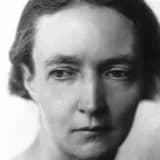
At 12:12 on 15 December 1948, the ZOE reactor, France's first nuclear reactor, goes critical at Fort de Châtillon under Frédéric Joliot-Curie, with Irène a key figure in the effort.
On 15 December 1948, at precisely 12:12, France's first nuclear reactor—nicknamed ZOE ("Zéro, Oxyde d'uranium, Eau lourde," reflecting its near-zero power, uranium oxide fuel, and heavy water moderator)—achieved criticality at the Fort de Châtillon research facility outside Paris. The project was led by Frédéric Joliot-Curie, but it was built upon the foundational scientific work in nuclear physics that Irène Joliot-Curie had helped pioneer over the preceding two decades.
As a leading figure in French nuclear science and a commissioner of the newly formed Commissariat à l'énergie atomique (CEA), Irène Joliot-Curie played a vital role in advancing France's post-war nuclear research program, of which ZOE was the crowning early achievement. Her earlier discovery of artificial radioactivity with Frédéric had been instrumental in demonstrating the feasibility of nuclear chain reactions and the practical exploitation of nuclear fission.
ZOE's start-up marked France's entry into the nuclear age, positioning the country among the small group of nations capable of controlled nuclear fission just a few years after the discovery of fission itself. This achievement had lasting strategic, scientific, and industrial consequences, seeding France's subsequent development of both civilian nuclear power and its nuclear armaments program. It stands as one of the definitive legacies of the Joliot-Curie scientific partnership.