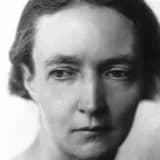
Irène and Frédéric Joliot-Curie announce to the French Academy of Sciences the discovery of artificial radioactivity, creating the first man-made radioactive isotopes.
On 15 January 1934, Irène Joliot-Curie and her husband Frédéric Joliot presented a note to the French Academy of Sciences announcing a discovery that would transform nuclear physics and medicine: artificial (induced) radioactivity. By bombarding stable elements such as aluminium, boron, and magnesium with alpha particles emitted from polonium, the couple observed that the target elements became radioactive themselves, emitting positrons even after the alpha source was removed.
This was the first time humans had created radioactive isotopes that did not exist in nature, transmuting stable atoms (such as aluminium-27) into radioactive isotopes (such as phosphorus-30). The discovery proved that radioactivity was not an exclusive property of naturally occurring heavy elements like uranium, radium, and polonium, but could be induced in virtually any element through nuclear bombardment.
The implications were immediate and profound: artificial radioisotopes rapidly became indispensable tools in medicine (for diagnosis and cancer treatment), biology, chemistry, and industry, and laid essential groundwork for the subsequent development of nuclear fission research and nuclear energy. The announcement was a sensation in the scientific world and directly led to the couple being jointly awarded the Nobel Prize in Chemistry less than two years later, an extraordinarily rapid recognition for the era.