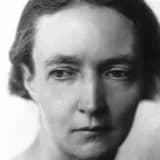
Irène Joliot-Curie receives the Nobel Prize in Chemistry in Stockholm with her husband, becoming the second woman ever to win a Nobel Prize in science.
On 10 December 1935, Irène Joliot-Curie stood in Stockholm alongside her husband Frédéric Joliot-Curie to receive the Nobel Prize in Chemistry for their 1934 discovery of artificial radioactivity. The award recognized their synthesis of new radioactive elements through the bombardment of stable nuclei with alpha particles, a discovery that fundamentally expanded the boundaries of nuclear science.
This ceremony was historic on multiple levels. Irène became only the second woman to receive a Nobel Prize in a scientific category, following in the footsteps of her own mother, Marie Curie, who had won the Physics prize in 1903 and the Chemistry prize in 1911. The Joliot-Curies also became only the second married couple in history to share a Nobel Prize, again echoing the achievement of Marie and Pierre Curie a generation earlier.
The award affirmed that the Curie family's extraordinary scientific legacy was not a singular event but a sustained tradition of excellence spanning generations. For Irène personally, the prize validated years of painstaking experimental work often conducted in the shadow of her illustrious mother, establishing her unequivocally as a scientist of the first rank in her own right rather than merely as "Marie Curie's daughter." The ceremony also carried enormous symbolic weight for women in science, demonstrating that the barriers faced by female researchers, while still formidable, were not insurmountable.