← All women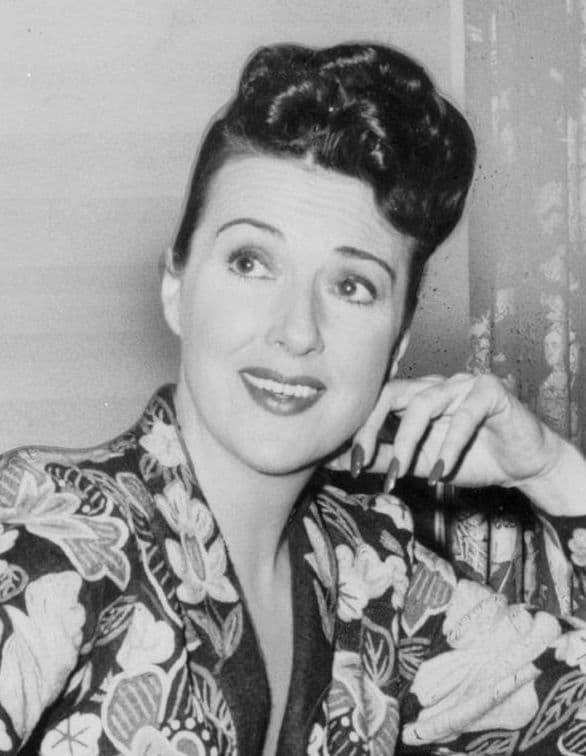
American · Arts · Literature
Gypsy Rose Lee
January 8, 1911 – April 26, 1970
Early Life and Background
Gypsy Rose Lee was born Rose Louise Hovick on January 8, 1911, in Seattle, Washington, to Rose Thompson Hovick and John Olaf Hovick, a traveling advertising salesman. Her childhood was shaped by her mother’s intense ambition and volatility. Rose Thompson Hovick, often described as a classic "stage mother," was determined that her daughters would escape working‑class obscurity through show business and was willing to bend facts, ages, and social norms to make that happen.
Rose Louise had a younger sister, June, later known professionally as June Havoc, who was initially regarded as the more talented child. Their mother shaved years off both girls’ ages to make them more marketable in vaudeville, a practice that later contributed to confusion about Gypsy’s birth year, with some sources citing 1914 instead of 1911. Archival research and official records, however, support the 1911 date.
From a very early age, Rose Louise’s life revolved around performance. According to regional historical accounts, she won a "healthy baby" contest in Seattle around her first birthday, a small but early indication of the public displays that would come to define her life. Formal schooling was sporadic, repeatedly interrupted by touring engagements and her mother’s decisions. As a result, Gypsy’s education came largely from lived experience: backstage environments, travel, and voracious reading.
The family’s movements followed the itinerant routes of early 20th‑century American entertainment—vaudeville circuits, carnivals, and small theaters. These worlds exposed her to a broad range of performers and working‑class audiences, as well as to the precarious economics of show business. Growing up in this environment taught Rose Louise how to survive amid constant flux and instability, skills she would later deploy in reshaping herself into Gypsy Rose Lee.
Career Beginnings and Development
Rose Louise’s first sustained experience onstage came as part of an act featuring her younger sister, June, managed aggressively by their mother. June, a gifted child dancer, headlined the sister act, while Louise often played secondary roles. Their mother’s domineering control and willingness to defy child‑labor regulations created a fraught working atmosphere but also ensured they gained extensive stage experience while still young.
As the sisters grew older, tensions mounted. June eventually ran away to pursue her own career, leaving Louise and their mother to reconfigure their act. This rupture forced Louise into more prominent roles and set the stage for her transformation into a burlesque performer. The move from family vaudeville act to solo work required her to develop a distinctive persona rather than simply support her sister’s dancing.
In the late 1920s, Louise began experimenting with striptease, notably in a burlesque theater in Toledo, Ohio, where she adopted the stage name "Gypsy Rose Lee". Although the precise date of this first striptease is uncertain, biographical accounts place it around 1928. Initially, her act was modest and hesitant, but she quickly realized that she could differentiate herself by emphasizing verbal wit and timing rather than rapid disrobing.
By the early 1930s, Gypsy had established herself on the New York burlesque scene, especially with the Minsky’s circuit, then one of the premier burlesque operations. At Minsky’s, she refined the slow, teasing style that became her trademark: she spoke to the audience, joked, commented, and created dramatic tension around each discarded garment. This approach stood in contrast to more frenetic or purely visual strip acts, making her performances memorable and giving her a reputation as a "thinking man’s stripper."
Gypsy’s burlesque success opened doors to mainstream entertainment. On October 3, 1932, under the name Rose Louise, she made her Broadway debut in the musical revue "Hot-Cha" at the 44th Street Theatre. This marked an important transition from the marginal world of burlesque to the more prestigious Broadway stage. In July 1933 she appeared in George White’s "Melodies", further integrating herself into mainstream theatrical circuits.
Breakthrough and Major Stage Accomplishments
Gypsy’s true breakthrough came with the Ziegfeld Follies of 1936. On January 30, 1936, she was first billed on Broadway as "Gypsy Rose Lee" in that production. This formal adoption of her burlesque persona on a Ziegfeld stage signaled that she had arrived as a major star. The Ziegfeld Follies were synonymous with glamour and high‑end revue entertainment; being billed under that banner conferred a level of respectability and mainstream visibility rarely afforded to striptease performers.
Her appearance in the Follies also put her at the forefront of a cultural shift. Historians describe Gypsy as among the first burlesque striptease stars to be featured in a major Ziegfeld production. Integrating a known stripper into such an elite theatrical brand represented a significant mainstreaming of burlesque aesthetics. Gypsy’s performance there emphasized her hallmark combination of witty patter and controlled undressing, demonstrating to audiences and producers alike that striptease could be presented as sophisticated, theatrical entertainment.
Throughout the late 1930s, Gypsy continued to expand her reach. In 1939 she headlined at the New York World’s Fair, a major national exposition dedicated to "The World of Tomorrow." Her presence at the Fair indicated that she had become a marquee attraction whose name could draw crowds at an event designed to showcase the best of American culture and innovation. It also highlighted the degree to which her once‑marginal art had moved into the mainstream.
In the early 1940s, Gypsy further solidified her place in Broadway musical theater. On January 16, 1940, she joined the cast of Cole Porter’s "Du Barry Was a Lady", replacing famed belter Ethel Merman mid‑run. Taking over a leading role originally created for Merman demonstrated substantial confidence in her talents and star power. Later that year, on October 30, 1940, she entered the cast of Porter’s "Panama Hattie", playing a tough, witty nightclub entertainer—a role that aligned closely with her real‑life persona.
Perhaps her most striking Broadway achievement came on June 24, 1942, when she co‑produced and starred in "Star and Garter", a burlesque‑style extravaganza staged by Mike Todd at the Eltinge Theatre. By serving as both star and co‑producer, Gypsy asserted significant creative and business control. The show brought burlesque aesthetics directly to a Broadway theater, further collapsing boundaries between "legitimate" theater and nightlife entertainment and underscoring her role as a cultural bridge between those realms.
Film, Television, and Literary Work
Beyond the stage, Gypsy Rose Lee pursued a varied career in film and, later, television. During the 1940s, she appeared in movies such as "Stage Door Canteen" (1943), which featured many well‑known entertainers performing for servicemen during World War II. These film roles often drew on her public persona as a witty, sophisticated entertainer, sometimes explicitly referencing her striptease background.
In the 1950s, she continued working in cinema, with roles in films such as "Babes in Baghdad" (1952). As the decade progressed, she shifted increasingly toward character parts that played on her established image while allowing her to explore more dramatic or eccentric roles. In 1958, she appeared in "Screaming Mimi" and "Wind Across the Everglades", both of which showcased her ability to contribute to noirish or offbeat narratives.
Gypsy also wrote fiction, including murder mystery novels that critics received positively. These works demonstrated her facility with plotting and dialogue, qualities that had long been evident in her stage patter. Her transition from live improvisation to structured narrative writing further challenged assumptions that striptease performers were merely bodies rather than creative minds.
Her most influential literary work, however, was her memoir. On September 10, 1957, she published "Gypsy: A Memoir", a semi‑fictionalized account of her childhood, career, and family life. The book offered a candid yet stylized portrait of the harsh realities of show business, the excesses of her mother’s ambition, and the emotional costs of living under constant performance pressure. It quickly became a bestseller, cementing Gypsy’s reputation as an author as well as an entertainer.
The memoir served as the basis for the Broadway musical "Gypsy", which premiered on May 21, 1959, at the Broadway Theatre in New York. With music by Jule Styne, lyrics by Stephen Sondheim, and a book by Arthur Laurents, the musical focused particularly on the character of Rose, Gypsy’s mother, and has since been hailed as one of the greatest American musicals. The original Broadway cast recording, released in 1959, later received recognition from the U.S. Library of Congress’s National Recording Registry for its cultural, historical, and aesthetic significance.
In the 1960s, Gypsy continued to appear in films, including "The Stripper" (1963), in which she played a striptease performer, and "The Trouble with Angels" (1966), one of her later screen roles. She also hosted television talk and variety programs, further demonstrating her ease as a conversationalist and cultural commentator. These projects collectively contributed to her image as an all‑around entertainer, not confined to any single medium.
Awards, Honors, and Recognition
Gypsy Rose Lee did not receive the kind of institutional awards often associated with classical arts—there are no Oscars or Tonys attached directly to her name—but her impact is reflected in other forms of recognition. Her star on the Hollywood Walk of Fame acknowledges her contributions to the entertainment industry, especially film and television.
The most enduring formal recognition of her legacy comes through the continued status of the musical "Gypsy". The show’s original cast recording was selected for the National Recording Registry of the Library of Congress, signaling that the story derived from her memoir is considered part of the nation’s cultural heritage. Numerous revivals of "Gypsy" on Broadway and beyond, often led by major actresses in the role of Rose, attest to the work’s ongoing relevance.
Biographical studies and archival collections, such as the Gypsy Rose Lee papers housed at the New York Public Library, further institutionalize her importance. These materials are used by historians and scholars to examine mid‑20th‑century entertainment, gender roles, and the construction of celebrity personas.
Personal Life
Gypsy Rose Lee’s personal life was as complex and unconventional as her career. She experienced multiple marriages and relationships, reflecting both the instability of show‑business life and her desire for companionship and autonomy. Sources note that she had at least one son, whom she worked diligently to support, and whom she tried, to some degree, to protect from the more exploitative aspects of the theatrical world she knew so well.
Her relationship with her mother, Rose Thompson Hovick, remained central and fraught. The mother’s ruthless ambition, willingness to manipulate others, and volatile temperament left deep marks on Gypsy’s emotional life. This relationship forms the core of her memoir and the musical "Gypsy," where the character of Rose is portrayed as both monstrous and sympathetic—driven by love, fear, and social constraint.
Gypsy was known for her intelligence, extensive reading, and wide circle of friends in artistic and bohemian communities. Accounts describe her as a witty conversationalist who enjoyed discussing politics, literature, and philosophy. She cultivated friendships with writers, actors, and public intellectuals, reinforcing her identity as more than a mere entertainer.
At the same time, she navigated the social stigma attached to stripping and burlesque. Romantic and social partners sometimes struggled with her public image; Gypsy herself worked to balance pride in her achievements with awareness of the moral judgments many contemporaries cast upon her profession.
Legacy and Historical Impact
Gypsy Rose Lee occupies a distinctive place in women’s and cultural history. She is widely credited with helping to redefine striptease as an art form that could incorporate intelligence, wit, and theatrical structure, rather than being reduced to simple exhibitionism. Her slow, teasing style and verbal interplay with the audience emphasized that erotic performance could be as much about suggestion and narrative as about nudity.
By crossing from burlesque into Broadway, film, television, and literature, Gypsy challenged the boundaries that typically confined women in entertainment. She demonstrated that a performer associated with sexuality could also command mainstream stages, publish best‑selling books, and exercise creative control behind the scenes. Her co‑production of "Star and Garter" and authorship of "Gypsy: A Memoir" are especially important in this regard.
The musical "Gypsy" has ensured that her story remains part of the cultural conversation. Although the show focuses heavily on her mother and takes dramatic liberties, it foregrounds women’s experiences in show business—ambition, sacrifice, manipulation, and love—in a way that has resonated with audiences for decades. Through countless revivals, the characters based on Gypsy and her family continue to provoke discussion about gender roles, motherhood, and the price of fame.
For scholars of gender and performance, Gypsy serves as a case study in the negotiation of agency within stigmatized forms of labor. She capitalized on a field that often exploited women but did so in a way that allowed her to assert intellectual and narrative control. Her insistence on being known as an entertainer, writer, and producer as well as a stripper complicates simplistic narratives of victimhood or empowerment, making her a rich subject for historical and feminist analysis.
Her influence extends into contemporary burlesque revival scenes, where performers frequently cite Gypsy Rose Lee as an inspiration for acts that emphasize storytelling, humor, and vintage aesthetics. Modern neo‑burlesque artists see in her a predecessor who proved that the striptease stage could be a site of creativity and commentary, not just display.
Later Life and Death
In her later years, Gypsy continued working across media. She remained active in film and television through the 1960s, with notable appearances in "The Stripper" (1963) and "The Trouble with Angels" (1966). She engaged in television hosting and talk‑show formats, lending her name and personality to programs that valued conversation and anecdote as much as spectacle.
Despite her continued visibility, she faced health challenges. Decades of working in smoky clubs and theaters, combined with the era’s widespread tobacco use, contributed to declining health. In the late 1960s, she was diagnosed with lung cancer. Even as illness progressed, she maintained her public persona and connections to the entertainment world.
On April 26, 1970, Gypsy Rose Lee died of lung cancer in Los Angeles, California, at the age of 59. Her death marked the end of a career that had transformed American understandings of burlesque and female performance. She was buried at Inglewood Park Cemetery, and her passing was widely reported, with obituaries noting her unique place in entertainment history.
Posthumously, interest in her life has remained strong. Archival collections, such as the Gypsy Rose Lee papers at the New York Public Library, and biographies, including Noralee Frankel’s Stripping Gypsy: The Life of Gypsy Rose Lee, have further illuminated her complexities and contributions. Revivals of "Gypsy" and reprints of her memoir continue to introduce new generations to her story.
Today, Gypsy Rose Lee is remembered not only as a famous stripper but as a multi‑talented performer and writer who navigated and reshaped the cultural terrain of mid‑20th‑century entertainment. Her life encapsulates the contradictions and possibilities faced by women who worked within industries that both exploited and empowered them, making her a key figure in any serious almanac of women’s history.
Dated achievements
13 indexed.
- Jan081911Science
Birth of Rose Louise Hovick in Seattle
Rose Louise Hovick, who would become Gypsy Rose Lee, was born in Seattle, Washington.
View details Gypsy Rose Lee - Wikipedia - Sep151912Science
Wins healthy baby contest in Seattle
As an infant, Rose Louise won a 'healthy baby' contest in Seattle, an early instance of local notoriety.