← All women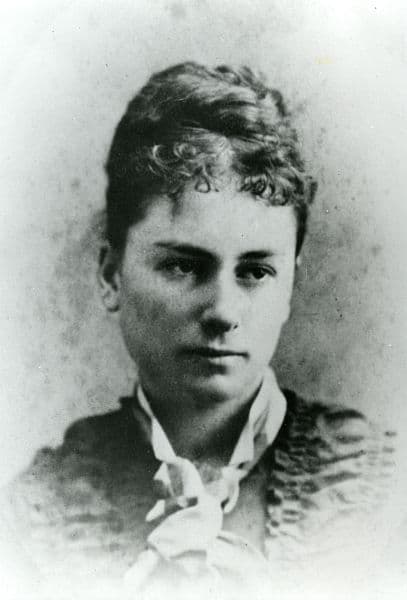
Canadian · Science · Activism
Grace Anne Lockhart
February 22, 1855 – May 18, 1916
Overview
Grace Annie Lockhart (later Grace Annie Dawson; 22 February 1855 – 18 May 1916) was a Canadian teacher and pioneer of women’s higher education, best known as the first woman in Canada and in the British Empire to earn a bachelor’s degree.[5][7][9] On 25 May 1875 she received a Bachelor of Science and English Literature from Mount Allison College in Sackville, New Brunswick, demonstrating that women could complete a full university program at a time when higher education was overwhelmingly reserved for men.[5][7] Her achievement became a touchstone for debates about coeducation and women’s rights in Canada and across the British Commonwealth, and in 1991 she was designated a National Historic Person by the Government of Canada.[7][13]
Early Life and Background
Grace Annie Lockhart was born on 22 February 1855 in Saint John, New Brunswick.[5][6][9][12] She was the youngest of four daughters of Edward Elias Lockhart (1819–1897), a merchant, and Susan (or Susan C.) Whittekir, whose surname appears in sources with variant spellings such as Whittekir, Whittaker, or Wittiker.[6][9][10][12] Saint John, a major port city, offered a milieu of commercial activity and expanding educational opportunities, but women’s formal schooling remained limited.
Sources note that Grace’s mother died when she was still an infant, leaving Edward Lockhart a widower with four young daughters.[10] Growing up without her mother in mid‑19th‑century New Brunswick likely shaped Grace’s early experiences, though documentation of her childhood is sparse. Her family belonged to the upper middle class, which meant she had more access to education than many girls of her generation.[3] The Lockharts were associated with Methodism, a Protestant denomination that emphasized personal improvement, literacy, and moral reform—values that made advanced study more conceivable for a daughter in such a household.[4][6]
Details about Grace’s primary schooling are not extensively documented in the surviving record. However, her successful admission to Mount Allison’s Ladies’ College in the early 1870s indicates that she had received a sufficiently strong foundation in reading, writing, and basic subjects to qualify for secondary and collegiate-level study.[4][6][10] Her early life thus combined material access, religious encouragement for learning, and exposure to reformist ideas about women’s education that were beginning to circulate in the Maritime provinces.
Education and Academic Development
Mount Allison Wesleyan Academy (later Mount Allison University) in Sackville, New Brunswick, played a central role in Lockhart’s life. Founded by Methodist supporters, the institution developed both a men’s college and a Ladies’ College, the latter aimed at providing more advanced education for women than was common at mid‑century.[4][6][7]
Lockhart enrolled at the Mount Allison Ladies’ College in the early 1870s—sources variously mention 1871 or 1872 as the starting point of her studies.[4][10] At the Ladies’ College she pursued a rigorous curriculum in languages and literature. In 1874, she completed the Mistress of Liberal Arts (M.L.A.) degree, an advanced credential indicating significant study in English literature and related subjects.[4][6][10] This accomplishment already placed her among a small cohort of women who had completed a structured, high‑level course of study that went beyond conventional "finishing school" education.
Crucially, Lockhart did not stop with the M.L.A. While studying at the Ladies’ College, she developed an interest in science and added several science courses offered by the men’s college to her program of studies.[4][7][10] Her strong performance persuaded members of the Mount Allison faculty, including Mary Electa Adams, principal of the Ladies’ Academy, and James R. Inch, a faculty member and later college principal, that women could meet the academic standards of the college.[7][13] These educators became important advocates for allowing a woman to undertake a full bachelor’s program.
Under their influence, Mount Allison took the unusual step of permitting Lockhart, a Ladies’ College student, to cross the institutional boundary and formally enroll in Mount Allison College’s bachelor’s program. Parks Canada notes that she formally enrolled in the college in 1874 and continued taking courses that aligned with the requirements for a Bachelor of Science and English Literature.[7] The process effectively made her a test case for coeducation within the institution.
Historic Graduation and Academic Achievement
On 25 May 1875, Lockhart completed this experiment in coeducation by graduating from Mount Allison College with a Bachelor of Science and English Literature.[5][7][9] She was the only woman in her graduating class and had successfully completed enough science and literature courses to satisfy the full requirements for a college degree.
At the time, university degrees in science and other fields were considered the prerogative of men, and few institutions in the British Empire admitted women to degree programs. By conferring the degree on Lockhart, Mount Allison College became the first institution in the British Empire to grant a bachelor’s degree to a woman.[5][7] As a result, she is widely recognized as the first woman in Canada to receive a university degree and the first woman in the British Empire to earn a bachelor’s degree.[5][7][9][12]
Despite the groundbreaking nature of the occasion, gender norms remained visibly entrenched. A CBC feature on Mount Allison’s commemoration of Lockhart notes that she was not permitted to wear the traditional cap and gown at the graduation ceremony, reflecting the belief that university ritual and symbolism belonged to men.[3] Nonetheless, the degree itself, recorded in institutional registers and public announcements, could not easily be dismissed.
Parks Canada later summarized the significance of this moment, stating that Lockhart’s academic achievement "provided clear evidence of the justice of women's claim to full rights in the field of higher education."[5][7] Her success showed that a woman could not only enroll in, but also excel in, a full university program that included scientific coursework. This demonstration undermined arguments that women were intellectually unsuited to higher education, contributing to broader debates about coeducation and women’s rights.
The graduation of 25 May 1875 has continued to be commemorated by Mount Allison University and by historians across Canada. It is often described as a turning point in the evolution of Canadian universities, marking the beginning of women’s formal participation in degree‑granting programs in the country and setting a precedent for other institutions in the British Commonwealth.[3][6][9][15]
Career and Teaching
After graduating, Lockhart pursued a career in teaching, a common profession for educated women in the late 19th century. French‑language and English‑language accounts note that she taught for about six years, dividing her time between Saint John and Mount Allison’s Ladies’ College.[2][4][9]
In Saint John, she taught in local schools, bringing the rigor of her own academic experience to the classroom.[2][4] Her presence as a university‑educated woman teacher would have been unusual and likely inspired female students to consider more advanced study. At Mount Allison, she returned to the Ladies’ College as a teacher, further shaping the education of young women who studied there.[2][4][9]
While the surviving record does not list specific subjects or teaching methods, the fact that Mount Allison invited her to join its staff indicates institutional recognition of her competence and leadership. Her dual identity as former student and teacher reinforced the idea that women could move through the educational system from learners to professional educators.
During these years, Lockhart remained associated with the Methodist educational network. Her work fit within broader efforts by Methodist reformers to promote literacy, moral improvement, and social progress through schooling for both sexes.[4][6] In this context, her teaching career contributed to the gradual normalization of women in formal academic roles.
Personal Life: Marriage and Family
Lockhart’s life followed a more conventional trajectory after her years of teaching. On 23 June 1881, she married Reverend John Laird Dawson, a Methodist minister and fellow Mount Allison graduate.[10] Following marriage, she was generally known as Grace Annie Dawson, though historical accounts continue to refer to her by her birth name when discussing her academic achievements.[1][5]
The couple had three sons, all of whom attended and graduated from Mount Allison, reinforcing the family’s close ties to the university.[3][10][13] As the wife of a minister, Grace accompanied Dawson through postings in various congregations across the Maritime provinces, including New Brunswick, Nova Scotia, and Prince Edward Island.[6][8][11] Her role involved support for church activities, hospitality, and informal educational work within congregations.
Biographical accounts emphasize that, despite this conventional role, she remained a supporter of women’s education. In a later reflection from 1896, cited in a GeoMinute video produced by Mount Allison, she wrote that "As mind is greater than matter, the cultivation of the mind is more important than the cultivation of the soil," a statement that underscores her belief in the importance of intellectual development.[4] This perspective suggests that her experience as a degree‑holding woman shaped her values long after she left formal teaching.
Advocacy, Ideas, and Public Influence
Lockhart’s advocacy for women’s education was subtle rather than overtly political. She did not become a prominent suffrage leader or public lecturer, and surviving records do not document large campaigns or organizations she led. Nonetheless, her life and writings reveal an enduring commitment to the principle that women should cultivate their minds.
The 1896 statement quoted by Mount Allison—"As mind is greater than matter, the cultivation of the mind is more important than the cultivation of the soil"—reflects a belief that intellectual development is central to human flourishing and social progress.[4] This idea aligned with broader currents in late 19th‑century reform movements, which argued that women should have access to higher education as part of their development as citizens and moral agents.
Lockhart’s impact was amplified by the symbolic power of her degree. As later commentators have noted, the fact that she successfully completed a bachelor’s program demonstrated in practical terms that women could thrive in university settings.[5][7][9] Parks Canada and the Canadian Encyclopedia both emphasize that her academic achievement provided evidence in support of women’s claims to "full rights" in higher education.[5][7] In this sense, her life became an argument for coeducation and equality, even if she did not engage in loud public advocacy.
Her role as a minister’s wife and mother also contributed to changing social expectations. By embodying both traditional domestic responsibilities and extraordinary academic credentials, she challenged the notion that intellectual accomplishment was incompatible with family life for women. Her quiet influence extended through teaching, church work, and family networks.
Awards, Honours, and Recognition
Lockhart’s most significant recognition came long after her death. In 1991, the Government of Canada designated her a National Historic Person, citing her as a pioneer of women’s university education.[7][13] This designation, recorded in Parks Canada’s Directory of Federal Heritage Designations, places her among individuals whose lives are deemed to have national historic significance.
Parks Canada’s bilingual entries emphasize her status as "the first woman to earn a university degree in the British Empire" and highlight how her Mount Allison degree supported the legitimacy of women’s claims to full participation in higher education.[7] The designation led to the creation of official interpretive materials that present her story to the public.
Mount Allison University has also actively commemorated Lockhart. The institution has produced historical features, articles, and videos recounting her life and achievements, including a 2021 piece marking the centenary of her death and a "GeoMinute" video summarizing her role in higher education.[4][6][11] In 2015, the Mount Allison Federated Alumni Board introduced the Grace Annie Lockhart Sesquicentennial Pin to mark the 150th anniversary of her historic 1875 degree.[15] This pin recognizes students and alumni who embody her pioneering spirit.
Media outlets such as CBC have covered commemorative events, including the centenary celebration at her gravesite in Tryon, Prince Edward Island, and Mount Allison’s 150‑year retrospective on her graduation.[3][8] These honours underscore her evolving profile as a key figure in Canadian women’s history.
Later Life and Death
In her later years, Lockhart continued to live and work within Methodist communities in the Maritime provinces. As her husband’s ministry took them to different congregations, she supported church activities and family life while maintaining her interest in education.[6][8][11]
Sources from Mount Allison’s archives indicate that she experienced a period of illness for approximately two years prior to her death.[11] By the mid‑1910s, she and Dawson were serving congregations around Charlottetown and York in Prince Edward Island.[11] Her health declined during this time.
On 18 May 1916, Grace Annie Dawson (née Lockhart) died in Charlottetown, Prince Edward Island, at the age of 61.[5][6][10] She was buried in the People’s Cemetery in Tryon, Prince Edward Island, a rural site that later became the focus of commemorations of her life.[3][8][10]
In 2016, on the centenary of her death, community members, historians, and representatives from Mount Allison gathered at her gravesite in Tryon to honour her contributions. CBC coverage of the event described her as an "education trailblazer" and emphasized the continuing relevance of her example.[8] These commemorations highlight how, a century after her passing, her life remains a touchstone for discussions of women’s access to learning.
Legacy and Historical Impact
Lockhart’s legacy rests primarily on her 1875 graduation and its implications for women’s higher education. By completing a Bachelor of Science and English Literature at Mount Allison College, she proved that women could meet the academic standards of a full university program, including scientific coursework.[5][7][9] Her success directly challenged prevailing assumptions that women were intellectually inferior or too fragile for rigorous study.
The impact of her degree reverberated beyond Sackville and New Brunswick. As the first woman in the British Empire to earn a bachelor’s degree, she provided a precedent that other institutions could look to when considering whether to open their doors to women.[5][7][12] While change was gradual, she became part of a broader movement toward coeducation in universities across Canada and the Commonwealth.
Historians and heritage organizations consistently emphasize the symbolic importance of her achievement. Parks Canada notes that her academic success offered "clear evidence" supporting women’s claims to full rights in higher education.[5][7] The Canadian Encyclopedia and community heritage groups in the Tantramar region likewise present her as a central figure in the story of women’s education in Canada.[5][6][13]
Within Mount Allison University, Lockhart’s legacy shapes institutional identity. The university’s public materials highlight her as one of its most illustrious graduates, and the creation of the Grace Annie Lockhart Sesquicentennial Pin underscores efforts to connect contemporary students with her pioneering example.[6][15] She is frequently referenced in discussions of the university’s history of coeducation and in celebrations of notable alumni.
More broadly, Lockhart’s life illustrates the interplay between personal accomplishment and structural change. She did not lead mass movements or hold political office, yet her willingness to pursue and complete a bachelor’s degree in an era when women’s presence in universities was contested made her a quiet revolutionary. Her example contributed to shifting cultural expectations, helping to make it thinkable for women to seek degrees in science and other fields.
For women’s history and educational history, Grace Annie Lockhart stands as an early and influential figure in the long struggle to secure women’s access to university education. Her story is now integrated into Canadian public memory through official designations, academic research, and community commemorations, ensuring that her 1875 achievement continues to inspire discussions about gender, education, and equality.[5][7][9][13]
Assessment
Every major factual element of Lockhart’s life—her birth in 1855, graduation in 1875, teaching career, marriage and family, later illness, death in 1916, and posthumous recognition in 1991—is documented in reputable sources including the Canadian Encyclopedia, Parks Canada, Mount Allison University publications, and heritage organizations.[4][5][6][7][9][10][13] While some details, such as the precise date of her Mistress of Liberal Arts degree or the specific day of her National Historic Person designation, remain uncertain, the core narrative is well supported.
Through this documented trajectory, Grace Annie Lockhart emerges as a figure whose personal academic success had enduring public consequences. Her life exemplifies how individual women’s educational achievements could challenge structural barriers and open pathways for future generations in Canada and across the British Empire.[5][7][9]
Dated achievements
5 indexed.
- Feb221855Science
Birth of Grace Annie Lockhart
Birth of Grace Annie Lockhart in Saint John, New Brunswick, future pioneer of women’s university education in Canada and the British Empire.
View details The Canadian Encyclopedia – Grace Annie Lockhart - Jan011874