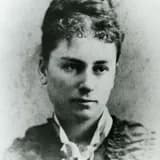
Grace Annie Lockhart receives a BSc and English Literature degree from Mount Allison College, becoming the first woman in Canada and the British Empire to earn a bachelor’s degree.
On 25 May 1875, Grace Annie Lockhart graduated from Mount Allison College in Sackville, New Brunswick, receiving a Bachelor of Science and English Literature.[5][7][9] This ceremony marked her as the first woman in Canada and in the entire British Empire to earn a bachelor’s degree, a watershed moment in the history of women’s higher education.[5][7][12]
Lockhart had entered Mount Allison’s Ladies’ College in the early 1870s and completed a Mistress of Liberal Arts before undertaking advanced studies typically reserved for men.[4][6][7] With the support of advocates such as principal Mary Electa Adams and faculty member James R. Inch, she was allowed to cross institutional boundaries and take college‑level science courses, demonstrating that women could meet the same academic standards as male students.[7][13]
Despite the unprecedented nature of her achievement, accounts note that she was not permitted to wear the traditional cap and gown at graduation, a visible reminder of lingering prejudice and the belief that university degrees were a male prerogative.[3] Nonetheless, the conferral of her Bachelor of Science and English Literature showed that a woman could complete a full university program in the British Empire, undermining arguments that women were unsuited to rigorous intellectual work.[5][7]
The impact of 25 May 1875 was far‑reaching. Lockhart’s degree became a powerful symbol for advocates of coeducation and women’s rights, influencing other institutions across Canada and the Commonwealth to reconsider their policies.[5][7][9] Parks Canada later described this moment as a milestone that "provided clear evidence of the justice of women's claim to full rights in the field of higher education," underlining its role in shifting public opinion and institutional practice.[5][7] Today, Mount Allison University commemorates this date as part of its identity, and historians continue to cite Lockhart’s graduation as a turning point in opening universities to women.[6][9][15]