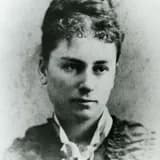
Government of Canada recognizes Grace Annie Lockhart as a National Historic Person for pioneering women’s university education.
In 1991, the Government of Canada formally recognized Grace Annie Lockhart as a National Historic Person, honouring her as a pioneer of women’s university education.[7][13] Parks Canada’s Directory of Federal Heritage Designations records this decision, which placed her alongside other individuals whose lives significantly shaped Canadian history.[7]
The designation acknowledged Lockhart’s 1875 achievement as the first woman in the British Empire to earn a university degree and underscored its national and international importance.[5][7][9] By the late 20th century, women were present across Canadian universities, but historians and educators were increasingly attentive to the earlier struggles that made this possible. Recognizing Lockhart in 1991 was part of a broader effort to recover and commemorate women whose contributions had been overlooked in traditional narratives.
As a National Historic Person, Lockhart became the subject of official interpretive materials, plaques, and educational resources that explain her role in advancing women’s access to higher education.[7] This status supports teaching about her life in schools and universities and connects her story to wider themes of gender equality, social reform, and the evolution of Canadian institutions.
The 1991 recognition has had continuing impact. It anchors public commemorations, including ceremonies at Mount Allison University and at her gravesite in Tryon, Prince Edward Island, where community members and descendants reflect on how her degree changed expectations for women’s academic potential.[6][8] While the exact day of the designation is not specified in accessible records, the year itself marks an important moment of rediscovery and institutional acknowledgment, ensuring that Lockhart’s quiet act of graduating in 1875 is remembered as a landmark in the history of Canadian women’s rights and education.[7][13]