← All women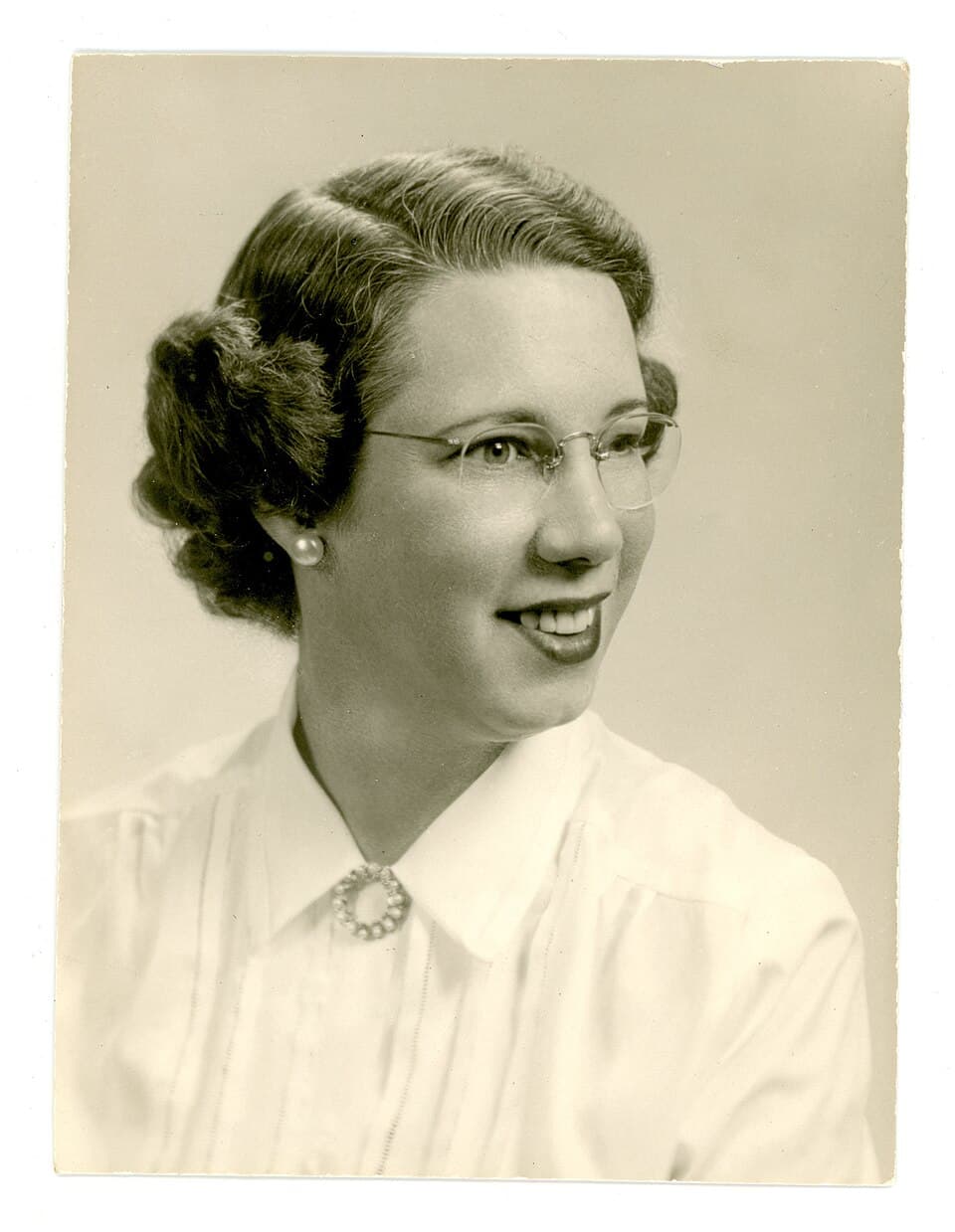
American · Science
Frances Elizabeth "Betty" Snyder
March 7, 1917 – December 8, 2001
Early life and education
Frances Elizabeth Snyder was born on March 7, 1917, in Philadelphia, Pennsylvania. Later known as Betty Holberton after marriage, she grew up in a period when women’s opportunities in science and engineering were sharply limited by social convention. Available biographies describe her as a bright student whose early path into higher education intersected with gender expectations that often discouraged women from pursuing advanced technical careers.
Holberton attended the University of Pennsylvania in the 1940s. Sources differ in emphasis on her original field of study, but they consistently note that she studied at the university before turning toward journalism, a field that at the time offered women more flexibility and travel. This choice reflected both the practical constraints of the era and Holberton’s own desire for a broader professional life. Her college experience also placed her in the intellectual environment from which wartime computing emerged. In the 1940s, mathematics and engineering were becoming crucial to military and scientific work, and women were increasingly recruited into calculation and data-processing roles.
Her early biography matters because it illustrates the limited pathways available to gifted women in technical fields before the computer age. She did not enter the profession through a conventional engineering route. Instead, she moved into computing at a moment when wartime necessity created openings for women whose talents might otherwise have been excluded from such work.
Wartime computing and ENIAC
During World War II, the U.S. Army needed people to compute ballistic trajectories for weapons research. Women were recruited as human “computors” at the Moore School of Electrical Engineering at the University of Pennsylvania, where Holberton became part of the group that would later be selected to program ENIAC. In 1945, six women—among them Betty Snyder—were chosen from this pool to become the first programmers of the experimental machine. Their work involved figuring out how to direct a computer that had not yet been accompanied by established programming practices, documentation, or a recognized programming profession.
The public unveiling of ENIAC on February 15, 1946, marked a major milestone in world history: the debut of the first operational general-purpose electronic digital computer. Holberton’s role was essential because ENIAC did not simply “run” on its own; it required humans to create procedures, wiring strategies, and logical sequences that made the hardware useful. The women who programmed it developed methods for setting up and reconfiguring calculations, helping transform the machine into an operational system.
Holberton’s ENIAC work is significant for women’s history because it shows that women were present at the beginning of the computer revolution, not added later. Yet their contributions were often minimized in public accounts of early computing. In later years, historians and institutions recognized that the ENIAC programmers had performed a form of software engineering before the term existed, establishing patterns of work that would become central to the discipline.
UNIVAC, programming innovations, and postwar computing
After the war, Holberton worked for the Eckert-Mauchly Corporation and later Remington Rand, helping move computing from military experimentation into commercial and governmental use. She was involved in the development of UNIVAC I, one of the first commercial computers in the United States, and contributed to software used in the processing of the 1950 U.S. Census. Her statistical analysis package helped demonstrate that electronic computers could manage large-scale administrative data, making computing more valuable to public institutions.
One of Holberton’s best-known achievements came in 1951, when she devised the first sort-merge generator for UNIVAC I. This was a major step toward generative programming: instead of writing all routines manually, programmers could create reusable structures for common operations. The concept anticipated later ideas in compilation and higher-level software abstraction. Grace Hopper later credited Holberton’s work as influential in the development of compiler thinking. In that sense, Holberton was not merely writing code; she was helping define what code could be.
During the 1950s, Holberton also helped design aspects of the UNIVAC I control console, including the computer and numeric keyboards, which influenced later interface design. She worked with John Mauchly on the C-10 instruction set for BINAC, and she contributed to the early standards work that eventually shaped COBOL and FORTRAN. These efforts show the breadth of her influence: she was active not only in programming but in the design of systems, instructions, and standards that made programming more portable and more systematic.
Later sources also credit Holberton with inventing the use of breakpoints in computer debugging, an innovation that became fundamental to software development practice. The ability to interrupt execution at a specific point and inspect a program’s state is now so standard that its origins can be overlooked. Holberton’s contribution helped shape the everyday craft of programmers far beyond her own era.
Later career and leadership
Holberton’s professional career continued to expand as computing institutions matured. She served in the Applied Mathematics Laboratory at the David Taylor Model Basin beginning in the 1950s, and in 1959 she became Chief of the Programming Research Branch. She later worked at the National Bureau of Standards, where she remained associated with computational research and standards-related work until 1983. These positions placed her at the center of the transition from experimental computing to institutionalized computer science.
Her leadership was especially notable in a period when women were still underrepresented in technical management. By rising into a branch chief role, she helped demonstrate that women could not only program computers but also guide the research agendas around them. Her career spanned the earliest decades of the computing profession, allowing her to influence both practice and policy as the field developed.
Awards and honors
Holberton received significant recognition later in life as historians and computer organizations reassessed the origins of computing. Available sources and memorial profiles identify honors including the Department of Commerce Silver Medal in 1976, the Ada Lovelace Award in 1997, and the IEEE Computer Pioneer Award in 1997. She was also associated with the WITI Hall of Fame in 1997. These honors recognized her not just as a participant in early computing, but as one of the field’s genuine pioneers.
The timing of these awards is also important. Many of the women who worked on ENIAC and related systems labored for decades before receiving broad public acknowledgment. Holberton’s late-career honors reflect a wider historical correction: the gradual recognition of women’s foundational contributions to computer science. Her awards validated work that had long been essential but underpublicized.
Personal life
Holberton married John Vaughn Holberton, and some sources note that they had two daughters. Her marriage is part of the public record of her life, but her professional legacy is what has most strongly shaped historical remembrance. As with many women in mid-20th-century technical fields, her personal life unfolded in a culture that often expected women to prioritize family over career. Her ability to pursue sustained professional work while raising a family reflects the balancing demands faced by many women scientists and engineers of her generation.
Biographical accounts also emphasize the gender barriers she confronted early in life. One often-cited anecdote recalls a University of Pennsylvania professor asking whether she would be better off at home raising children. Whether quoted exactly or paraphrased in later retellings, the story captures the assumptions women in technical education routinely faced. Holberton’s career became an answer to those assumptions.
Legacy and historical impact
Betty Holberton’s legacy lies in the invention and refinement of practices that made computing a usable human discipline. She was present at the creation of ENIAC, helped move computing into the commercial era through UNIVAC, contributed to early programming standards, and shaped debugging and interface conventions that remained influential for decades. Her life shows that software history was not only written by later theorists, but also by practitioners who had to invent methods before formal rules existed.
Her importance to women’s history is equally profound. Holberton was one of the very first women to hold a central role in electronic computing, and her career demonstrated that women’s technical labor was foundational rather than auxiliary. Later historians have repeatedly cited her when tracing the history of women in computing, the genealogy of programming languages, and the emergence of software engineering. She belongs to the generation that turned computing from a wartime experiment into a lasting scientific and commercial field.
Frances Elizabeth “Betty” Snyder Holberton died on December 8, 2001, in Rockville, Maryland, at the age of 84. Her death prompted renewed appreciation for a life that had helped shape the modern digital world long before the public fully understood how important programming would become. Today, she is remembered as one of the indispensable pioneers whose work helped define both the technology and the profession that followed.
Dated achievements
5 indexed.
- Mar071917Science
Birth of Frances Elizabeth "Betty" Snyder
Betty Snyder, pioneering computer programmer, was born in Philadelphia, Pennsylvania.
View details Betty Snyder — Wikipedia - Feb151946Science
Public unveiling of ENIAC, the first general-purpose electronic digital computer
ENIAC, programmed by Snyder and five other women, was publicly unveiled at the Moore School, marking the birth of modern computing.