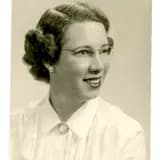
Holberton wrote one of the earliest statistical software packages, used to process 1950 U.S. Census data on UNIVAC I.
By 1950, Betty Snyder Holberton had developed one of the earliest known statistical analysis software packages for the newly built UNIVAC I computer, the first commercially produced computer in the United States. This software was used to help process data from the 1950 United States Census, a massive undertaking that had previously relied on mechanical tabulating machines dating back to Herman Hollerith's punch-card systems of the 1890s.
Holberton's work demonstrated that electronic computers could handle large-scale, real-world government data processing tasks with speed and accuracy far beyond prior methods. This was among the first major civilian, non-military applications of electronic computing to a nationwide administrative function, helping to prove the practical value of computers beyond scientific and military calculation.
Her statistical package required not only mathematical rigor but also careful engineering of how data would be organized, sorted, and reported — skills that built directly on her ENIAC experience and would soon lead to her development of the sort-merge generator. This project helped cement UNIVAC's reputation as a viable tool for business and government, paving the way for the broader commercial adoption of computers throughout the 1950s and beyond.
The exact calendar date of completion is not documented in surviving records, but the work is consistently dated to 1950 in historical accounts of early computing.