← All women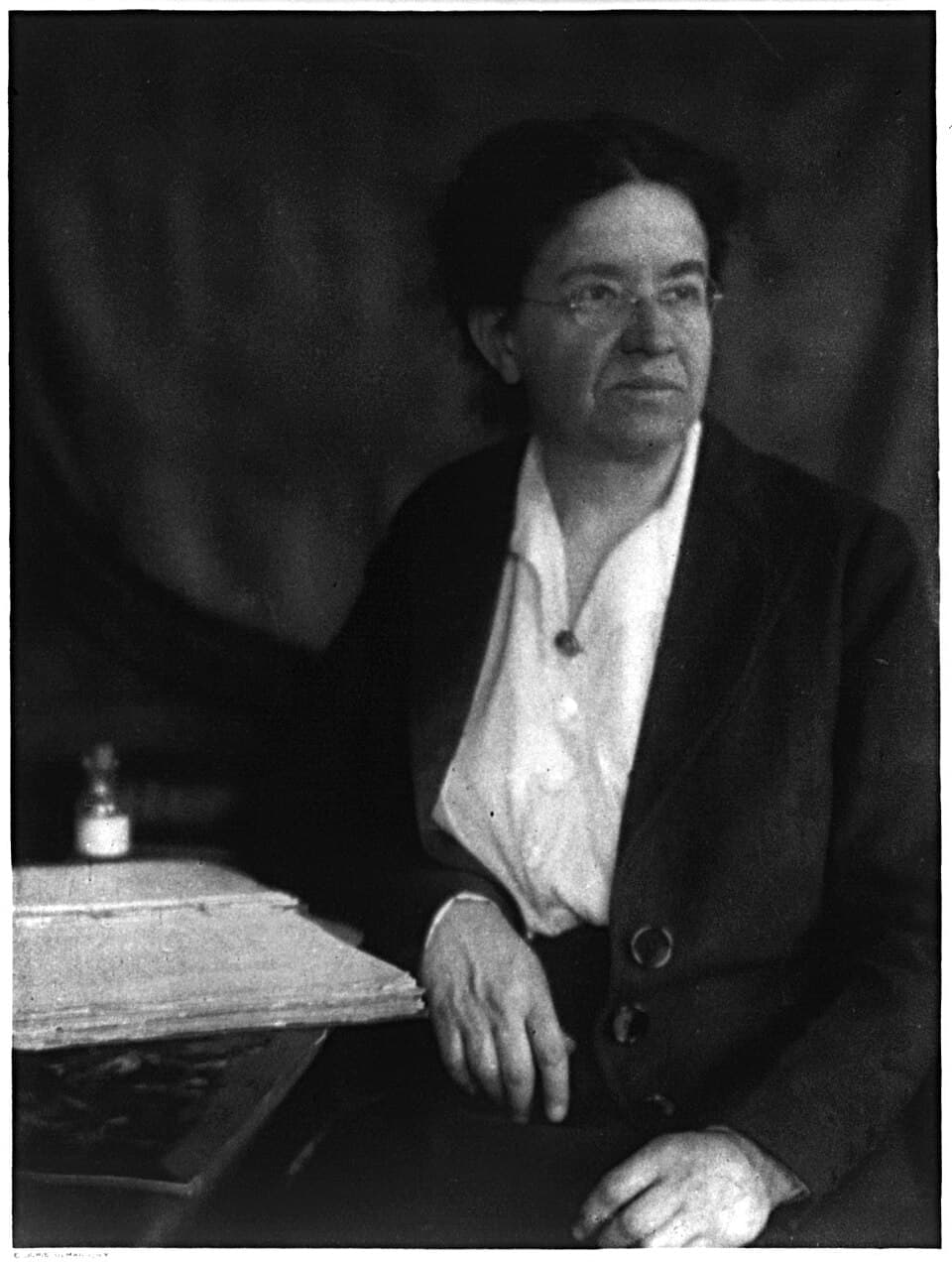
American · Science · Medicine
Florence Sabin
November 9, 1871 – October 3, 1953
Early Life and Family Background
Florence Rena Sabin was born on November 9, 1871, in Central City, Colorado Territory, a mining town in the Rocky Mountains.[1][4][8] She was the second daughter of George Kimball Sabin, a mining engineer, and Serena Miner Sabin, a schoolteacher.[4][9] Her early years were shaped by both the rough environment of a boom‑and‑bust mining community and a family culture that valued education.
Sabin’s childhood was marked by loss and instability. Her mother died when Florence was seven, reportedly on Florence’s seventh birthday, leaving George Sabin a widower responsible for two young daughters.[3][4] Unable to manage both mining work and child‑rearing, he placed the girls in boarding schools and later with relatives in the East.[3][4] Florence and her sister Mary spent time in Vermont, where they eventually attended Vermont Academy, a coeducational preparatory school.[4][9] These moves exposed Sabin to different educational environments and fostered independence and adaptability at an early age.
Despite limited means, the family encouraged Florence’s academic ambitions. At Vermont Academy she excelled, particularly in science and mathematics, and was encouraged to continue her education.[4][9] The decision to pursue higher education was itself notable: in the late 19th century, relatively few American women, and fewer still from frontier regions, enrolled in college.
Education and Formative Influences
Sabin entered Smith College in Northampton, Massachusetts, one of the leading women’s colleges of the period, and received her B.S. degree in 1893.[4][8][9] At Smith, she developed a strong interest in biology and anatomy, influenced by faculty including zoologist Mary Browne and by the dean, Dr. Ada Comstock or another woman dean often referred to as Dr. Preston in later accounts, who urged her to consider a medical career despite widespread barriers to women in medicine.[3][5][9]
Upon graduation, Sabin faced the economic realities confronting many aspiring women professionals. To finance further study, she taught high school mathematics in Denver for two years and then taught zoology at Smith College for another year.[4][8] This period of teaching not only provided income but deepened her understanding of biological sciences and confirmed her desire to do research.
Sabin entered the newly established Johns Hopkins School of Medicine in Baltimore in 1896.[4][5][8] Johns Hopkins had agreed to admit women to its medical school following a major fundraising campaign led by women donors, a story Sabin later acknowledged as critical to her own opportunity.[5][7][9] She was one of fourteen women in a class of forty‑five, a striking minority presence in an institution that would become central to American biomedical research.[4][8]
At Johns Hopkins, Sabin studied under prominent anatomist and mentor Franklin P. Mall, whose emphasis on meticulous histological methods greatly influenced her career.[4][6][8] She completed her M.D. degree in 1900, graduating with honors.[3][4][7][9] During her medical training she began research projects that would launch her scientific career, including early work on the structure of the spinal cord and medulla.
Career Beginnings at Johns Hopkins
After receiving her M.D. in 1900, Sabin undertook internships at Johns Hopkins and quickly moved into academic work.[3][4][8] She was appointed an assistant in anatomy, then instructor, under Franklin Mall, who strongly supported her research ambitions.[4][6] At a time when women physicians were often restricted to clinical roles or women’s hospitals, Sabin’s shift into laboratory science was atypical and required institutional backing and personal persistence.
One of her earliest major projects was An Atlas of the Medulla and Midbrain, published in 1901.[1][4][8] The atlas provided detailed histological and anatomical drawings and descriptions of brainstem structures and became a widely used reference for medical students and neurologists for decades.[1][4] Its rigorous correlation of microscopic anatomy with gross structure reflected Mall’s influence and Sabin’s own precision.
Sabin also produced clinical and neuropathological research in this early period. In 1900 she authored a paper on arsenical neuritis, dealing with nerve damage induced by arsenic compounds, which were then used therapeutically and could cause serious toxicity.[8] This work displayed her ability to connect clinical observations with underlying pathology and contributed to the emerging literature on chemical neuropathology.
Sabin’s rise through academic ranks was steady but remarkable for a woman in the early 20th century. By 1902 she was teaching anatomy at Johns Hopkins, and over subsequent years she advanced in responsibility and reputation.[1] Her teaching was praised for clarity and rigor, and she drew many students into research projects, helping to form a tradition of investigative pathology and histology at the institution.
Pioneering Research on the Lymphatic System
Sabin’s most celebrated scientific contributions came from her investigations into the development of the lymphatic system. Supported in part by the Baltimore Association for the Promotion of University Education for Women, she undertook a complex embryological study to determine how lymphatic vessels arise in the developing mammalian body.[3][4][8]
Her work culminated in the publication of The Origin and Development of the Lymphatic System in 1913, a monograph that became foundational for lymphatic embryology.[1][4][8] Through meticulous injection and histological techniques, she argued that lymphatic vessels develop from endothelial outgrowths of veins rather than from isolated mesenchymal spaces. This venous origin theory challenged competing models and was widely accepted, profoundly shaping understanding of fluid balance, immune cell trafficking, and vascular development.[4][8][9]
Sabin’s lymphatic research extended to the study of blood cells and the bone marrow. She investigated the genesis of leukocytes and erythrocytes, exploring how different blood cell lineages develop and migrate.[4][8] Her studies helped establish the concept of the bone marrow as a central hematopoietic organ and informed later work on anemia, leukemia, and immune disorders.
As her reputation grew, Sabin was invited to lecture widely and participate in professional societies. She was recognized not only for specific discoveries but for methodological innovations—careful serial sectioning, systematic injections, and quantitative analysis of embryonic structures. Her work exemplified the new model of the physician‑scientist who combined clinical training with laboratory research.
First Woman Full Professor at Johns Hopkins
In 1917, Sabin was appointed professor of histology at Johns Hopkins School of Medicine, becoming the institution’s first woman to hold a full professorship and, more broadly, one of the earliest women full professors at any major American medical school.[1][4][6][8] Her promotion capped years of research productivity and teaching excellence.
This achievement carried major symbolic weight. Medical schools and universities in the early 20th century rarely granted women tenure‑track or senior positions, and when they did, it was often in women’s colleges or marginal departments. Sabin’s rise in a leading coeducational research institution challenged prevailing assumptions about women’s capabilities and roles in academic medicine.[5][9]
As a full professor, Sabin continued to direct research, supervise graduate students, and shape curriculum in histology and embryology. She served as a role model for younger women at Johns Hopkins and beyond, demonstrating that women could lead laboratories and achieve senior academic status while conducting cutting‑edge research.
Leadership in Professional Societies
Sabin’s influence extended beyond Johns Hopkins into national professional organizations. In 1924 she became the first woman president of the American Association of Anatomists (AAA), reflecting broad recognition of her scientific leadership.[1][6][8] Her presidency at AAA symbolized women’s growing presence in anatomical science and provided an important precedent for later female officers across scientific societies.
Her most famous institutional breakthrough occurred in 1925, when she was elected the first woman member of the National Academy of Sciences. The Academy was founded in 1863 and had remained exclusively male for sixty‑eight years.[6] Sabin’s election, announced publicly on May 17, 1925, drew national attention and was widely portrayed as a milestone in the struggle for women’s recognition in science.[5][6][7]
For two decades after her election, Sabin remained the sole woman in NAS, underscoring both the magnitude of her achievement and the persistent exclusion of women from elite scientific institutions.[8][9] Her presence within the Academy provided a crucial precedent and source of encouragement for later women scientists seeking membership.
Career at the Rockefeller Institute for Medical Research
In 1925 Sabin moved from Johns Hopkins to the Rockefeller Institute for Medical Research (now Rockefeller University) in New York City, where she became head of the Department of Cellular Studies, again breaking gender barriers as the first woman to head a department at the institute.[1][2][7][8]
At Rockefeller, Sabin shifted her research focus increasingly toward tuberculosis, a leading cause of death in the early 20th century. She studied the pathology of the disease and the body’s immune response, analyzing how tubercle bacilli interacted with various host tissues and immune cells.[2][5][8] Her work contributed to refining experimental models of tuberculosis and helped inform approaches to vaccination and public-health measures, even as the full therapeutic revolution awaited later antibiotics.
Sabin also continued her investigations into blood and vascular biology, including studies of blood vessel formation, phagocytic cells, and inflammatory responses.[2][4][8] Her research at Rockefeller reinforced her status as a leading figure in experimental pathology and immunology.
She remained at the Rockefeller Institute until her retirement in 1938, closing a chapter of laboratory‑based scientific work that spanned nearly four decades.[1][7][9] By then she had published more than 100 scientific papers, book chapters, and two major books, and had trained numerous younger scientists.[4]
Transition to Public Health Activism in Colorado
After retiring from Rockefeller in 1938, Sabin returned to Colorado, intending to live a quieter life.[1][4][7] However, she soon became deeply involved in the state’s public‑health problems. By the early 1940s, Colorado faced high tuberculosis rates, inadequate sanitation, and limited funding for public-health services—issues that resonated with Sabin’s scientific background and social concerns.[3][5]
In 1944, Governor John Vivian asked Sabin to serve as a health advisor on the state’s Post‑War Planning Committee, and she ultimately chaired a subcommittee on health.[1][3] She agreed, emerging from retirement to lead an intensive investigation of Colorado’s health infrastructure. Drawing on her scientific training and organizational skills, Sabin gathered data on disease incidence, hospital capacity, and public-health administration across the state.
Her findings highlighted serious deficiencies and helped shape an ambitious legislative agenda. Sabin became an energetic advocate for reform, testifying before the legislature, speaking to civic groups, and writing articles that explained the public-health crisis to citizens.[3][5][9] Her work culminated in a package of measures passed in the mid‑1940s, often collectively referred to as the “Sabin Health Laws.”[1][3][5]
These laws reorganized the Colorado State Health Department, increased funding, strengthened disease reporting, and improved hospital and sanitation standards. The impact was measurable; for example, Denver’s tuberculosis death rate reportedly fell significantly—from about 54.7 to 27 per 100,000 population—over the years after reforms were implemented.[3] Sabin’s second career thus helped transform Colorado’s health system and demonstrated how a laboratory scientist could become an effective public-health activist.
Awards, Honors, and Recognition
Over the course of her life, Sabin received numerous honors recognizing both scientific achievement and public service. Her election to the National Academy of Sciences in 1925 remains one of the most cited milestones.[6][7][8] She was also awarded honorary degrees and invited to give named lectures at major universities and medical societies.[4][9]
In 1951 she received the Albert Lasker Public Service Award, one of the most prestigious American medical honors, for her work in modernizing Colorado’s public-health system.[2][7] The award acknowledged the effectiveness of the Sabin health laws and her leadership in translating scientific understanding of disease into legislative and administrative reforms.
Sabin’s contributions continued to be recognized posthumously. She was later inducted into the Colorado Women’s Hall of Fame, and her bronze statue was placed in the National Statuary Hall Collection at the U.S. Capitol as one of two representatives of Colorado, symbolizing her importance to the state and to women’s history.[1][3]
Personal Life
Sabin’s personal life was characterized by dedication to work and a conscious choice not to marry or have children, decisions that contemporaries and later historians have linked to both personal inclination and the structural demands of a pioneering career in science.[4][9] Sources consistently note that she never married and had no children.[9]
Colleagues described Sabin as disciplined, reserved, and intensely focused, but also supportive of younger scientists and students. She maintained close professional relationships with mentors like Franklin Mall and with peers at Johns Hopkins and Rockefeller.[4][6] While much of her life centered on work, recollections mention that she enjoyed reading and, later in life, listening to baseball games on the radio—she died during a Brooklyn Dodgers game in 1953.[5]
Sabin also engaged in broader civic and women’s issues. She advocated for women’s opportunities in science and medicine, spoke publicly about the importance of education for women, and saw her own career as part of a larger movement to expand women’s participation in professional fields.[5][9] Her personal choices and public statements contributed to her contemporary reputation as a "first lady of American science."[5]
Legacy and Historical Impact
Florence Sabin’s legacy spans multiple domains. In biomedical science, her work on the embryological development of the lymphatic system and blood cells remains historically important, and her methodological contributions helped establish histology and experimental pathology as central disciplines in medical research.[4][8]
In academic medicine, she broke barriers as the first woman full professor at Johns Hopkins School of Medicine and the first woman president of the American Association of Anatomists.[1][6][8] These achievements provided tangible evidence that women could hold senior academic and leadership positions in research institutions, influencing both formal policies and informal expectations.
Her election as the first woman member of the National Academy of Sciences has enduring symbolic resonance. For decades, she was cited in debates over women’s place in science, and her example encouraged later generations to challenge exclusion and discrimination.[5][6][7][8]
In public health, Sabin’s role in Colorado’s mid‑20th‑century health reforms demonstrated how scientific expertise could be mobilized for legislative change. The Sabin health laws helped reduce tuberculosis mortality and improve overall health standards, and they remain a case study in effective health advocacy.[1][3][5]
Sabin’s story is also central to the history of women in science and medicine. She navigated a career in an era when women faced substantial barriers—including limited access to training, skepticism about their capabilities, and formal exclusion from many roles—and yet succeeded in becoming a leading scientist, institution builder, and public servant.[5][9] Modern historians and institutions such as the National Library of Medicine, the Smithsonian, and the National Academy of Sciences continue to highlight her achievements as part of a broader effort to recover and celebrate women’s contributions to science.[4][5][6]
Later Life and Death
After the passage of the Sabin health laws and the consolidation of Colorado’s public-health reforms, Sabin gradually reduced her public activities. Even so, she remained a respected figure whose opinions on health matters were sought by officials and community leaders.[3][5]
In 1951, at age 79, she received the Albert Lasker Public Service Award, affirming the national impact of her Colorado work.[2][7] She continued to live in Denver, where she followed public affairs and remained intellectually engaged.
On October 3, 1953, Florence Sabin died of a heart attack in Denver, at age 81.[4][7][8][9] Accounts note that she was listening to a Brooklyn Dodgers baseball game on the radio at the time, a detail that humanizes a figure often seen primarily through the lens of her professional achievements.[5] Her death drew obituaries emphasizing both her scientific contributions and her role in advancing women’s place in medicine and science.
Sabin’s papers, including correspondence, scientific notes, and manuscripts, were preserved in institutional archives, such as the Chesney Medical Archives at Johns Hopkins, allowing historians to study her work and career in detail.[10] Through these records and ongoing historical scholarship, her life continues to illuminate the development of modern medicine and the evolving role of women in scientific professions.
Dated achievements
3 indexed.
- Nov091871Science
Birth of Florence Rena Sabin in Central City, Colorado
Florence Rena Sabin was born on November 9, 1871, in the mining town of Central City, Colorado.
View details Florence Rena Sabin - Britannica Kids - May171925Science
First woman elected to the National Academy of Sciences
The New York Times reported on May 17, 1925, that Sabin had become the first woman elected to the National Academy of Sciences.