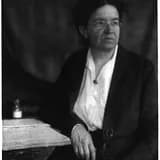
The New York Times reported on May 17, 1925, that Sabin had become the first woman elected to the National Academy of Sciences.
On May 17, 1925, The New York Times reported that Dr. Florence Sabin had been elected as the first woman member of the National Academy of Sciences (NAS), the most prestigious scientific honor society in the United States, founded in 1863 to advise the federal government on matters of science and technology.
Prior to this moment, in the Academy's more than six-decade history, no woman had ever been admitted to its ranks, reflecting the deep institutional barriers women faced in gaining recognition within the American scientific establishment. Sabin's election was a landmark achievement that signaled a slow but significant shift in how women scientists were perceived and credentialed at the highest levels.
Her election was based on the strength of her groundbreaking research in histology, embryology, and the lymphatic and immune systems, conducted first at Johns Hopkins and later at the Rockefeller Institute for Medical Research. The newspaper coverage of the event underscored the novelty and significance of a woman being admitted to such an elite scientific body, describing it as the Academy "opening" to women for the first time.
This achievement paved the way for future generations of women scientists to seek membership in the NAS, and it remains one of the most frequently cited milestones in the history of women in American science, cementing Sabin's legacy as a trailblazer who dismantled gender barriers in elite scientific institutions.