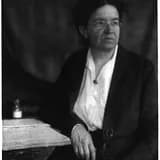
Florence Rena Sabin died on October 3, 1953, having spent her final years advancing public health reform in Colorado.
Dr. Florence Rena Sabin died on October 3, 1953, at the age of 81. She passed away in Denver, Colorado, the state where she had spent her final and arguably most publicly impactful years leading a sweeping public health reform movement, often referred to as the "Sabin Health Laws."
By the time of her death, Sabin had amassed an extraordinary legacy spanning multiple fields: she was a pioneering anatomist and embryologist who mapped the origins of the lymphatic system, the first woman to attain a full professorship at Johns Hopkins University School of Medicine, the first woman president of the American Association of Anatomists, and the first woman elected to the National Academy of Sciences. In her later career, she pivoted to public health administration, chairing Colorado's subcommittee on health under the state's Post-War Planning Committee, where her data-driven advocacy led to sweeping reforms in sanitation, tuberculosis control, and modernization of the state's public health infrastructure.
Her death marked the end of a remarkable seven-decade life that began in a Colorado mining town and culminated in her being one of the most honored women scientists of her generation. Sabin's legacy endures through the many institutions, awards, and scholarships named in her honor, and she was later selected as one of Colorado's two representatives in the National Statuary Hall of the U.S. Capitol, a testament to her enduring impact on both science and her adopted home state.