← All women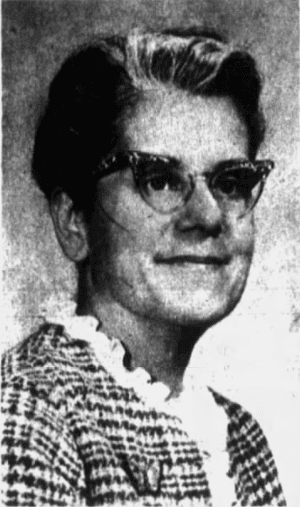
American · Arts
Emma Bailey
March 6, 1910 – September 3, 1999
Early Life and Background
Emma Bailey, born Emma Parascandola on 6 March 1910, came into the world in New York City, New York, at a time when the United States was undergoing rapid urbanization and social change.[1][5] Raised in an Italian American family (her birth surname suggests Italian heritage), she spent much of her childhood in the greater New York–New Jersey area and completed her schooling in Newark, New Jersey.[5] These early years in a diverse urban environment exposed her to a wide range of people and commercial practices, experiences that would later prove useful in the socially charged atmosphere of public auctions.
Little detailed documentation exists about her parents, siblings, or precise educational trajectory beyond the note that she finished school in Newark.[5] However, the fact that she obtained a basic education and later demonstrated strong verbal skills, business acumen, and literary ability suggests that she benefited from the expanding educational opportunities available to girls in the early 20th century. Growing up in the years between the 1910s and 1920s, she witnessed the passage of the 19th Amendment granting women the vote in 1920, but the idea of women pursuing careers in vocally assertive, public‑facing professions such as auctioneering remained far outside prevailing norms.
In 1932, Emma married Eli J. Bailey, adopting the surname by which she would become historically known.[5] The couple shared a working, practical outlook and, like many families of the era, faced the economic challenges of the Great Depression and the disruptions of World War II. These years honed her resourcefulness and likely influenced the decisions that later led her to the auction block as a means of supplementing family income.
Move to Vermont and Family Life
In 1945, shortly after the end of World War II, Emma and Eli Bailey moved with their two children to Brattleboro, Vermont.[1][5] They settled on Black Mountain Road, a rural area outside town. This relocation from the urban Northeast corridor to a small New England community marked a major transition in Bailey’s life. Brattleboro’s economy and social fabric differed sharply from the metropolitan environment in which she had been raised; local commerce and community exchanges often revolved around farm sales, estate dispersals, and second‑hand goods, all of which could be brought under the hammer of an auctioneer.
Emma’s role in this family context was typical of mid‑century American expectations: she managed household responsibilities and supported her husband’s work. Yet the family also needed additional income. It was this economic impetus that pushed Bailey to consider auctioneering. The idea of a woman taking up the auction gavel was unconventional enough that it required not only personal initiative but also a degree of courage in the face of likely skepticism. Her husband supported the venture, and together they developed what would become a family‑run auction operation.
Career Beginnings: The First Auction
Bailey’s historic debut as an auctioneer took place on 12 May 1950 in Brattleboro, Vermont.[1][2][7] Seeking to supplement her family’s income, she organized a small sale and stepped up to the auction block at what became known as the Bailey Auction Barn on Black Mountain Road.[2] The first item she sold was a fifty‑year‑old rocking chair, which went for $2.50.[2][4][6] Though modest in monetary terms, this transaction has been repeatedly cited in historical accounts as the moment when Emma Bailey became the first American woman auctioneer.[1][2][4][7]
At the time, auctioneering was overwhelmingly a male profession. Auctioneers presided over farm dispersals, estate sales, livestock auctions, and commercial liquidations, roles that required not only knowledge of goods and markets but also a commanding public presence. The rapid, rhythmic “chant” associated with auctioneers was often perceived as a masculine performance of authority. Bailey faced a local culture in which few, if any, women had tried to assume such a role. Contemporary recollections and later tributes note that she encountered skepticism and heckling from some men who doubted a woman’s capacity to handle the auction block.[3][6]
Nevertheless, accounts describe her as "short‑statured, fast‑talking, and sharp as a tack," a "dynamite" personality who quickly proved her competence.[6] Her first auction, though small, demonstrated her ability to control the crowd, set terms, and create a lively atmosphere that encouraged bidding. As she held additional sales, she refined her chant and developed a reputation for fairness and good humor. The Bailey Auction Barn soon became a regular gathering place for local buyers and sellers, and her presence at the microphone began to normalize the idea of a woman auctioneer in the region.
Development of the Bailey Auction Barn
Following the success of her first sale, Bailey expanded her activity at the Bailey Auction Barn.[2] The barn functioned as a family‑run auction house from which she conducted regular sales over nearly two decades.[1][2] She sold a wide variety of items: household furniture, farm equipment, antiques, collectibles, and everyday goods. The operation required substantial organizational labor—scheduling sales, advertising, cataloging items, handling consignments, and settling accounts—all of which she managed alongside her auctioneering performance.
Her barn became part of the social life of Brattleboro and surrounding communities. Auction days drew crowds not only for commercial reasons but also for entertainment; people came to watch Bailey’s spirited performance and the interactions among bidders. Her professionalism helped dispel initial doubts about women in the role. Over time, her success contributed to a broader recognition that auctioneering skills were not inherently gendered and that women could run profitable auction businesses.
While there is no detailed published ledger of every sale she conducted, sources emphasize that Bailey continued auctioneering for nearly twenty years, retiring in the late 1960s.[1] Her long tenure underscores that her career was not a one‑time novelty but a sustained engagement with the profession. During these years, she also developed contacts with other auctioneers and began to interact with the wider professional community.
Breaking the Professional Barrier: National Auctioneers Association
Bailey’s impact extended beyond her local barn when she sought entry into national professional circles. In 1952, she applied to join the National Auctioneers Association (NAA), an organization founded in 1949 to promote ethical standards, education, and networking among auctioneers.[1][10][11] After reviewing her application, the Association accepted her, making Emma Bailey the first woman admitted to the National Auctioneers Association.[1][6][10][11]
Her membership in the NAA carried significant symbolic weight. Professional associations in the mid‑20th century often served as gatekeepers, implicitly or explicitly limiting women’s participation. By accepting Bailey, the NAA extended formal recognition to a woman whose work met its standards of professional competence. The decision implicitly challenged any lingering assumptions that auctioneering was exclusively a male domain.
Industry histories and women’s‑history compendia now highlight this milestone. Articles on women auctioneers, such as those published by estatesales.org and auction industry blogs, cite Bailey as the first woman known to have joined the NAA and note that her membership paved the way for the many women who would later enter both the Association and the profession.[6][8][16] Secondary sources agree that the year of her acceptance was 1952, although surviving records do not specify the exact month and day, and scholars treat the date as year‑only.[10][11]
Authorship: "Sold to the Lady in the Green Hat"
Bailey did not merely practice auctioneering; she also documented it. In 1962, she published a memoir titled Sold to the Lady in the Green Hat, which recounted her experiences as America’s first woman auctioneer.[1][11] The title refers to a distinctive green hat she often wore while conducting auctions, an image that became part of her public persona.[3] The book combined anecdote, humor, and reflection, conveying both the excitement of auction days and the challenges she faced in carving out a place in a male‑dominated profession.
Her memoir serves several important functions. First, it preserves primary recollections of her career, including interactions with bidders, unusual lots, and the social culture of mid‑century New England auctions. Second, it offers insight into the gender dynamics of her work, describing both overt and subtle forms of resistance she encountered. Third, it reflects her literary ability and desire to communicate her story to a wider audience. The memoir has been cited in later discussions of women in auctioneering and has inspired tributes, including the naming of auction businesses such as "Baileys Honor" in her memory.[9][11]
Later Career and Retirement
Emma Bailey continued to run auctions at the Bailey Auction Barn and elsewhere for nearly two decades after her 1950 debut.[1][2] Over the course of her career, she became a familiar voice at auctions across New England, and her barn became an institution in the local economy. Sources indicate that she retired from active auctioneering in the late 1960s, though exact dates are not widely documented.[1] By that time, the profession was slowly opening to more women, some of whom regarded Bailey’s example as a precedent.
Her retirement did not erase her presence from the historical record. Her memoir remained available, and those who had attended her auctions retained vivid memories of her chant and personality. Industry commentators and historians looking back on the mid‑century evolution of auctioneering increasingly recognized her as a pioneer, especially as more women entered the field in later decades.
Awards, Honors, and Recognition
There is limited evidence of formal awards or medals bestowed on Emma Bailey during her lifetime by major national institutions, but her work has been honored in other ways. She is included in the List of American women’s firsts, a widely consulted summary of pioneering achievements compiled on Wikipedia, which records her May 12, 1950 auction as the first conducted by an American woman.[7] The National Auctioneers Association and auction history organizations acknowledge her as the first woman admitted to the Association and as a key figure in the history of women in the industry.[10][16]
In the years after her death, various auction houses and commentators have paid tribute to Bailey. For example, the Wisconsin‑based auction company Baileys Honor explicitly chose its name in recognition of Emma Bailey, citing her status as the first woman auctioneer and author of Sold to the Lady in the Green Hat.[9] Articles on women auctioneers, such as those published by estatesales.org and parksauction.com, highlight her as a trailblazer whose early success helped legitimize women’s participation in the trade.[6][8]
Activists and historians have also sought more formal recognition. A Change.org petition has called on the National Auctioneers Association to dedicate a space, award, or memorial to Emma Bailey within its organizational structure, arguing that her pioneering role is insufficiently marked.[11] This petition reflects ongoing efforts in public history to ensure that women who broke barriers in less‑visible professions receive commensurate recognition.
Personal Life
Publicly available sources emphasize Bailey’s professional story more than her private life, but some details are known. She married Eli J. Bailey in 1932, and the couple had at least two children.[5] Family support was integral to her career: the Bailey Auction Barn functioned as a family enterprise, with relatives contributing to setup, operations, and logistics.
Accounts of her personality portray her as energetic, witty, and resilient—qualities that helped her navigate the dual demands of family and business. Her distinctive green hat, referenced in the title of her memoir, became a symbolic extension of her identity, signaling both her individuality and her comfort with the performative aspects of auctioneering.[3] Beyond these glimpses, there is relatively little detailed documentation of her private relationships, hobbies, or activities outside the auction world.
Legacy and Historical Impact
Emma Bailey’s legacy rests primarily on two interconnected achievements: being the first American woman auctioneer and the first female member of the National Auctioneers Association.[1][2][4][6][7][10] In an era when women were largely absent from the auction block and marginalized within professional associations, she demonstrated that women could excel in a field requiring quick thinking, vocal authority, and business savvy.
Her pioneering status has been recognized in multiple contexts. The List of American women’s firsts memorializes her 1950 auction as a landmark in the history of women’s economic participation.[7] Auction industry histories and commentary—such as those by estatesales.org, parksauction.com, and the Virginia Auctioneers Association—cite her as the starting point for discussions of women auctioneers, often noting how the profession has diversified since her time.[6][8][16] Modern women auctioneers have followed in her footsteps, some explicitly acknowledging her as a role model.
Bailey’s story also contributes to broader narratives in women’s history. Her career illustrates how gender norms are contested not only in high‑profile arenas such as politics or academia but also in everyday commercial practice. By stepping to the microphone in a barn in rural Vermont, she challenged assumptions about who could command public space and manage financial transactions. Her success, sustained over nearly two decades, helped normalize the idea of women auctioneers and likely made it easier for later women to enter the field without facing the same degree of novelty and skepticism.
Her memoir, Sold to the Lady in the Green Hat, extends this legacy into the realm of literature, providing a narrative record that future historians and readers can consult. The fact that auction businesses and historical projects continue to invoke her name decades after her retirement and death underscores the enduring resonance of her achievements.[9][11]
Later Life and Death
After retiring from active auctioneering in the late 1960s, Emma Bailey lived quietly, with her public presence largely mediated through her book and the memories of those who had attended her sales.[1] Over the ensuing decades, as more women entered the auction profession, her role as a pioneer became clearer in retrospect. Commentators and historians revisiting the mid‑century history of auctioneering came to regard her 1950 debut and 1952 NAA membership as turning points.
Emma Bailey died on 3 September 1999, at the age of 89.[1][3] By the end of her life, the auction landscape had changed significantly: women had become far more visible in the field, and professional associations such as the NAA included many female members. While the exact circumstances of her death are not widely documented in public sources, her passing prompted renewed interest in her story among those committed to documenting women’s history.
Posthumously, Bailey’s name has appeared in women’s‑history calendars, social media posts, and educational materials that highlight "on this day" anniversaries of pioneering achievements.[3][5] Articles and petitions continue to call for formal recognition within the National Auctioneers Association and broader public history venues.[11] As of the early 21st century, she stands as a key figure in the history of women’s economic participation and professional advancement, her life illustrating how a single individual’s determination can reshape the boundaries of an entire occupation.
Dated achievements
4 indexed.
- Mar061910Arts
Birth of Emma Parascandola (Emma Bailey) in New York City
Birth of Emma Parascandola (Emma Bailey) in New York City, a future pioneering American woman auctioneer.
View details Emma Bailey – biographical overview - May121950Arts
First American woman auctioneer, inaugural auction in Brattleboro
Emma Bailey holds her first auction in Brattleboro, Vermont, selling a rocking chair and becoming the first American woman auctioneer.