← All women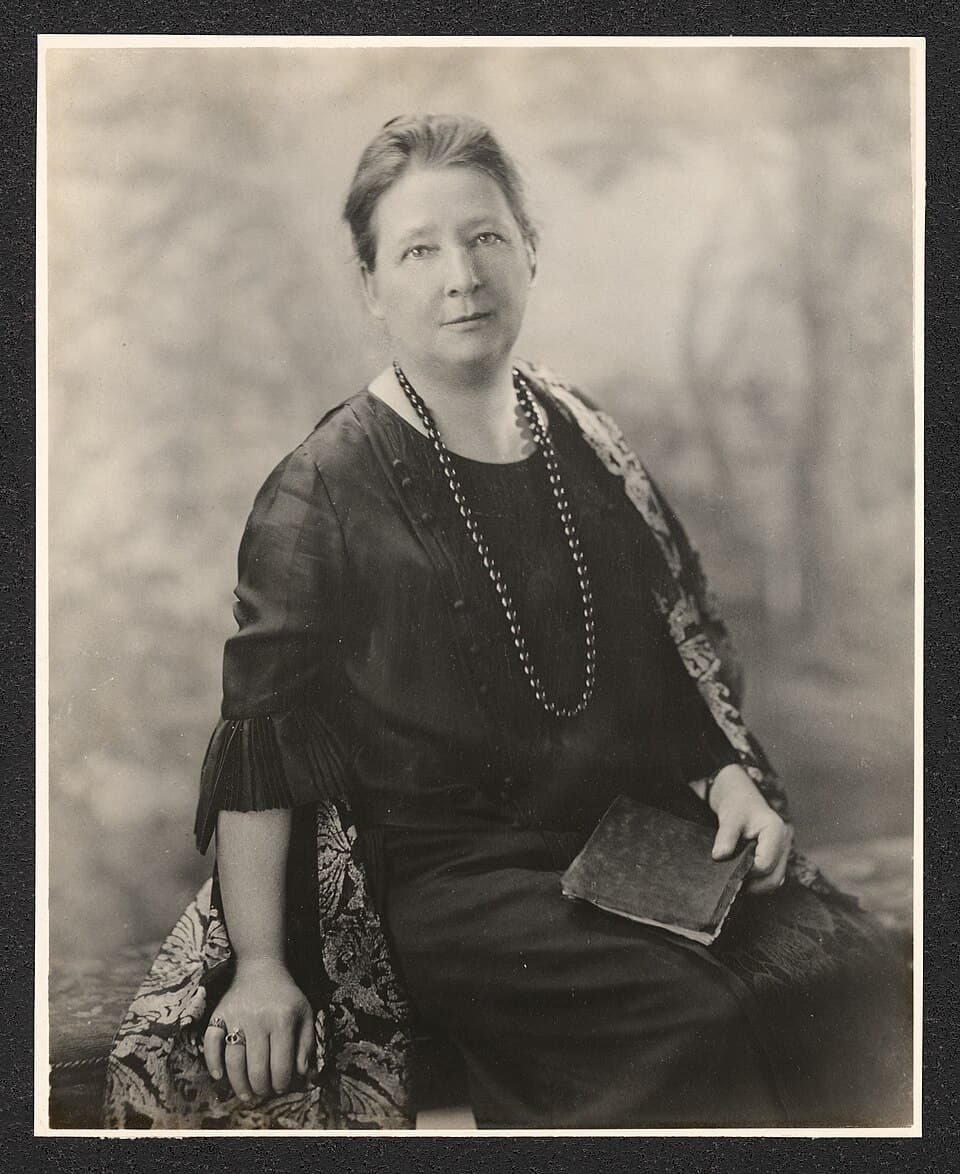
American · Activism · Medicine
Emily Bissell
May 31, 1861 – March 8, 1948
Early Life and Background
Emily Perkins Bissell (May 31, 1861 – March 8, 1948) was an American social worker and activist best known for introducing Christmas Seals to the United States as a fundraising device for tuberculosis control.[1][2] She was born in Wilmington, Delaware, the first daughter and second of four children of Champion Aristarcus Bissell, a banker and real estate investor, and Josephine (Wales) Bissell.[2][9] The family’s prosperity and social position placed Emily in the upper-middle-class milieu of post–Civil War Wilmington, a city experiencing rapid industrial and demographic change.
Bissell received her early education in Wilmington schools and later attended Miss Charlier’s School, a private finishing school in New York City, where she was instructed in languages, literature, and social graces intended to prepare young women for cultured domestic and civic life.[2][5][9] Her schooling exposed her to contemporary ideas about moral responsibility and philanthropy, particularly the growing belief among Protestant reformers that educated women had obligations to address poverty, vice, and ill health in urban communities.
According to local and biographical accounts, Bissell began volunteer work at around age fifteen, an early start that set the pattern for a lifetime of organized social service.[4][6] She was described by contemporaries as a kind, gentle, and understanding woman who combined empathy with practical organizational skills.[4] These formative influences—family resources, formal education, religiously inflected moral training, and early volunteer experience—shaped her trajectory as a civic reformer rather than a professional in medicine or law.
Career Beginnings and Settlement Work
Bissell’s formal entry into social work is often traced to her role in organizing the West End Reading Room in Wilmington around 1889.[5] Although surviving sources provide only the year, the reading room is widely described as the first neighborhood institution of its kind in Delaware, offering working-class and immigrant residents access to books and periodicals and cultivating literacy and self-improvement.[5][4] This initiative aligned with the emerging settlement movement, which encouraged middle-class reformers to establish community centers in poor districts.
In the late 1880s and 1890s, Bissell helped to establish what is recognized as Wilmington’s first settlement house, known as Neighborhood House, in the city’s West End.[2][10] The institution assisted recent immigrants, particularly Irish and German newcomers, with literacy, housing, employment, and acclimation to American life.[10] Neighborhood House offered classes, clubs, and recreational programs, embodying Progressive Era ideals of social uplift through education rather than direct relief alone.
During this period Bissell became increasingly involved in child welfare. She played a leading role in creating Wilmington’s first free kindergarten, giving children from poor families access to early education at a time when such schooling was largely limited to those who could pay.[2][4][10] She also sponsored the city’s first public playground, a space where children could play safely under supervision, reflecting contemporary concerns about juvenile delinquency and the need for structured recreation.[2][10] These initiatives were important local "firsts" and demonstrated her commitment to preventive social work—trying to address problems before they turned into crises.
Bissell’s settlement and child welfare activities brought her into contact with broader reform networks. She became active in the Delaware State Federation of Women’s Clubs, serving as chair of social services and using club structures to support projects like kindergartens, playgrounds, and anti-tuberculosis work.[10] These clubwomen’s networks were central to Progressive reform and provided Bissell with organizational reach beyond her immediate neighborhood.
Child Labor Reform and Americanization
Drawing on her experience with children and industrial families, Bissell became a force in Delaware’s early child labor reform. Accounts credit her as being instrumental in the passage of Delaware’s first child labor law, achieved through her service on the Child Labor Commission and the Children’s Bureau.[6][10] While precise dates are not consistently recorded, her work occurred in the early 20th century, when states across the nation began limiting the hours and conditions under which children could work.
In 1913, Bissell launched what was described as an Americanization program in Wilmington, aimed at helping immigrants become citizens by offering English-language instruction, civics education, and practical aid.[5] This initiative built on her settlement house experience and acknowledged the growing political and social demands placed on newcomers in an era of heightened nationalism and nativism. Through classes and organized activities, Bissell and her collaborators sought to foster loyalty to American institutions while assisting immigrants in navigating legal and cultural systems.
These efforts in child labor reform and immigrant Americanization fit squarely within Progressive Era strategies for managing the social consequences of industrialization. They also underscore the breadth of Bissell’s activism beyond her later fame with Christmas Seals. She operated at the intersection of local legislation, education, and community building, using voluntary organizations to achieve reforms that the state was only beginning to adopt.
Anti‑Suffrage Activism and Political Views
One of the most contentious aspects of Bissell’s career is her strong opposition to woman suffrage. Despite her activism on behalf of children, workers, and public health, she aligned herself with the anti‑suffrage movement, arguing that voting rights should remain exclusively with men.[1][10] This position reflected a strain of conservative thought among some clubwomen who believed that women’s influence was best exercised through moral suasion and voluntary organizations rather than through formal politics.
Bissell testified against woman suffrage before Congress in 1900 and again before the U.S. House of Representatives in 1913, appearing as a prominent anti‑suffrage voice from Delaware.[10][18] In these appearances she argued that political participation might distract women from domestic and benevolent duties and that their moral authority was more powerful when not entangled with partisan conflict. Her testimony placed her among a national network of women opposed to the enfranchisement campaign led by figures such as Carrie Chapman Catt and Alice Paul.
Historians of women’s history emphasize this paradox: Bissell championed reforms benefiting vulnerable populations yet opposed expanding women’s formal political rights. Her stance illuminates the diversity of opinion among women reformers and underscores that Progressive social activism did not map neatly onto support for political feminism. For editorial almanacs, her anti‑suffrage role is a critical part of understanding the complexity of early 20th‑century women’s movements.
Introduction of Christmas Seals and Public Health Fundraising
Bissell’s most famous contribution arose from her involvement in the campaign against tuberculosis. The concept of selling special stamps to raise funds originated with a Danish postal clerk, Einar Holbøll, who proposed Christmas charity stamps in Denmark in the early 1900s.[2] Bissell encountered an article about this idea—sources often attribute the story to a writer named "Rils"—and adapted it for use in Wilmington when a cousin asked for help for a local tuberculosis sanatorium.[2][3]
In 1907, at the request of her cousin, Dr. John Wales, Bissell sought to raise $300 to save a small open‑air facility sometimes referred to as the Brandywine Shack.[4][11] She designed a Christmas Seal featuring a holly wreath and the words "Merry Christmas" and borrowed money from friends to print 50,000 seals.[2][3] Sold for one cent each, the seals were intended to be affixed to holiday cards and letters, providing a decorative way for ordinary people to support the sanatorium. The local campaign in Wilmington was an immediate success: in some accounts, 30,000 seals sold in two days; the effort netted about $3,000, ten times her original goal.[3][11]
Impressed by the fundraising results and the public’s enthusiasm, Bissell persuaded the American Red Cross to allow its emblem to be used on the seals and to support a broader campaign.[2][3] In December 1907, the National Association for the Study and Prevention of Tuberculosis and the Red Cross organized the first national Christmas Seal drive in the United States, explicitly crediting Bissell’s Wilmington initiative as the origin of the American campaign.[2][6] The following year, the drive expanded nationally under Red Cross auspices, raising approximately $135,000 for anti‑tuberculosis work.[6]
The Christmas Seal concept was pioneering in its use of micro‑donations from millions of individuals rather than large contributions from wealthy patrons alone. It harnessed the postal system and holiday traditions to create a repeatable, emotionally resonant fundraising mechanism. Bissell’s seals helped finance sanatoria, clinics, and public health education, and they eventually supported the work of the National Tuberculosis Association and its successor, the American Lung Association.[1][8] Her idea fundamentally changed public health philanthropy in the United States.
Leadership in Anti‑Tuberculosis Organizations
After the initial success of Christmas Seals, Bissell devoted much of the remainder of her life to anti‑tuberculosis work. She served as president of the Anti‑Tuberculosis Society and held other leadership roles within state and national organizations concerned with the disease.[10][11] Her administrative responsibilities included overseeing campaigns, coordinating volunteers, and working with public health officials to direct funds toward treatment and prevention.
The National Tuberculosis Association’s growing seal campaigns produced substantial resources. By the mid‑20th century, the annual Christmas Seal drive had become a major national event, with extensive publicity and broad participation. According to her New York Times obituary, the Association reported that the 1947 campaign raised $18,250,000, a dramatic increase from the modest sums of the earliest drives.[6] Bissell, by then in her eighties, was still involved in guiding and promoting the seal efforts.
In recognition of her contributions, the National Tuberculosis Association awarded Bissell the Trudeau Medal in 1942, making her the first lay (non‑physician) recipient of the organization’s highest honor.[2][6] The medal, named for noted tuberculosis physician Edward Livingston Trudeau, had traditionally gone to medical professionals. Awarding it to Bissell acknowledged that the fight against tuberculosis depended not only on clinical research but also on mass public engagement and fundraising—areas in which she had been a visionary pioneer.
Personal Life and Literary Work
Available sources emphasize Bissell’s public activities and provide relatively little detail about her private life. There is no evidence in standard references that she married or had children; biographical sketches and obituaries focus instead on her family of origin and her lifelong dedication to social causes.[2][6][9] She lived in Wilmington for most of her life, working within the community in which she had been raised.
Beyond her organizational work, Bissell also wrote poetry under the pen name "Priscilla Leonard".[9] While her poems are not widely cited in modern anthologies, this literary activity indicates a reflective, creative dimension to her engagement with social issues. Writing under a pseudonym may have allowed her a measure of privacy and artistic freedom beyond the public identity attached to her reform work.
Contemporary descriptions portray her as gentle yet determined, a woman who balanced kindness with a firm sense of purpose in pursuing reforms.[4] Her life in Wilmington’s upper-middle-class circles gave her access to influential networks, but she chose to spend much of her time in neighborhoods and institutions serving the poor and sick.
Awards, Honors, and Posthumous Recognition
The most notable formal honor Bissell received during her lifetime was the Trudeau Medal of the National Tuberculosis Association in 1942, with contemporary accounts emphasizing that she was the first lay person to receive the award.[2][6] This distinction underscored the importance of non‑medical leadership in public health campaigns and placed her alongside physician-researchers in the Association’s pantheon.
After her death, Bissell’s contributions continued to be celebrated. In 1980, the U.S. Postal Service issued a 15‑cent commemorative stamp bearing her likeness and Christmas Seal imagery, explicitly honoring her for introducing Christmas Seals into the United States and crusading against tuberculosis.[2][1][7] Philatelic sources note the stamp’s role in reminding the public of her impact on public health fundraising.
Some reference works and art archives also list 1986 as a "Year Honored" in connection with a U.S. postage stamp or related recognition, indicating further posthumous acknowledgment of her influence.[3][10] In Delaware, Bissell has been inducted into the Delaware Women’s Hall of Fame, and exhibits at institutions such as the Delaware Public Archives and local museums continue to highlight her story and the Christmas Seal campaign.[10][15]
Her memory is also maintained through archival collections. The Winterthur Library holds papers related to Bissell’s life and work, and local historical organizations preserve photographs, documents, and artifacts associated with her campaigns.[13][15] These materials support ongoing research into early 20th‑century public health and women’s activism.
Legacy and Historical Impact
Emily Bissell’s legacy rests chiefly on her introduction and development of Christmas Seals as a fundraising tool for tuberculosis control. The concept she adapted from Denmark and implemented in Wilmington proved so successful that it became a nationwide institution, supporting the National Tuberculosis Association and later the American Lung Association.[1][2][8] Her work helped normalize the idea that ordinary citizens, contributing small amounts, could collectively finance major public health initiatives.
The long‑term impact of Christmas Seals extends beyond tuberculosis. The campaigns contributed to a culture of health philanthropy in the United States, influencing subsequent efforts to raise funds for heart disease, cancer, and other conditions. The seals also played a role in educating the public, as accompanying literature explained the nature of tuberculosis, the importance of early diagnosis, and the need for community responsibility.[6][11]
At the local level, Bissell’s achievements in establishing a settlement house, free kindergarten, public playground, and child labor reforms helped shape Delaware’s early welfare infrastructure.[2][5][10] Her Americanization program reflected efforts to integrate immigrants into civic life, and her longtime service in women’s clubs demonstrated the centrality of female voluntary organizations in Progressive Era reform.
Her opposition to woman suffrage complicates her legacy. Historians use Bissell as an example of how some women reformers embraced social activism while rejecting political enfranchisement, preferring to influence society through moral and maternal authority rather than through the ballot.[10][18] This stance illustrates the diversity of thought within women’s movements and invites nuanced analysis of how gender, class, and ideology intersected in early 20th‑century reform.
In recent years, exhibits and articles—such as those produced by the Delaware Public Archives and medical history organizations—have revisited Bissell’s work to highlight the historical roots of modern public health campaigns and to recognize women’s roles in them.[15][16] Her story continues to serve as a case study in the power of innovative fundraising, local activism, and the sometimes paradoxical political beliefs of reformers.
Later Life and Death
Bissell remained active in anti‑tuberculosis work and Christmas Seal campaigns well into old age. As president and leader within the Anti‑Tuberculosis Society and related organizations, she oversaw increasingly large and complex drives that, by the 1940s, raised millions of dollars annually.[6][10] Even as new medical treatments emerged, she emphasized the ongoing need for public education and support.
In her final years, Bissell continued to live in Wilmington, the city that had served as the hub of her reform efforts. She maintained connections with women’s clubs, public health organizations, and community institutions she had helped to found. Her lifelong attachment to Wilmington underscores the local grounding of much Progressive Era reform work: national impact grew out of sustained engagement in specific communities.
On March 8, 1948, Bissell died at Delaware Hospital in Wilmington after a three‑month illness, at age 86.[1][2][6] Her obituary in The New York Times hailed her as the originator of the Christmas Seal drive in the United States and noted that she had begun welfare work at fifteen.[6] She was interred in Wilmington and Brandywine Cemetery, close to her mother, among the graves of other prominent Delawareans.[4][5]
By the time of her death, the system she had helped build was firmly entrenched. The National Tuberculosis Association’s 1947 Christmas Seal campaign had raised $18,250,000, demonstrating the enduring power of the fundraising model she pioneered decades earlier.[6] Her passing thus coincided with a moment when her innovations were yielding their greatest returns in financial terms, even as medical advances were beginning to transform the landscape of tuberculosis treatment.
Emily Perkins Bissell’s life spanned periods of profound change in American society, from Reconstruction to the post–World War II era. Her work—at once visionary and ideologically complex—left lasting marks on public health fundraising, child welfare, immigration policy, and the history of women’s activism.
Dated achievements
6 indexed.
- May311861Activism
Birth of Emily Perkins Bissell
Birth of Emily Perkins Bissell in Wilmington, Delaware, to Champion Aristarcus and Josephine Wales Bissell.
View details Emily Bissell - Wikipedia - Jan011889Activism
Organization of the West End Reading Room in Wilmington
Approximate 1889 organization of Wilmington’s West End Reading Room, a pioneering neighborhood social‑work and literacy center.