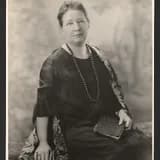
Death of Emily Perkins Bissell at Delaware Hospital in Wilmington, Delaware, aged 86, after a three‑month illness.
On March 8, 1948, Emily Perkins Bissell died at Delaware Hospital in Wilmington, Delaware, at the age of 86, following a three‑month illness.[1][2][6] Her death was noted in a lengthy obituary in The New York Times, which described her as the originator of the American Christmas Seal drive and a pioneer in welfare work who began her social service career at 15.[6] She was buried in Wilmington and Brandywine Cemetery, close to her mother, in the city where she had carried out nearly all of her reform activities.[4][5]
Bissell’s passing marked the end of an era in grassroots public health and social reform. By 1948, the Christmas Seal campaign she had conceived four decades earlier had grown into a nationwide institution, raising millions of dollars annually for tuberculosis control—$18,250,000 in the 1947 season alone, according to the National Tuberculosis Association.[6] Her local innovations in kindergartens, playgrounds, settlement work, and child labor advocacy had helped shape Delaware’s early welfare infrastructure and demonstrated the power of women’s voluntary organizations in policy change.[2][10]
Historically, the date of her death is a sentinel moment because it closed a life that spanned Reconstruction, the Progressive Era, two World Wars, and the dawn of antibiotic treatments for tuberculosis. Bissell remained actively involved in Christmas Seal campaigns into her 80s, embodying the continuity of reform traditions across generations.[2][9] Her complex legacy—including both visionary public health activism and vocal opposition to woman suffrage—continues to spark debate among historians of women’s history and social policy. The March 8, 1948 date thus anchors assessments of her long-term impact on philanthropy, public health, and the evolving role of women in civic leadership.