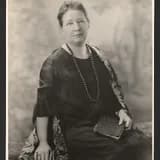
First national U.S. Christmas Seal drive launched, crediting Emily Bissell as originator of the American Christmas Seal campaign.
On December 7, 1907, the National Association for the Study and Prevention of Tuberculosis and the American Red Cross launched the first national Christmas Seal drive in the United States, explicitly crediting Emily Perkins Bissell as the originator of the American Christmas Seal campaign.[2][6] This national initiative grew directly out of Bissell’s 1907 local effort in Wilmington, where, inspired by a Danish postal clerk’s idea, she had designed a small holiday seal bearing a holly wreath and the words "Merry Christmas" to raise funds for a struggling tuberculosis sanatorium.[2][3]
In the months leading up to the national drive, Bissell borrowed money to print 50,000 seals and sold them for one cent apiece, enabling people of modest means to contribute to the fight against tuberculosis.[2][3] Her local campaign raised about $3,000, a sum ten times her initial goal of $300, and attracted national attention from public health leaders and the Red Cross.[3][11] Recognizing the concept’s fundraising potential, the Red Cross agreed to allow its emblem on the stamps, and the Tuberculosis Association organized a coordinated seasonal sale through post offices and voluntary organizations.
This December 1907 national drive was historically transformative. It institutionalized Christmas Seals as a recurring public health fundraising tool and pioneered the use of low-cost, mass‑market philanthropy to support disease prevention. In an era before antibiotics, tuberculosis was a leading cause of death; Bissell’s seal campaign provided critical resources for sanatoria, public health education, and ultimately for the evolving National Tuberculosis Association and later the American Lung Association.[1][8] The event also showcased a woman social worker shaping national health policy and fundraising strategy, bridging local activism and nationwide public engagement.