← All women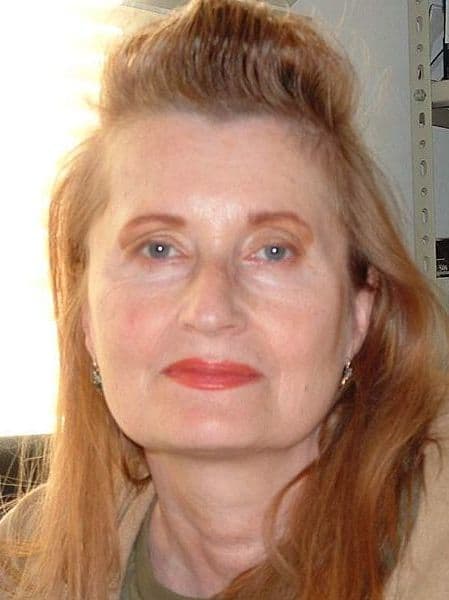
Austrian · Literature · Arts
Elfriede Jelinek
October 20, 1946 – present
Early life and background
Elfriede Jelinek was born on 20 October 1946 in Mürzzuschlag, Styria, Austria, and grew up in Vienna. Her father, Friedrich Jelinek, was of Czech Jewish background, and her mother, Olga Ilona Jelinek (née Buchner), came from a Catholic family. This mixed family background, together with the historical trauma of the Holocaust and postwar Austrian silence about the Nazi period, shaped the moral and political consciousness that would later animate her writing.
Jelinek showed exceptional musical talent early in life. She studied piano, organ, violin, and composition at the Vienna Conservatory, originally preparing for a professional musical career. She later studied theater and art history, and the discipline of musical training left a lasting mark on her prose and drama. Critics frequently note the compositional quality of her writing, including repetition, variation, counterpoint, and a strong sense of rhythm.
Her childhood and adolescence unfolded in a conservative postwar Austria that often preferred cultural normalcy to historical confrontation. The gap between official public memory and lived historical trauma became a central concern in her later work. Jelinek has often been described as one of the writers who most forcefully exposed the hypocrisies of Austrian self-image after 1945.
Early career and first publications
Jelinek began writing poetry as a young adult and published her first volume, Lisas Schatten, in 1967. Her early work gained attention quickly, and in 1969 she received two important prizes: the Austrian University Students’ Poetry Prize on 11 July 1969 and the Young Austrian Culture Week Poetry and Prose Prize on 10 October 1969. These early honors signaled that her voice was already regarded as distinctive within Austrian literary culture.
Her first novel, Wir sind lockvögel baby!, appeared in 1970. During the 1970s she continued to develop a body of work that moved across poetry, prose, radio plays, screenwriting, and theater. In 1974 she married Gottfried Hüngsberg, an information-systems engineer. Jelinek has lived for long periods in Vienna and Munich, and she has generally kept her private life out of public view.
Her early career was also supported by state and institutional recognition. She received the Austrian State Literature Stipendium on 15 June 1972, followed by the Roswitha Memorial Medal of Bad Gandersheim on 25 September 1978 and the West German Interior Ministry Prize for Film Writing on 12 November 1979. These awards show the breadth of her activity well before the international fame that would later arrive with major prizes.
Major works and literary development
Jelinek became widely known for her unsparing critiques of gender relations, consumer culture, sexuality, and the ideological structures of modern society. Her fiction and drama frequently expose the violence embedded in everyday language and social routine. Among her best-known works are the novels Die Klavierspielerin (The Piano Teacher) and Lust, both of which became international reference points for her examination of domination and desire.
Die Kinder der Toten is another major work in her prose canon and one that later received the Bremer Literature Prize on 21 January 1996. The novel is especially significant for its confrontation with Austrian history, memory, and the persistence of the past. Jelinek’s writing often rejects sentimental realism in favor of dense, layered, and sometimes abrasive language, a style that some readers find difficult but which has also made her one of the most influential experimental writers in Europe.
Her dramatic work is equally important. Jelinek’s plays, including Macht Nichts, Das Werk, Winterreise, and Rechnitz (Der Würgeengel), use theatrical language to interrogate power, violence, and collective guilt. She often avoids conventional character psychology in favor of voices, textual fragments, and interwoven registers. This approach, deeply informed by her musical background, has made her one of the most discussed playwrights in the German language.
Awards, honors, and international recognition
Jelinek accumulated an exceptional series of literary honors from the 1960s onward. She received major prizes in Austria and Germany throughout the 1980s and 1990s, including the Heinrich Böll Prize of Cologne, the Literature Prize of the State of Styria, the City of Vienna Prize for Literature, the Walter Hasenclever Prize, the Peter Weiss Prize, and the Georg Büchner Prize on 17 October 1998. The Büchner Prize is the most prestigious literary award in the German language and marked her official canonization within German literature.
The decisive international breakthrough came on 7 October 2004, when the Swedish Academy announced that she had won the Nobel Prize in Literature “for her musical flow of voices and counter-voices in novels and plays that, with extraordinary linguistic zeal, reveal the absurdity of society’s clichés and their subjugating power.” She became the first Austrian woman to receive the Nobel Prize in Literature. That distinction is historically important not only as a personal achievement but also as a milestone in the recognition of women within European literary institutions.
In the same year she received several additional honors, including the Lessing Prize for Criticism on 15 February 2004, the Hörspielpreis der Kriegsblinden for Jackie on 16 May 2004, the Mülheim Dramatists Prize for Das Werk on 6 June 2004, the Franz Kafka Prize on 10 October 2004, and the Stig Dagerman Prize on 6 November 2004. Later honors included honorary membership in the American Academy of Arts and Letters in 2011, the Der Faust lifetime-achievement prize in 2017, honorary citizenship of Vienna in 2021, and the Nestroy Theatre Prize for lifetime achievement in 2021.
Personal life
Jelinek married Gottfried Hüngsberg on 12 June 1974. Publicly available biographical sources generally note the marriage but do not emphasize children, and no children are documented in the standard reference sources used here. She has long divided her time between Vienna and Munich and has been known for guarding her private life carefully.
Her Jewish family background has often been discussed in relation to her writing, especially her recurring attention to memory, violence, and the unfinished aftermath of fascism. Jelinek has also been politically outspoken, and her literary and public persona have frequently overlapped, especially in debates over feminism, Austrian politics, and cultural responsibility.
Legacy and historical impact
Elfriede Jelinek is widely regarded as one of the most important contemporary writers in German. Her work has had a major impact on feminist criticism, experimental prose, and modern theater. She is especially influential for the way she transforms language itself into a site of resistance, exposing cliché, domination, and ideological control through repetition, parody, fragmentation, and sonic patterning.
Her significance in women’s history lies not only in the prizes she won but in the intellectual and artistic barriers she overcame. Jelinek built a career in a literary culture that often marginalized women’s voices, rewarded conformity, and expected female authors to write within narrow emotional or stylistic limits. Instead, she made difficulty, critique, and formal disruption the center of her art. That achievement helped expand the range of what women writers in Europe could be seen as capable of doing.
Jelinek’s Nobel Prize and subsequent honors have secured her place in the international canon, but her historical importance extends beyond prestige. She remains a pivotal figure for readers and scholars interested in the relation between language and power, the representation of violence, and the literary afterlife of postwar Europe. Her body of work continues to influence playwrights, novelists, translators, and critics, and her career stands as one of the defining examples of women’s literary modernism and its continuing legacy.
Dated achievements
33 indexed.
- Oct201946Literature
Birth of Elfriede Jelinek
Elfriede Jelinek was born in Mürzzuschlag, Styria, Austria, to a Czech Jewish father and a Catholic mother.
View details Wikipedia - Elfriede Jelinek - Jul111969Literature
Austrian University Students’ Poetry Prize
Jelinek was awarded the Austrian University Students’ Poetry Prize, recognizing her early work as a poet.