← All women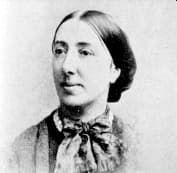
British · Science
Eleanor Anne Ormerod
May 11, 1828 – July 19, 1901
Early Life and Background
Eleanor Anne Ormerod was born on 11 May 1828 at Sedbury Park, West Gloucestershire, England, the youngest of ten children in a wealthy landowning and intellectually prominent family.[3][8] Her father, George Ormerod, was an antiquary and historian best known for his monumental work The History of Cheshire, while her mother, Sarah Mayer Latham, was the daughter of the physician and naturalist John Latham.[3][4] This combination of historical scholarship and scientific interest created a household steeped in learning, books and discussion.
Growing up on the family’s 800-acre estate, Eleanor had daily exposure to farming operations, estate workers and the varied fauna of fields, woods and gardens.[5][8] From an early age she showed an intense fascination with insects, persuading her father’s workforce to bring her unusual specimens in exchange for small rewards that became known locally as “Miss Ormerod’s shillings.”[8] This informal collecting network foreshadowed the extensive correspondence and field-based investigations that would later underpin her professional work in economic entomology.
Like many Victorian gentlewomen, Eleanor did not receive a formal school or university education. Instead, her mother tutored her at home in subjects considered appropriate for enhancing marriage prospects, including languages, art and music.[6] Ormerod, however, extended her learning far beyond these expectations. She was largely self-taught in modern languages and Latin, and pursued natural history studies on her own initiative.[5] Her intellectual independence and capacity for disciplined self-education would prove crucial, as universities and most scientific institutions were closed to women for much of her life.
Family circumstances also shaped her path. The Ormerods were affluent but subject to the constraints of Victorian gender ideology, which initially limited Eleanor’s ambitions. According to later accounts, her scientific endeavours were not taken seriously by her family while her father lived, and she delayed publishing her research until after his death in 1873.[2] This tension between social expectations and scientific drive is a recurrent theme in her life story.
Career Beginnings and Scientific Development
Ormerod’s earliest documented scientific work concerned the toxic properties of Triton (newts), reflecting her curiosity about animal poisons and physiology.[6] This research, which included the notorious episode of her tasting a live newt to understand its effects, demonstrated her willingness to take personal risks in the pursuit of knowledge and her commitment to empirical investigation, even when it challenged conventional notions of feminine delicacy.
Her entry into agricultural entomology is traced to 1868, when the Royal Horticultural Society sought assistance in compiling a collection of beneficial and harmful insects affecting British agriculture.[6] Ormerod accepted the request and devoted roughly a decade to gathering and identifying insects on behalf of the Society, systematically building a reference collection that farmers and horticulturalists could use to recognize pests and allies. This work connected her private natural history interests with national agricultural concerns and marked her transition from amateur observer to recognized specialist.
During this period she refined methods for documenting insect life cycles, damage patterns and control measures, drawing on direct field observation, estate experience and extensive communication with growers. Her reports to horticultural journals such as the Gardeners’ Chronicle and the Agricultural Gazette began to establish her reputation as a practical authority on insect pests.[1] By the early 1870s she had become a familiar name among those seeking advice on agricultural problems, even though she lacked formal credentials.
A key turning point came in 1870, when the Royal Horticultural Society awarded her the Flora Medal for work on insects injurious to hops and fruit trees.[5] This honor recognized both the scientific quality and practical value of her research, signalling that a major learned society considered her contributions indispensable to horticultural improvement. It also demonstrated that a woman, self-taught and working largely from home, could successfully intervene in domains usually dominated by male professionals.
Major Works and Contributions
Ormerod’s most influential undertaking was her long series of “Reports on Injurious Insects and Farm Pests”. In 1877, she self-published the first of what would become 22 annual Reports, continuing almost unbroken until 1900.[1][6] Printed at her own expense and widely distributed to farmers, land agents and agricultural officials, these volumes compiled case studies, correspondence, field observations and practical recommendations on dealing with insect pests across a wide range of crops.
Each Report followed a clear structure, describing the insect’s appearance and life cycle, the nature of the damage inflicted, the conditions favouring outbreaks and detailed control strategies. Topics covered included the turnip-fly, wireworms, aphids, orchard and forest pests, and insects affecting livestock.[2] Ormerod’s writing aimed at accessibility and utility rather than academic abstraction, translating entomological knowledge into actionable guidance for those whose livelihoods depended on crop yields.
One notable example of her approach is the special report on the turnip-fly, published in 1881, which drew on widespread correspondence with farmers and land agents.[2] By assembling observations from across the country, she anticipated modern survey and citizen-science methods, using distributed data collection to identify patterns and test control methods. Her Reports thus not only provided advice but also created a national information network on insect pests.
Ormerod also wrote numerous articles for periodicals and contributed to agricultural handbooks. Her work extended beyond insects to broader issues of rural economy and public health. She became known for promoting the use of Paris green, a copper arsenite compound, as an insecticide against pests such as the Colorado beetle, while simultaneously advocating for careful handling and purity to minimize risk.[1][11] A later historical assessment described her as a “pioneer of purity even more than of Paris green,” emphasizing her insistence on responsible chemical use and testing.[11]
In addition to crop protection, Ormerod studied the connections between weather and insect outbreaks, recognising that climatic conditions influenced pest dynamics.[2] This work, combining meteorology and entomology, underpinned her later election as a Fellow of the Meteorological Society. She prepared detailed meteorological charts and analyses to relate seasonal weather patterns to agricultural losses, contributing to early understanding of climate impacts on food security.
Toward the end of her life, Ormerod published “Autobiography and Correspondence” (1898), edited from her papers.[9][3] This volume offered insights into her methods, intellectual development and extensive communications with farmers, scientists and officials, providing a valuable primary source for historians of science and agriculture.
Awards, Honors and Professional Recognition
Over the course of her career, Ormerod accumulated a remarkable array of honors, especially notable given her gender and lack of formal scientific training. The Flora Medal from the Royal Horticultural Society in 1870 acknowledged her early contributions to understanding pests of hops and fruit trees.[5]
In 1878, she was elected a Fellow of the Meteorological Society (later the Royal Meteorological Society), becoming the first woman to receive this fellowship.[1][2] This election recognised her investigations into the relation between weather and insect infestations and placed her within a professional scientific community that rarely admitted women. Biographical accounts emphasize its importance as an early institutional recognition of a woman’s scientific work in Britain.[2][8]
Her practical authority on crop pests led to her appointment in 1882 as consulting entomologist to the Royal Agricultural Society of England, a position she held for around ten years.[2][7] In this role she advised on pest outbreaks, contributed to the Society’s journal and served, in effect, as Britain’s government entomologist, though she never drew a regular salary for her extensive service.[8] Her advice was sought not only by individual farmers but also by government departments concerned with agricultural productivity and trade.
Internationally, Ormerod received medals and commendations from several countries, reflecting the global relevance of her work in an era of expanding agricultural trade and emergent plant protection regimes.[1][11] Obituaries and later tributes compared her stature to that of pioneering women scientists such as Caroline Herschel and Mary Somerville, situating her within a small but significant tradition of highly respected female scientific figures.[3][11]
Her most symbolically charged honor came on 2 April 1900, when the University of Edinburgh awarded her an honorary Doctor of Laws (LL.D.), making her the first woman to receive an honorary doctorate from that institution.[2][6][9] Edinburgh’s alumni records and later commemorations emphasize this first, noting that the degree recognized her impact on agriculture and entomology and that she was celebrated as the “protectress of agriculture and fruits of the earth.”[2] In a period when women’s access to university degrees was still contested, this doctorate represented an extraordinary acknowledgment of her scientific and practical contributions.
Personal Life and Character
Ormerod never married and lived much of her life within the orbit of her family, especially her sisters.[3][8] As a wealthy spinster, she occupied a social position that, while limited by Victorian gender norms, offered her some autonomy and time for study. She lived at various family properties, including the estate at Sedbury Park and later houses in Tynemouth and Torquay, before settling in St Albans in 1887 with her sister Georgiana.[4][8]
Accounts of her personality emphasize her relentless curiosity, independence and courage.[6] The anecdote of her tasting a live newt during research into toxins illustrates her willingness to risk personal discomfort or danger in the name of empirical evidence.[6] She was also known as a polyglot and a diligent reader, teaching herself modern languages and Latin to access scientific literature.[5]
Despite her tireless work, Ormerod rarely accepted payment for her services, maintaining a sense of duty to the agricultural community and to the nation’s food security.[6][8] This ethic reflected both Victorian ideals of feminine selflessness and her own conviction that scientific knowledge should serve public welfare. Her correspondence with farmers shows a practical, sympathetic tone and a deep respect for their experience.
Later Life and Death
In 1887, Ormerod moved to Torrington House, 47 Holywell Hill, St Albans, Hertfordshire, with her sister Georgiana Elizabeth.[4] The final fourteen years of her life were spent there, during which she continued to write, consult and lecture on insect pests almost until her death.[6][8] The house later received a commemorative plaque recognizing her residence, and her grave in Hatfield Road cemetery remains a local point of historical interest.[4][8]
Her health declined at the turn of the century, but she remained intellectually active. Even after receiving the honorary LL.D. from Edinburgh in 1900, she continued to correspond and advise on agricultural problems.[6] On 19 July 1901, she died at Torrington House from malignant disease of the liver and was buried in St Albans.[3][4] Obituaries in major newspapers and scientific journals praised her pioneering role in economic entomology and compared her to renowned women scientists of earlier generations.[3][11]
Legacy and Historical Impact
Ormerod’s legacy is multifaceted, encompassing scientific, institutional and gender-historical dimensions. Scientifically, she is recognized as a pioneer of economic and agricultural entomology, helping to define the field as a systematic study of insects that benefit or harm humans, domestic animals and crops.[1][2] Her annual Reports on Injurious Insects created a template for practical pest management literature and contributed to the emergence of modern integrated pest management strategies.[2][12]
Institutionally, her work was crucial in establishing economic entomology as a science of national importance in Britain.[2] Through advisory roles with the Royal Agricultural Society of England, the Royal Horticultural Society and meteorological and agricultural bodies, she brought entomological expertise into direct contact with policy-making and farm practice. Her guidance influenced the adoption of chemical insecticides, quarantine measures and monitoring systems that shaped late nineteenth-century responses to pest threats.[1][11]
From a gender perspective, Ormerod’s achievements challenged contemporary norms. As a self-taught woman without university training, she became the first female Fellow of the Meteorological Society and the first woman to receive an honorary doctorate from the University of Edinburgh.[1][2][6] These milestones demonstrated that women could attain high levels of scientific recognition even in the face of institutional exclusion and helped to expand the imagined possibilities for women’s roles in science.
Her life has attracted attention from later scholars and writers. A detailed biographical study, Eleanor Ormerod, LL.D., Economic Entomologist: Autobiography and Correspondence, was published in 1904, providing primary evidence of her work and thought.[9] A 2019 article in The Conversation highlights her as one of the “hidden women of history,” emphasizing her self-taught background and her audacious experiments.[6] The Oxford University Museum of Natural History and other institutions use her story in educational materials to illustrate the development of economic entomology and the contributions of women scientists.[2]
Contemporary scientific organizations continue to commemorate her. The Royal Entomological Society established the Eleanor Ormerod Award to honour excellence in applied entomology and the practical application of insect science, explicitly linking modern pest management practice to her pioneering work.[12] Historians of science have analysed her methods, professional networks and influence, for example in the British Journal for the History of Science, where she is described as a “pioneer of purity even more than of Paris green.”[11]
Locally, St Albans has embraced her memory as part of Victorian social history. The St Albans & Hertfordshire Architectural and Archaeological Society and local history projects have produced accounts of “a Victorian gentlewoman with a passion for the study of insects,” emphasizing her impact on the town and her unusual position as a celebrated woman scientist living on Holywell Hill.[8]
Overall, Eleanor Anne Ormerod’s legacy resides in her demonstration that rigorous, field-based, practically oriented science could be conducted and led by women outside traditional academic structures. Her life and work continue to inspire historians, entomologists and advocates for gender equality in science, and she stands as an enduring figure in the almanac of women’s history: a self-taught gentlewoman who became the protectress of British agriculture.
Dated achievements
8 indexed.
- May111828Science
Birth of Eleanor Anne Ormerod
Born at Sedbury Park, West Gloucestershire, England, youngest daughter of antiquary George Ormerod.
View details Eleanor Anne Ormerod - Wikipedia - Jun011868Science
Begins work in agricultural entomology for the Royal Horticultural Society
Around mid-1868, Ormerod began assisting the Royal Horticultural Society in cataloguing insects affecting British agriculture, launching her scientific career.