← All women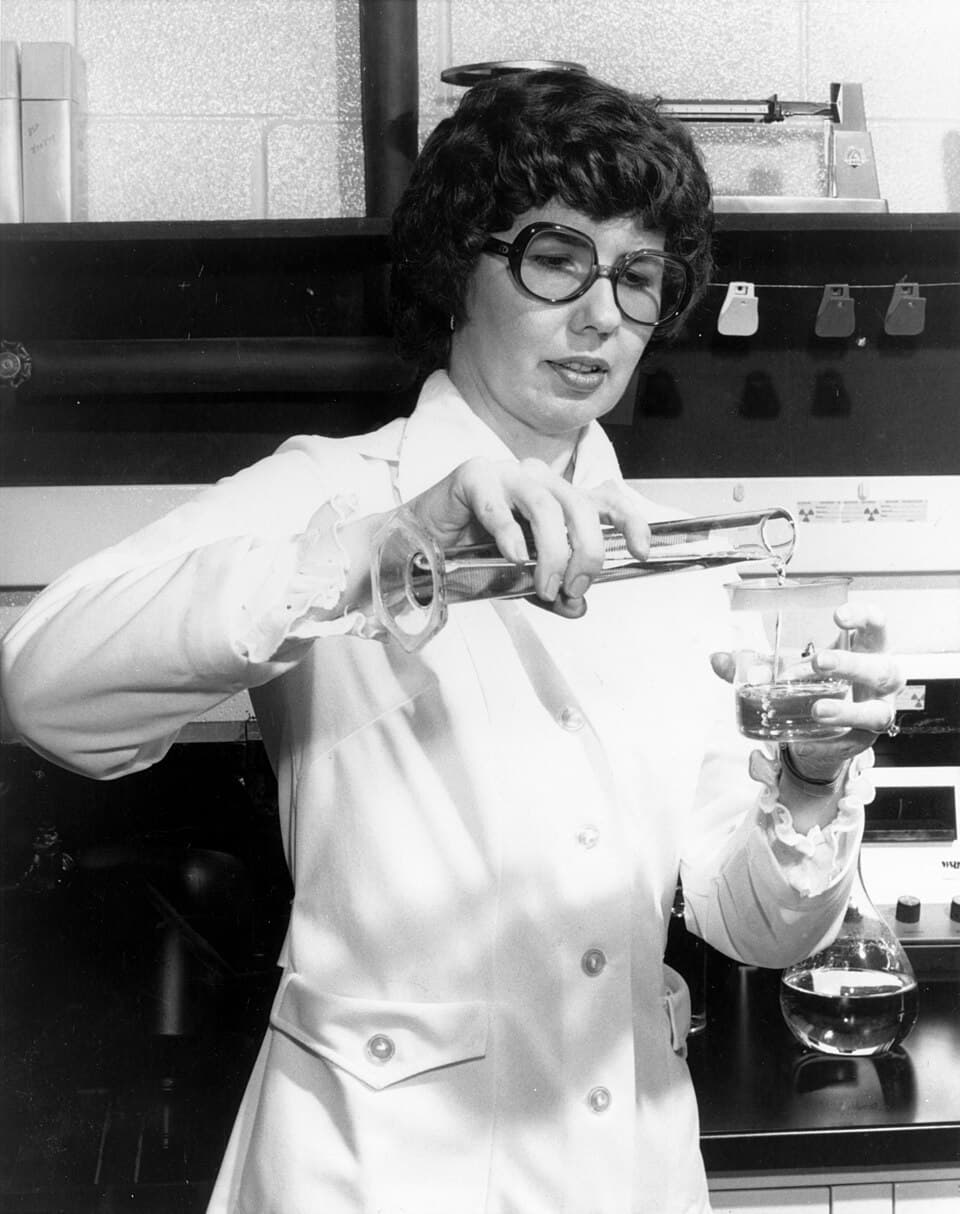
American · Science
Barbara S. Askins
1939 – present
Overview
Barbara S. Askins (born 1939) is an American chemist best known for inventing an autoradiographic method to intensify underexposed photographic negatives. Working at NASA’s Marshall Space Flight Center in Huntsville, Alabama, she developed a radiological image‑enhancement process that transformed barely visible images into high‑contrast prints. Her technique was adopted by NASA for astronomical and geological photography and later found important applications in medical imaging, including X‑ray diagnostics.[2][6][8][9]
For this work, Askins received U.S. Patent 4,101,780 in 1978 and was named National Inventor of the Year by the Association for Advancement of Inventions and Innovations, becoming the first woman honored with that award while holding sole title to the patent in question.[1][2][8][9][10] Her career illustrates the intersection of chemistry, space science, and imaging technology at a moment of rapid scientific change and highlights the contributions of women to NASA’s research programs in the 1970s.
Early life and background
Barbara Scott (later Barbara S. Askins) was born in 1939 in the small community of Belfast, Tennessee[1][2][3][6][11] Most biographical summaries note her birth year and birthplace but do not give an exact date or extensive detail about her childhood, family background, or early schooling. She grew up in the American South during the 1940s and 1950s, a period in which educational and professional opportunities in science for women were limited and social expectations often discouraged women from pursuing technical careers.
Sources emphasize that Askins’s path to higher education in chemistry was not straightforward or immediate. Biographical sketches describe her first spending years as a teacher and as a mother, postponing the completion of her formal scientific training until after her children were in school.[9] This pattern—returning to university studies in mid‑life after family responsibilities—was relatively common among women of her generation who entered STEM fields, reflecting systemic barriers that delayed rather than prevented their scientific contributions.
Askins eventually enrolled at the University of Alabama in Huntsville, where she earned both a bachelor’s degree and subsequently a master’s degree in chemistry.[2][5][6] The precise years and thesis details are not widely documented, but her graduate training provided the foundation in physical and radiochemistry that would later prove critical for her image‑enhancement research. The university’s proximity to NASA’s Marshall Space Flight Center in Huntsville placed her at the heart of the U.S. space program’s engineering and scientific infrastructure, an environment that would shape her later career.
Career beginnings and development
Before joining NASA, Askins worked as a teacher, balancing professional aspirations with family responsibilities.[9] This early career phase is not extensively documented in technical literature, but it suggests experience in explaining scientific and mathematical ideas—skills that later informed her communication of complex image‑processing concepts to engineers, physicians, and administrators.
In 1975, after completing her master’s degree in chemistry, Askins was hired as a physical chemist at NASA’s Marshall Space Flight Center in Huntsville, Alabama.[2][6][8][9] A NASA image description notes that Marshall hired her "to find a better way to develop astronomical and geological pictures" taken by researchers in space science programs.[8] At the time, NASA scientists were grappling with the technical limitations of photographic emulsions used to record faint celestial objects and subtle geological features under low‑light or low‑signal conditions. Many images were severely underexposed; although they contained valuable information, the recorded details were extremely difficult to see or quantify.
As a physical chemist, Askins was well placed to investigate the underlying chemical and physical processes in photographic emulsions. Her task required not merely incremental improvements in development chemistry but a fundamentally new approach to extracting latent information from the silver grains that constitute a photographic image. Her work at Marshall occurred against the backdrop of the post‑Apollo era, when NASA was diversifying its portfolio toward space science, Earth observation, and the upcoming Space Shuttle program, all of which demanded ever more sophisticated imaging techniques.
From 1975 onward, Askins conducted research on methods of enhancing underexposed negatives using radiological principles. She explored how radioactive labeling of the image silver might produce additional exposure in a secondary emulsion, leading to increased density and contrast. By the mid‑1970s she had begun to obtain promising results, and by the late 1970s she had refined a reproducible technique that could be applied systematically to NASA’s image archives.[6][8][9]
Major works, discoveries, and technical contributions
Development of autoradiographic image‑enhancement
Askins’s central contribution is a process in which images recorded on a developed photographic emulsion are intensified via autoradiography. According to technical and biographical sources, the method operates by converting the metallic silver forming the photographic image into a radioactive compound and then placing this radioactive image in contact with a second photographic emulsion. The emitted radiation exposes the second emulsion, producing a new print—an autoradiograph—with significantly increased density and contrast compared with the original negative.[2][5][6][9][11]
This technique was especially valuable for photographs captured under conditions where photon or particle flux was low, such as deep‑space astronomy, faint nebulae, or low‑contrast geological features. Under such conditions, obtaining properly exposed negatives could require prohibitively long exposures or was simply impossible. Askins’s process allowed scientists to make productive use of underexposed negatives without re‑taking the images, which for space missions was not an option. NASA descriptions emphasize that many images which had formerly been considered "hardly visible" or "useless" became scientifically valuable once processed by her method.[8][9]
1976 publication on intensified photographic images
By 1976, Askins had advanced her research sufficiently to publish an article describing a new chemical method for intensifying images in developed photographic emulsions.[6] This early publication (the title is typically cited as “Method of obtaining intensified image from developed photographic films and plates”) laid out the conceptual and experimental groundwork for the later patent. It presented her approach of subjecting the developed image to radioactivity and using that radiation to expose a second emulsion.
The 1976 article served multiple functions. Scientifically, it provided a systematic description of the process, including conditions under which intensification was effective and the degree of contrast improvement that could be achieved. Institutionally, it demonstrated that NASA’s work at Marshall included not only engineering but also fundamental chemical research. Historically, it documented that Askins was among the relatively small number of women scientists publishing original research on space‑related imaging during the mid‑1970s.
Patent 4,101,780 and technical codification
On 18 July 1978, Askins received U.S. Patent 4,101,780 for her invention, titled “Method of Obtaining Intensified Image from Developed Photographic Films and Plates.”[1][6][8][9][10] The patent legally codified the autoradiographic method she had developed at Marshall. It articulated the steps required to make the silver image radioactive, the configuration for contacting it with a second emulsion, and the resulting improvements in image quality.
Patent language and subsequent descriptions highlight several key advantages of the process:
- It could dramatically increase the density and contrast of underexposed images, revealing fine details.
- It allowed reuse of existing negatives, which was crucial for unique space mission photographs that could not be replicated.
- It could be adapted to a variety of photographic materials, from astronomical plates to medical X‑ray films.
NASA and biographical summaries note that the process was so successful in internal use that it was expanded beyond research photography to other fields.[2][8][9] The patent also provided a basis for commercial and institutional adoption outside NASA, contributing to its broader impact.
Adoption by NASA and medical imaging
By 1978, Askins’s method was in regular use at NASA for enhancing astronomical and geological images.[1][2][6][8] The Marshall Space Flight Center used the technique to improve data extraction from photographs associated with space missions and Earth‑observation experiments. Underexposed negatives containing subtle variations in brightness—such as cloud structures, planetary surface features, or faint stars—could be transformed into scientifically meaningful images.
The method’s usefulness extended into medical imaging, particularly in radiography. Biographical accounts describe how the process enabled physicians to interpret X‑ray images that had previously been unreadable while simultaneously allowing lower radiation doses for patients. Because the autoradiographic method magnified the visual information contained in low‑exposure radiographs, clinicians could achieve diagnostic clarity without repeating exposures.[2][6][8][9][10]
These applications illustrate how a technology developed for space research migrated into healthcare, a common pattern in the history of NASA spinoffs. Askins’s work thus exemplifies how cross‑disciplinary innovation can arise when chemists engage directly with the practical challenges of imaging in demanding environments.
Scientific publication of the method
In 1978, Askins published a detailed paper titled “Method of Obtaining Intensified Image from Developed Photographic Films and Plates,” describing her enhanced image‑intensification technique to the broader scientific community.[6] The article elaborated on the process that had been patented the same year and provided empirical evidence for its effectiveness. It discussed the degree of intensification achievable, the types of films and plates suitable for treatment, and the implications for both scientific imaging and archival work.
This publication made her method more widely accessible and citable, moving it beyond NASA’s internal documents and patent filings into the open scientific record. As a result, researchers and practitioners in fields such as astronomy, geology, radiology, and photographic conservation had a concrete reference for adapting the method to their own needs. It also solidified Askins’s reputation as a scientist‑inventor rather than solely as an institutional technologist.
Awards, honors, and recognition
Askins’s most prominent honor is the title of National Inventor of the Year. In many sources, this recognition is dated to 1978; others, including several biographical essays, describe the award as being conferred in 1979.[1][2][6][8][10] The award was given by the Association for Advancement of Inventions and Innovations in recognition of her image‑enhancement process.
Regardless of the precise calendar date of the ceremony—which available sources do not specify—accounts agree that Askins was the first woman to receive this honor while holding sole title to the relevant patent.[6][9][10] In the context of the late 1970s, this represented a significant milestone, as women were rarely the sole named inventors on major patents recognized by national organizations. The award brought her work to public attention and emphasized its practical utility for space research and medicine.
NASA’s own communication channels have highlighted Askins’s achievements. An official NASA image feature discusses her hiring by the Marshall Space Flight Center in 1975, her 1978 patent, and her National Inventor of the Year recognition, presenting her as an exemplar of scientific innovation within the agency.[8] External compilations of notable women in STEM, such as profiles by the Lemelson–MIT Program and women‑in‑science projects, likewise cite her as an important figure in the history of imaging technology.[1][6][9]
Personal life
Biographical sources give only limited information about Askins’s personal life, reflecting both the historical focus on her professional achievements and her own apparent preference for privacy. Several non‑academic accounts note that she was a mother of two children who waited until "after her two children entered school" to complete her bachelor’s and master’s degrees in chemistry.[9] This suggests that for a significant period she combined family responsibilities with part‑time or interrupted study, a common experience for women of her generation.
Some language‑specific encyclopedic entries list her birth surname as Scott, referring to her as "Barbara Scott" or "Barbara Scott Askins," indicating that she married and took the surname Askins.[3][11] However, public sources do not provide details about her spouse, the date of marriage, or other family relationships. There is also no widely cited information about her hobbies, community roles, or personal beliefs; available accounts focus overwhelmingly on her scientific and technical work.
Because of this limited documentation, any deeper discussion of her personal life would require speculation beyond the evidence. What can be reliably said is that Askins pursued an advanced scientific career while raising children and that she navigated educational and professional systems that were not designed with women’s careers in mind.
Legacy and historical impact
Barbara S. Askins’s legacy rests on several interconnected dimensions: technical innovation, cross‑sector impact, and her role as a woman inventor in a male‑dominated era.
Technically, her autoradiographic image‑enhancement process represents a creative application of radiochemistry to a practical problem in photographic science. By treating the silver image itself as a source of radiation, she effectively converted underexposed negatives into latent sources of additional exposure, thereby amplifying their informational content. This approach extended the life and value of existing film archives and provided a tool for extracting scientifically meaningful data from images previously judged to be failures.[2][6][8][9][11]
In space science, the method improved NASA’s ability to interpret astronomical and geological photographs, contributing to more accurate analyses of space mission data. While Askins did not lead mission‑planning or spacecraft operations, her work provided critical support to researchers who depended on high‑quality images to test hypotheses and measure phenomena.
In medicine, the adaptation of her process to X‑ray imaging offered two key benefits: more readable images and the possibility of reduced radiation doses for patients. This dual impact—enhanced diagnostic information and improved safety—aligns with broader trends in medical imaging that seek to maximize information while minimizing harm. Although digital imaging would later transform radiology, Askins’s work played a significant role in extending the usefulness of film‑based systems during an important transitional period.
As a woman inventor, Askins’s recognition as National Inventor of the Year marked a visible break with longstanding patterns of underrepresentation. Historically, women inventors were often excluded from patent rights or had their contributions subsumed under institutional or male colleagues’ names. Askins’s status as the first woman with sole patent ownership to receive that award underscored the importance of acknowledging women’s intellectual property in their own names.[6][9][10]
Her story has since been featured in educational materials, women‑in‑science projects, and public‑facing articles that seek to broaden the narrative of who contributes to STEM. Profiles emphasize her return to higher education after raising children, her work at NASA, and the tangible societal benefits of her invention, making her a compelling role model for students considering non‑linear paths into scientific careers.
Later life and current status
Public sources treat Barbara S. Askins as a living figure, and no death date has been reported in major encyclopedic references such as English‑language Wikipedia or national biographical projects.[2][6][7] Details about her activities after the 1970s and early 1980s, including her later career at NASA, possible roles in industry or academia, or retirement, are not well documented in widely accessible sources.
Many biographical notices list her "period of activity" as beginning in 1976 and extending to an unspecified later date, implying that she continued to work in chemistry or related technical fields beyond the period of her most widely recognized invention.[6] However, specific positions, publications, or projects from her later career have not been as prominently chronicled, and popular accounts often reiterate the same core narrative: her mid‑life entry into advanced study, her hiring by Marshall Space Flight Center in 1975, the development and patenting of her autoradiographic method by 1978, and her National Inventor of the Year recognition around 1978–1979.
Given the absence of detailed public records on her subsequent life, assessments of her later activities must remain cautious. Nevertheless, her earlier achievements continue to be cited in discussions of women in STEM, NASA spinoffs, and the history of image‑enhancement technologies. She occupies a place in the broader history of twentieth‑century science as an example of how individual ingenuity, supported by institutional resources, can produce innovations with wide‑ranging consequences for both research and everyday life.
Dated achievements
4 indexed.
- Jul181978Science
U.S. Patent 4,101,780 Granted for Image-Intensification Process
Askins was granted U.S. Patent No. 4,101,780 for her autoradiographic method of intensifying underexposed photographic negatives.
View details Barbara Askins - Lemelson-MIT - Jan011978Science
Publication of Paper on Intensified Image Method
Askins published a scientific paper detailing her patented autoradiographic method for intensifying underexposed photographic images.