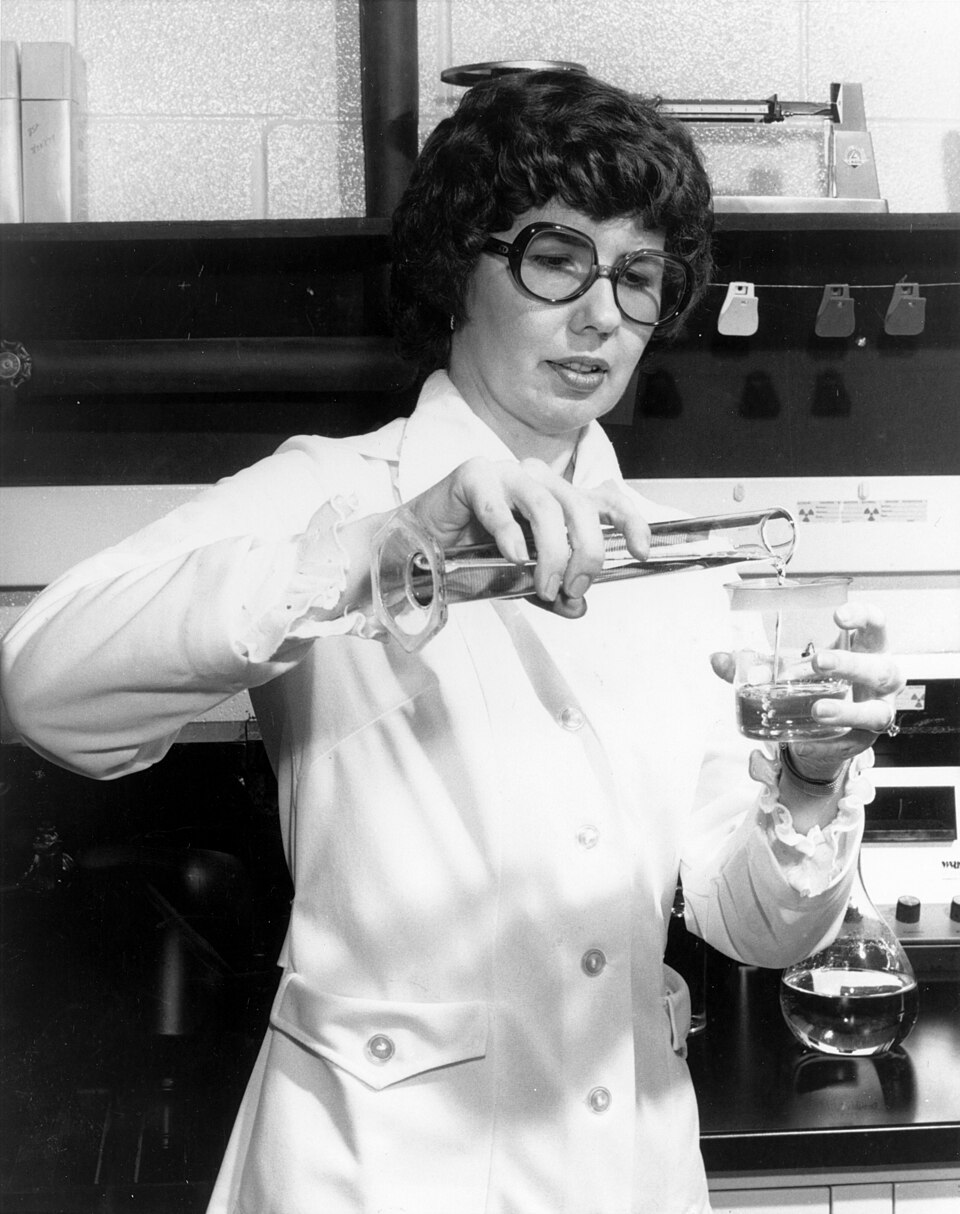
Askins was granted U.S. Patent No. 4,101,780 for her autoradiographic method of intensifying underexposed photographic negatives.
On July 18, 1978, the United States Patent and Trademark Office issued U.S. Patent No. 4,101,780 to chemist Barbara S. Askins, titled "Method of Obtaining Intensified Image from Developed Photographic Films and Plates." The patent formally protected her innovative autoradiographic process, which used radioactive isotopes to bind to the silver particles in a developed photographic negative, dramatically amplifying faint or underexposed images without the loss of detail typical of conventional intensification techniques.
Askins developed this method while working as a chemist at NASA's Marshall Space Flight Center, where she was tasked with rescuing scientific value from thousands of underexposed astronomical and geological photographs. Her solution proved so effective that it could recover images previously thought unusable, revealing details invisible in the original negative.
The significance of this patent extended far beyond its original aerospace application. It was later adapted for use in medical radiography, where it allowed X-ray images to be intensified after exposure, permitting physicians to reduce the radiation dose given to patients while still obtaining diagnostically useful images. This cross-disciplinary impact—from deep space imagery to patient safety in hospitals—cemented the patent's legacy as one of NASA's most successful technology transfer stories, and it laid the groundwork for the national recognition Askins would receive the following year.
Images