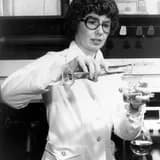
Askins published a scientific paper detailing her patented autoradiographic method for intensifying underexposed photographic images.
In 1978, Barbara S. Askins published a scientific paper titled "Method of Obtaining Intensified Image from Developed Photographic Films and Plates," presenting to the broader scientific and technical community the details of the autoradiographic process she had patented that same year. The paper explained how radioactive isotopes could be used to bind selectively to silver particles in a developed negative, intensifying the image and recovering detail from otherwise unusable underexposed photographs.
This publication served as a bridge between her patented invention and its practical adoption across multiple fields. By making her methodology available to other researchers, engineers, and medical professionals, Askins accelerated the translation of a NASA-developed solution into everyday scientific and clinical practice.
The paper's release coincided with growing interest at NASA in maximizing the scientific yield of costly space and aerial imaging missions, where a single underexposed frame could represent a irreplaceable loss of data. Her clearly documented process gave other technicians a reproducible method to apply the same intensification technique to their own archives of undervalued negatives, amplifying the practical reach of her invention well beyond her own laboratory.