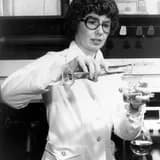
Askins' image-enhancement technique was applied to intensify underexposed astronomical and geological photographs for NASA.
By 1978, Barbara S. Askins had fully developed and begun applying her radiological image-enhancement technique to real-world underexposed photographic materials at NASA's Marshall Space Flight Center. The method used a chemical bath containing radioactive silver or sulfur compounds that bonded to the existing silver particles in a developed negative, causing them to emit additional exposure onto photographic paper and thereby amplifying faint image details that would otherwise remain invisible.
This technique proved transformative for NASA's vast archives of astronomical and geological photography, much of which had been captured under difficult lighting or exposure conditions during spaceflight and aerial survey missions. Photographs of galaxies, planetary surfaces, and geological formations that had previously been discarded as too faint to analyze could now be recovered and made scientifically useful.
The technique's success within NASA quickly attracted attention from the medical community, where physicians recognized its potential to enhance X-ray images after exposure—allowing lower radiation doses to be used during imaging procedures while still producing diagnostically clear results. This dual application, spanning space science and clinical medicine, exemplified the kind of practical, high-impact innovation that would earn Askins national recognition as an inventor.