← All women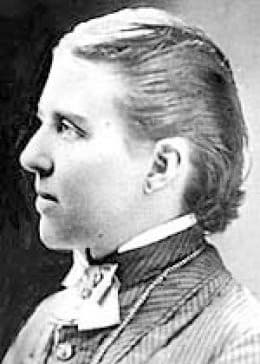
American · Law · Activism
Arabella Mansfield
May 23, 1846 – August 2, 1911
"
Early Life and Background
Arabella \"Belle\" Aurelia Babb was born on May 23, 1846, near Burlington in Des Moines County, Iowa, to Miles Babb and Mary Moore Babb. (Some sources, including the Iowa State Historical Society's educator resources, cite an alternative birth date of August 23, 1846; May 23 is the date most commonly cited by Encyclopaedia Britannica and Wikipedia.) Her father, drawn by the promise of the California Gold Rush, left the family to seek his fortune in the West and died there while Arabella was still a young child. This early loss shaped the family's circumstances, and around 1860 her mother relocated the family to Mount Pleasant, Iowa, a town that would prove pivotal to Arabella's future.
Mount Pleasant was home to Iowa Wesleyan College, one of the relatively few American institutions of higher education in the mid-nineteenth century that admitted women on equal terms with men. This educational opportunity, unusual for the era, allowed Arabella and her elder brother Washington Babb both to pursue rigorous academic training. Washington would go on to study law, and his legal career would later provide Arabella with an entry point into the profession that would define her legacy.
Education and Early Career
Arabella Babb enrolled at Iowa Wesleyan College and distinguished herself academically, graduating in June 1866 as valedictorian of her class. Graduating first in her class was an extraordinary accomplishment for a woman at the time, when prevailing social attitudes often dismissed women's intellectual capacities and questioned the propriety of women pursuing advanced education at all.
Following her graduation, Mansfield did not withdraw into domestic life, as most educated women of her era were expected to do. Instead, she joined the faculty at Iowa Wesleyan College, teaching English and history. This early teaching position provided her with financial independence and professional standing, and it placed her among a small cohort of women who worked as college-level educators in the United States during the 1860s.
In 1867, Arabella married John Melvin Mansfield, a fellow professor at Iowa Wesleyan who taught natural sciences. Their marriage was, by most accounts, a partnership of intellectual equals; John supported Arabella's ambitions to study law, an unusual stance for a husband in an era when married women's legal and professional identities were often subsumed under those of their spouses through the doctrine of coverture.
Reading Law and the Path to the Bar
Between approximately 1867 and 1869, while continuing her teaching duties at Iowa Wesleyan, Mansfield read law in the office of her brother, Washington Babb, a practicing attorney in Mount Pleasant. \"Reading law\" under the tutelage of a practicing attorney was, at the time, a common and legitimate path to legal qualification, an alternative to formal law school education, which itself was scarcely available to women in any case.
Mansfield's preparation was rigorous and comprehensive. She immersed herself in legal texts, case law, and procedural rules, effectively completing the equivalent of a legal apprenticeship over roughly two years. Her dedication to this course of study, undertaken while she balanced a full-time teaching career, speaks to her exceptional discipline and her deep commitment to entering the legal profession despite the significant barriers she knew she would face.
The Historic Bar Examination and Admission
At the time, Iowa's statute governing admission to the bar restricted the practice of law to \"any white male person\" of good moral character. This language appeared to categorically exclude Mansfield from ever being formally admitted to practice, regardless of her qualifications. Nevertheless, on June 15, 1869, Mansfield sat for the bar examination administered by the Henry County Bar Association in Mount Pleasant.
Her performance on the examination was reportedly outstanding; several accounts suggest that her examiners were so impressed by her command of the law that they recommended her for admission despite the restrictive statutory language, with some noting she outperformed many of the male candidates examined alongside her. The examining committee's endorsement set up a direct legal confrontation: could a woman, regardless of qualification, be denied admission to the bar solely because of the word \"male\" in the statute?
On June 17, 1869, the presiding judge ruled in Mansfield's favor, interpreting the statute's language in a manner that allowed for her admission. This ruling made Arabella Mansfield the first woman in United States history to be admitted to practice law. The decision was a landmark moment, not merely a personal victory but a legal precedent demonstrating that gender-based exclusion from professional licensure could be challenged and overcome.
The impact of Mansfield's admission was immediate and far-reaching. Later that year, around September 1869, the Iowa legislature amended its bar admission statute to explicitly state that \"women and persons of color may be attorneys at law.\" This legislative change made Iowa the first state in the nation to statutorily guarantee that women and people of color could be admitted to the legal profession, transforming what might have remained an isolated judicial ruling into an enduring, codified right.
Suffrage Activism and Public Life
Although Mansfield rarely practiced law in the traditional sense of representing clients in court, she used her unprecedented status as a platform for broader social reform. In 1870, she chaired the Iowa Women's Suffrage Convention, lending her considerable public credibility to the movement for women's political enfranchisement. As a woman who had proven her intellectual and professional equality with men in one of society's most male-dominated fields, Mansfield's advocacy for suffrage carried particular symbolic weight.
Throughout the 1870s and 1880s, Mansfield remained an active participant in the women's rights movement. She delivered public lectures on suffrage, participated in reform organizations, and held leadership positions in groups such as the Iowa Peace Society, reflecting her broader commitment to social progress beyond the legal profession alone.
Academic Career and Administration
Mansfield's primary professional focus throughout her life remained education rather than legal practice. She continued teaching and, in the 1880s and 1890s, took on increasing administrative responsibilities. She served as a professor and eventually as dean of the School of Art and Music at DePauw University in Greencastle, Indiana, a position of considerable academic authority for a woman of her era.
Her long career in academic administration demonstrated that her talents extended well beyond the legal breakthrough for which she is best remembered; she was a capable and respected institutional leader who helped shape the educational offerings of a major university over multiple decades.
Recognition at the World's Columbian Exposition
On May 19, 1893, at the World's Columbian Exposition in Chicago, Mansfield's pioneering achievement was formally recognized before a national audience. At the Congress of Women Lawyers, held in conjunction with the World's Fair, she was celebrated as the first woman lawyer in the United States, more than two decades after her original admission. This event also marked her becoming a charter member of the National League of Women Lawyers, an organization dedicated to supporting the growing ranks of women entering the legal profession.
This recognition placed Mansfield's individual achievement within a broader national narrative of women's professional advancement, connecting her 1869 breakthrough to the ongoing efforts of women lawyers who followed in her footsteps throughout the late nineteenth century.
Personal Life
Mansfield's marriage to John Melvin Mansfield appears to have been a supportive partnership throughout her life; the couple did not have children, and Arabella's career, both in education and as a legal pioneer, remained central to her identity throughout her adult life. She and her husband eventually relocated in connection with academic positions, ultimately settling in the Midwest region where she would spend her final years.
Later Life, Death, and Legacy
Arabella Mansfield died on August 2, 1911, in Aurora, Illinois, at the age of 65. Her death came after a long and multifaceted career that spanned legal history, education, and social activism.
Mansfield's legacy endures primarily through her status as the first woman admitted to the practice of law in the United States, a distinction that opened the legal profession to generations of women who followed. Her case remains a foundational moment in the history of American women's professional advancement, cited frequently in histories of the legal profession, women's rights, and civil rights more broadly, given that the subsequent Iowa legislative amendment also extended bar admission rights to people of color.
Today, Mansfield is commemorated by bar associations, law schools, and historical societies across the United States. The American Bar Association's Commission on Women in the Profession established the Arabella Babb Mansfield Award to honor women lawyers who have achieved similar trailblazing distinction in their own careers. Her life stands as an enduring testament to the power of individual determination to challenge unjust legal barriers and reshape the boundaries of professional opportunity for women in America.
"Dated achievements
8 indexed.
- May231846Science
Birth of Arabella "Belle" Aurelia Babb
Arabella Mansfield was born near Burlington, Des Moines County, Iowa.
View details Arabella Mansfield - Wikipedia - Jun201866Science
Graduates as Valedictorian from Iowa Wesleyan College
Arabella Babb graduated at the top of her class from Iowa Wesleyan College in Mount Pleasant, Iowa.