← All women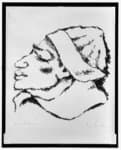
English · Activism · Politics
Anne Hutchinson
July 20, 1591 – August 20, 1643
Early Life and Background
Anne Hutchinson (née Anne Marbury) was born in July 1591Alford, Lincolnshire, England, the daughter of Francis Marbury, a clergyman and schoolmaster, and Bridget Dryden.[1][7] Her exact birth day is not recorded; historians commonly use her baptism on 20 July 1591 as the closest documented date for her birth.[7] Francis Marbury was known for his outspoken criticism of the Church of England, having been imprisoned and suspended for denouncing the church’s leaders as insufficiently trained and corrupt.[1][5] Growing up in a household where theological dispute and resistance to ecclesiastical authority were part of daily life deeply shaped Anne’s understanding of faith and conscience.
Marbury’s eventual reinstatement and appointment as a curate in London exposed his family to Puritan reformist circles, where emphasis on scripture, personal piety, and moral rigor was strong. Anne likely received more education than many girls of her era because her father ran a school and valued literacy.[1] She became familiar with the Bible and Protestant theology, developing an ability to discuss doctrinal matters that later astonished colonial magistrates unused to women’s public theological argument.
In 1612 Anne married William Hutchinson, a cloth merchant from Alford.[1][7] The couple shared Puritan convictions and became devoted followers of the minister John Cotton, whose emphasis on "free grace" and the inner assurance of salvation resonated with Anne’s beliefs.[1][8] Over the next two decades, Anne bore a large family—traditionally reported as fifteen children—while continuing to engage in lay religious practice and informal spiritual counseling.[1][11] Cotton’s later migration to New England would strongly influence their decision to cross the Atlantic.
Migration to New England and Early Colonial Life
Increasing pressure on Puritan nonconformists under the reigns of James I and Charles I, along with economic motives, encouraged many English families to join the "Great Migration" to New England. Around 1633–1634, Anne and William Hutchinson emigrated to the Massachusetts Bay Colony, settling in Boston shortly after Cotton had taken up a post there.[1][7] Sources differ slightly on the exact year of their arrival; some place it in 1633, others in 1634, but agree that they quickly became part of Boston’s religious community.[5][7]
In Boston, Anne worked as a midwife and healer, roles that brought her into intimate contact with many women and their families.[11] Through these connections she began hosting religious meetings in her home, initially for women, where she discussed the previous Sunday’s sermons and offered her own theological reflections.[1][5] By 1634, these meetings had grown so popular that men also began attending, including influential figures in the colony.[3][12] Hutchinson’s skill in interpreting scripture and her warm, confident manner attracted followers who contrasted her emphasis on inner grace with the colony’s dominant teachings about preparation and moral striving.
The Massachusetts Bay Colony, founded as a "city upon a hill," intertwined religious and civil authority; ministers and magistrates reinforced each other’s power, and public dissent was considered dangerous.[6][10] Within this context, Hutchinson’s home meetings, female leadership, and critical stance toward certain ministers challenged accepted norms of both gender and governance.
Beliefs and the Antinomian Controversy
The core of Anne Hutchinson’s theology lay in her belief in the "covenant of grace", the idea that salvation is granted by God’s free favor and experienced as inward assurance through the Holy Spirit, rather than earned through outward works or strict adherence to ordinances—the "covenant of works".[7][16] Influenced by John Cotton, she argued that some Massachusetts ministers overly emphasized moral behavior and preparation, thereby obscuring the primacy of faith and inner experience.
Hutchinson claimed that true believers could experience personal revelation, a direct witness of the Spirit confirming salvation.[5][16] To her followers, this teaching offered comfort and spiritual empowerment. To many of the colony’s leaders, however, it appeared to undermine clerical authority and encourage people to judge ministers’ spiritual standing. Hutchinson reportedly classified certain ministers as lacking the "seal" of God’s grace, telling followers which preachers they should distrust.[1][11]
The theological conflict that emerged from these disputes is known as the Antinomian Controversy (1636–1638).[1][11][16] "Antinomian"—meaning "against the law"—was used by her opponents to suggest that her reliance on grace disparaged moral law and encouraged disorder. Central to the controversy was the struggle between Cotton’s grace-centered teaching and the more preparation-focused theology of other clerics. Hutchinson’s charismatic lay leadership made her the public face of the debate.
Gender expectations intensified the conflict. Puritan authorities believed women should not teach men or assume public spiritual authority. Hutchinson’s thriving mixed-sex meetings and confident critique of ministers were thus doubly transgressive—religiously and socially. Historian Michael Winship calls her "a prophet, spiritual adviser, mother of fifteen, and important participant in a fierce religious controversy" that shook the infant colony.[1][8]
Civil Trial and Sentence of Banishment
By 1637 the Antinomian Controversy had divided the colony’s elite and alarmed Governor John Winthrop and his allies. The General Court resolved to suppress dissent. In November 1637, Hutchinson was arrested and tried before the civil authorities on charges of sedition and heresy.[1][15] The exact day of the trial is debated across sources, but its proceedings are well documented in contemporary accounts.
During the trial, Hutchinson defended her right to hold meetings and articulated her theological positions with notable clarity.[15][16] The magistrates pressed her to explain why she had judged some ministers as lacking grace. When she claimed that God had revealed to her that He would deliver her from their hands—an assertion interpreted by the court as a claim to special revelation—they seized upon this as blasphemous.[6][10] Her words were portrayed as undermining the colony’s religious foundations.
The General Court ultimately convicted her and, after deliberation, on 22 March 1638 formally sentenced her to banishment from the Massachusetts Bay Colony.[10][16] This decision expelled not merely a dissenter, but one of the first prominent women religious leaders in the colonies.[12] The ruling ended her public ministry in Massachusetts yet inadvertently propelled the creation of more tolerant communities elsewhere.
Church Trial and Excommunication
Following the civil trial, Hutchinson faced a second ordeal: a church trial before the Boston congregation, where ministers sought to discipline her religiously. In March 1638, she was examined by clergy including her former mentor, John Cotton.[7][12] Accused of holding "erroneous" beliefs and sowing discord, she was pressured to recant.
Despite some moments of apparent concession, Hutchinson refused to abandon the core of her belief in immediate revelation and the covenant of grace. The congregation voted to excommunicate her, formally casting her out of the church fellowship.[1][7] Excommunication carried profound spiritual and social stigma in Puritan society, isolating the individual and reinforcing communal boundaries.
Together, the civil and church trials exemplify the entanglement of religious doctrine and civic power in early Massachusetts. Hutchinson’s vigorous self-defense, recorded in detail, has been interpreted as an early example of a colonial woman publicly asserting her conscience against institutional authority, foreshadowing later developments in notions of individual rights.[3][5][15]
Exile and the Founding of Portsmouth, Rhode Island
In early April 1638, after the banishment order took effect, Hutchinson and her family left Boston, traveling toward Roger Williams’s settlement at Providence.[16] Their departure, often placed around 7 April in modern timelines, was both a physical and symbolic exit from a colony that refused her beliefs.[16] Soon afterward, she joined other dissenters, including William Coddington and John Clarke, who had negotiated for land on Aquidneck Island.
On or about 30 April 1638, this group established a new settlement at the northern end of the island, later known as Portsmouth.[4][13] They adopted the Portsmouth Compact, a civil agreement that emphasized government by consent and reflected their desire for a less rigid, more tolerant community. Hutchinson, though not a formal signer due to gender conventions, is widely regarded as a co-founder and "founding mother" of Portsmouth.[4][13] Her presence and ordeal in Massachusetts deeply influenced the ethos of the new town.
Portsmouth, along with Providence, formed the early nucleus of what became the colony of Rhode Island, distinguished in time for its practices of religious toleration and separation of church from state authority.[3][6] Hutchinson’s role in founding Portsmouth marks her as one of the earliest women recognized in colonial records as a civic founder, a notable milestone in women’s history.
Later Years: Move to New Netherland
Life in Rhode Island offered greater religious freedom but was not without challenges. Political and theological tensions persisted among settlers, and the small communities remained economically and militarily vulnerable. In 1642, after the death of her husband William Hutchinson, Anne decided to leave Rhode Island.[12][16] She moved with her youngest children to the Dutch colony of New Netherland, settling near present-day Pelham Bay
On this frontier, Hutchinson sought a quieter existence, farming and raising her family at some distance from the intense religious quarrels that had defined her Massachusetts years. Yet the region was embroiled in conflict between Dutch authorities and local Indigenous nations, including the Siwanoy. Tensions, raids, and reprisals created a volatile environment for outlying settlements.[11] In August 1643, Hutchinson’s household was attacked by Siwanoy warriors. Several sources give only "August 1643" or "August or September 1643" as the timeframe; EBSCO’s research starter identifies the most precise date as 20 August 1643.[5][7] In the assault, Anne and most of her children were killed, and their homestead destroyed.[5][11] One daughter is said to have survived and later become part of the Siwanoy community, illustrating the complex human outcomes of colonial frontier violence.[11] Hutchinson’s death underscores the risks faced by exiled and marginal settlers who, pushed away from more secure centers, lived on contested edges of colonial expansion. Her life thus ended not in court or church but amid the broader conflicts of empire, land, and Indigenous resistance. Anne Hutchinson’s marriage to William Hutchinson was a long partnership rooted in shared religious convictions. William supported her migration decisions and was himself a respected member of the Boston community, serving in public roles before the controversy intensified.[1][11] Their large family—traditionally counted as fifteen children—formed a significant portion of her social world and responsibilities, simultaneous with her religious work.[1] As a midwife, Hutchinson built strong bonds with other women, assisting at births and providing care. These relationships became the initial network for her religious meetings and lent credibility to her role as spiritual adviser.[5][11] She also engaged with leading male figures: she admired John Cotton, clashed with John Winthrop, and influenced other laymen who attended her gatherings. Her trials reveal complex dynamics of support and betrayal as some allies distanced themselves under pressure. Hutchinson’s major contributions lie in several intertwined areas: While formal awards did not exist in her lifetime, Hutchinson has received substantial posthumous recognition: Anne Hutchinson’s legacy is multifaceted, spanning religion, gender, and political thought. In religious history, she is remembered as a pioneer of personal revelation and individual conscience, insisting that laypeople—women included—could interpret scripture and experience God’s grace without complete dependence on ordained clergy.[5][16] Her teaching anticipated later evangelical currents, including those of the Great Awakening, which placed renewed emphasis on inward experience. In women’s history, Hutchinson is often cited as an early feminist figure—although that term is anachronistic—because she assumed public spiritual authority in a culture that explicitly barred women from such roles and because she refused to be silenced in the face of male leadership.[1][5] Her home-based religious meetings provided a space where women’s voices carried weight, challenging the strict limitations placed on female speech. Politically, her clash with Massachusetts authorities influenced the trajectory of American notions of liberty. By forcing dissenters like Hutchinson and Roger Williams into exile, the colony unintentionally fostered the development of Rhode Island and other settlements committed to greater toleration.[6][10][11] Over time, these experiments helped shape the intellectual climate from which later constitutional protections for religious freedom and free expression emerged. Modern historians and educators use Hutchinson’s story to illustrate the tension between communal order and individual rights. Her insistence on following her conscience, even at the cost of exile and danger, resonates with later struggles over civil liberties and minority viewpoints in American life.[3][5][9] Despite broad admiration, interpretations of Hutchinson are not entirely uniform. Some scholars caution against portraying her as a fully modern advocate of pluralism, noting that she remained a committed Puritan whose criticism of ministers stemmed from theological rigor rather than generalized tolerance.[8][11] Others question the accuracy of calling her "America’s first feminist," emphasizing that such labels impose contemporary frameworks on seventeenth-century actors.[5] There are also historiographical debates about the exact timing and nature of her statements at trial, the degree to which she claimed prophetic status, and how far her teachings diverged from accepted Calvinist doctrine. Nonetheless, there is broad consensus that her case dramatically exposed the fragility of dissent within Puritan theocracy and that her experiences shaped the development of more tolerant colonial societies. Hutchinson has appeared in numerous histories, biographies, and educational materials, including scholarly studies, school curricula, and media portrayals.[1][3][9][11] She features in discussions of early American religious liberty, colonial women’s roles, and the origins of the First Amendment. Authors and institutions variously present her as a martyr to conscience, a radical religious visionary, a proto-libertarian critic of state-enforced orthodoxy, and a mother whose family’s fate illustrates the human cost of colonial expansion.[5][10][11] Her trials are frequently taught alongside cases such as those of Roger Williams and later figures who challenged dominant religious or political structures. The transcripts of her examinations, preserved and analyzed by legal historians, remain compelling examples of a laywoman confronting a panel of powerful men with scriptural argument and appeals to divine guidance.[15] In public memory—statues, plaques, and museum exhibits—Hutchinson stands as a symbol of courageous dissent. While the precise contours of her theology may be complex, her refusal to recant under pressure and her willingness to build a new community on principles of conscience secure her place in the broader story of the struggle for religious freedom and women’s public voice. Anne Hutchinson, baptized in 1591 in Alford and killed in 1643 near Pelham Bay, lived a life that traversed the religious and geographic frontiers of the English Atlantic world. As a midwife, spiritual adviser, and central figure in the Antinomian Controversy, she challenged the ministers and magistrates of Massachusetts Bay, defended her beliefs in notable civil and church trials, and ultimately helped found Portsmouth, Rhode Island, a refuge for religious dissent.[1][4][5][11] Her story illustrates how a single woman’s conscience could unsettle a fledgling theocracy, reconfigure colonial settlement patterns, and contribute to the long evolution of ideas about grace, authority, and freedom. Though she died violently on a contested frontier, her voice continues to echo in discussions of religious liberty, gender, and the rights of individuals to speak and assemble in pursuit of their convictions.Death in the Pelham Bay Massacre
Personal Life and Relationships
Major Contributions and Historical Significance
Awards, Honors, and Modern Recognition
Legacy and Historical Impact
Interpretive Debates
Later Memory and Cultural Representation
Summary
Dated achievements
5 indexed.
- Jul201591Science
Baptism (traditional birth date) in Alford, Lincolnshire
Anne Hutchinson was baptized in Alford, Lincolnshire, England — a date historians commonly use as her birth date due to lack of surviving birth records.
View details Anne Hutchinson - Britannica - Mar221638Science
Formally sentenced to banishment by the Massachusetts General Court
The Massachusetts Bay General Court formally sentenced Anne Hutchinson to banishment for sedition and heresy following her civil trial.