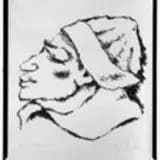
Anne Hutchinson and most of her household were killed in an attack by Siwanoy Native Americans near present-day Pelham Bay in New Netherland.
On August 20, 1643, Anne Hutchinson and all but one of her household then living with her were killed in an attack by Siwanoy Native Americans near present-day Pelham Bay in New Netherland (now part of the Bronx, New York). Hutchinson had relocated there after the 1642 death of her husband William, seeking to distance herself and her family from the reach of Massachusetts Bay authorities, whose ongoing hostility and threats of further persecution had made even Rhode Island feel unsafe.
The attack occurred amid Kieft's War, a broader and brutal conflict between Dutch colonial settlers and Native American groups in the New Netherland region; the Hutchinson household, isolated and recently arrived, was caught in the violence largely unrelated to their own history of religious dissent. Only Hutchinson's young daughter Susanna is believed to have survived, taken captive before later being ransomed back to English colonists.
Hutchinson's death at approximately age 52 closed the life of one of colonial America's most consequential religious dissenters. Some contemporaries in Massachusetts, including Governor John Winthrop, controversially interpreted her violent death as divine judgment for her heresies, a reaction that itself became emblematic of the harshness of Puritan orthodoxy. Her memory endured, however, as a symbol of courage in the face of religious persecution, and she is commemorated today by a statue at the Massachusetts State House and by the naming of the Hutchinson River and Parkway near the site of her death.