← All women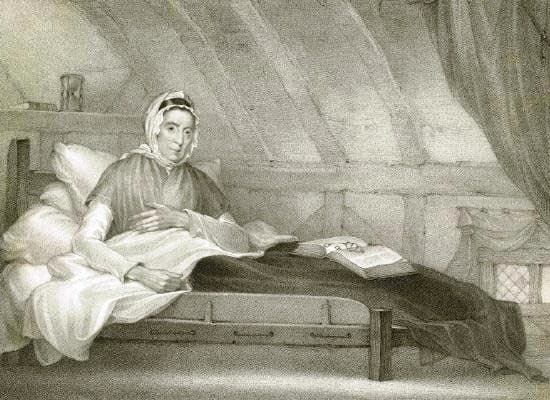
British, American · Activism · Politics
Ann Moore
October 31, 1761 – October 3, 1825
Overview
Ann Moore is a name shared by several historically significant women whose lives illuminate different facets of women’s experiences with the media, the body, and corporate power. This profile focuses on two figures whose careers and controversies are well documented: Ann Moore of Tutbury (born 31 October 1761, died 1825), notorious in early nineteenth‑century England as the “fasting‑woman of Tutbury”, and Ann S. Moore (born 29 May 1950), the American media executive who became the first woman to lead Time Inc.
Although separated by nearly two centuries and operating in very different environments, both women achieved widespread public attention. The Tutbury Moore became the subject of medical treatises, newspaper coverage, and popular pamphlets, embodying anxieties about truth, fraud, and the limits of the body. Ann S. Moore, by contrast, rose through corporate ranks to reshape major magazine brands during the transition to digital media, illustrating the slow but significant entry of women into top executive roles.
Ann Moore of Tutbury: Early Life and Background
Ann Moore, later known as the fasting‑woman, was born in Derby, England, and baptized at St Peter’s Church on 31 October 1761, according to parish records cited in modern scholarship.1 She grew up in modest circumstances in the Midlands, a region undergoing industrialization. Little is known in detail about her childhood or education; typical of poor women of the period, her early life left few documentary traces beyond church registers.
By adulthood Moore was living in or around Tutbury, a village in Staffordshire. Contemporary and later accounts describe her as impoverished and the mother of several children, relying on irregular work and charity to survive.2 Some narratives portray her as improvident and morally questionable, reflecting the moralizing tone common in Georgian commentary about poor women. Others emphasize the structural hardship she faced in a society that offered few secure livelihoods to working‑class mothers.
Ann Moore of Tutbury: Emergence of the "Fasting‑Woman"
Moore’s notoriety began in the mid‑1800s. By about 1805, observers noted that she appeared to subsist on extremely little food.6 In 1807, while living in Tutbury with at least one of her children, Mary, she began publicly claiming that she could survive without food or drink.2 Her last clearly documented intake of food was reported as occurring in July 1807, when she ate some blackcurrants; soon afterwards she took permanently to her bed and it was asserted that she ate nothing at all.2
These claims quickly attracted local curiosity. As Moore’s apparent abstinence continued, pamphlets were published about her case, and visitors from surrounding districts came to witness what many perceived as a marvel. Her fame grew within a culture fascinated by religious signs, bodily wonders, and the possibility of overturning the "order of nature." The story reached broader audiences through newspapers and printed tracts, situating Moore among a wider group of European figures said to live without normal sustenance.
Medical and Public Surveillance
The growing controversy prompted attempts to verify her claims. On 21 April 1807, local physicians and gentlemen initiated a formal watch at Moore’s house in Tutbury, maintaining continuous surveillance for sixteen days.4 They sought to determine whether she truly took no food or drink, placing her under round‑the‑clock observation. The watch concluded without observers witnessing her consume solid food, and this outcome led many to believe her claims were genuine.
However, later accounts and medical analyses emphasized the watch’s methodological weaknesses. It did not fully prevent the possibility of secret liquid nourishment, and Moore’s daughter had opportunities to be alone with her. The imperfect nature of the trial became a key point in subsequent critical examinations, which argued that the early 1807 surveillance should never have been considered proof of miraculous abstinence.3
Peak Notoriety and Media Attention
By 1 March 1809, Moore’s reputation had reached its height. The Dictionary of National Biography and other sources record that reports of her supposed multi‑year fast were widely circulated in the British press by this date, drawing a steady stream of visitors to Tutbury.4 Clergymen, physicians, and laypeople came to see the fasting‑woman, often paying for the privilege and sometimes leaving donations.
Her case inspired not only newspaper articles but also more substantial pamphlets. Some treated her as an object of religious significance, citing her abstinence as evidence of divine power or extraordinary piety. Others framed the case as a physiological challenge, speculating about latent animal magnetism or extraordinary metabolic processes. Moore’s bed thus became a quasi‑public stage where debates about faith, fraud, and scientific skepticism were played out upon a working‑class woman’s body.
Moore benefitted financially: she reportedly accumulated a considerable sum by the standards of her station, derived from gifts from sympathetic visitors.6 At the same time, she became increasingly confined, both physically and socially, as her identity narrowed to the role of fasting‑woman.
Exposure and Collapse of the Imposture
Skepticism grew as the years passed. In 1812, Ann possessed a notable amount of money from donations, prompting further scrutiny.6 The most decisive challenge came in 1813, when a more rigorous watch was organized. According to the Dictionary of National Biography, this second surveillance lasted eight days and involved stricter controls on access to Moore.4
The watch ended on 24 May 1813. Observers noted Moore’s extreme weakness and loss of weight, raising fears that she might die if the experiment continued. At the same time, suspicions intensified that her daughter, Mary, had been secretly providing sustenance—likely in liquid form—during private moments such as morning and evening kisses.4
Under pressure, Moore eventually confessed that she had not been living without nourishment. She admitted to having taken sustenance at intervals during the previous six years. The conclusion of the eight‑day watch therefore publicly exposed her claims as fraudulent and turned her from marvel into impostor.1
The exposure had immediate social consequences. Moore was denounced in print as an "artful impostor," and the public that had once revered her now treated her with contempt. Her case became an example in medical literature of feigned abstinence, used to caution against credulity and to advocate for more rigorous experimental methods in investigating extraordinary bodily claims.3
Later Life and Death of the Tutbury Moore
After 1813, Moore disappeared from public view. Sources note that she left Tutbury amid public outrage and that she lived in poverty.4 Archival research indicates that she spent time in Macclesfield and Knutsford gaols for robbing her lodgings, further illustrating her marginal economic situation and the precariousness of life for disgraced women in early nineteenth‑century England.4
Earlier biographical summaries often gave her death year as 1813, presumably assuming she died soon after the exposure. More recent work, using parish registers and local records, has corrected this. A detailed study of Christ Church, Macclesfield, shows that Ann Moore, identified in the margin as “The Fasting Woman,” was buried on 3 October 1825, having died in early October of that year.2 This finding extends her life by more than a decade beyond previously assumed dates.
Moore thus died in obscurity, remembered officially only by the epithet that had once made her famous. Her grave and the notation in the burial register are among the few surviving traces of her later years.
Legacy and Historical Interpretation of the Tutbury Moore
Ann Moore’s story has continued to attract interest from historians and commentators. Nineteenth‑century medical writers used her case to argue against the possibility of long‑term survival without nourishment and to highlight the ease with which untested claims could gain public traction.3 The Dictionary of National Biography summarized her life as an example of imposture and credulity.
Twentieth‑ and twenty‑first‑century scholars and bloggers have revisited the case from broader perspectives. Some have suggested that Moore’s actions can be understood as a form of social protest, in which a poor woman leveraged the cultural fascination with miracles to command attention and economic support in a society that otherwise neglected her.1 Others emphasize that whatever her motives, the imposture relied heavily on the gendered assumptions of the era: her posture of piety and passivity fit expectations of feminine virtue, even as she subverted medical norms.
Her legacy lies less in any lasting institutional change than in the insight her story provides into the intersection of gender, class, media, and medical authority in Georgian Britain. The continuing research into her burial and court records also illustrates how modern women’s‑history scholarship can revise long‑held assumptions through careful archival work.
Ann S. Moore: Early Life and Education
Ann S. Moore was born on 29 May 1950 in New York, United States.17 She came of age in the decades when second‑wave feminism was challenging traditional gender roles and when mass media—especially magazines and television—were becoming central in shaping public discourse.
Biographical sources describe Moore as entering the magazine industry relatively early in her career and developing expertise in circulation, marketing, and brand development. Details of her formal education and early non‑Time positions are recorded in corporate profiles and interviews, which emphasize her analytical skills and understanding of readership behavior.
Career Beginnings at Time Inc.
Moore joined Time Inc., the magazine division of Time Warner, and built her career within the company across several decades.17 She worked on multiple titles, most notably People magazine, where she held senior positions and drove significant growth in circulation and revenue. Her leadership style combined attention to editorial appeal with aggressive pursuit of brand extensions.
Under her guidance, People expanded its presence, and Moore became known for developing profitable spin‑offs and specials that capitalized on the magazine’s strong connection with readers. This track record of commercial success positioned her as a leading internal candidate for higher executive roles.
Rise to Executive Leadership
Over the years, Moore advanced into top management positions at Time Inc. She eventually became president of the People Group and then moved into broader executive roles overseeing multiple magazines.17 Her experience managing large staffs and complex budgets, as well as her ability to identify new revenue streams, made her a central figure in the company’s strategic planning.
At a time when few women held senior leadership positions in major media corporations, Moore’s rise was notable. Her career unfolded alongside growing public scrutiny of how magazines represented women, including criticism that mainstream titles often reinforced stereotypes even as they reported on women’s rights movements. Moore operated within this environment, balancing the commercial imperatives of popular publishing with evolving expectations about women’s roles both in content and in corporate hierarchies.
First Female CEO of Time Inc.
The pivotal moment in Moore’s career came in 2002. On 19 July 2002, she was formally named chairman and chief executive officer of Time Inc., becoming the first woman to lead the company.17 Her appointment was widely reported as a breakthrough in media leadership, representing the shattering of a glass ceiling at one of the world’s most influential magazine publishers.
As CEO, Moore held responsibility for a vast portfolio of magazines, including Time, Fortune, Sports Illustrated, People, and others. She oversaw editorial direction, business strategy, and adaptation to changing market conditions. Her tenure coincided with the rise of digital platforms, fragmentation of audiences, and shifts in advertising spending toward online media.
Moore’s leadership was characterized by efforts to extend magazine brands across platforms and to maintain profitability amid industry disruption. She championed brand diversification and sought ways to align traditional print products with emerging digital realities, including websites and new forms of content distribution.
Women and the Media: Context of Moore’s Leadership
Ann S. Moore’s role as Time Inc.’s first female CEO must be understood within the broader context of women’s struggle for representation in media industries. Scholarly work on women and the media notes that, despite increased presence in journalism and mid‑level management, women remained underrepresented in top executive positions through the late twentieth century.opentextbc Moore’s appointment in 2002 was therefore symbolically important.
Her leadership occurred during a period when feminist critiques highlighted how media narratives often marginalized women or focused disproportionately on appearance and domestic roles. As a woman leading a major magazine group, Moore became part of the conversation about who controlled media agendas and how corporate decisions could influence content and employment practices.
While detailed assessments of her policies on gender representation vary, her visibility as a female CEO provided an example for younger women in media, suggesting that advancement to the highest levels was possible despite persistent structural barriers.
Awards, Honors, and Recognition
Throughout her career, Moore received recognition for her achievements in publishing and corporate leadership. Press coverage and industry analyses have cited her as one of the most powerful women in media, and she has been profiled in business and trade publications that emphasize her role in reshaping magazine brands and navigating digital challenges.17
Specific awards and honors are noted in various profiles but are often dated by year rather than exact day; they include rankings on lists of influential women in business and acknowledgments from industry organizations. These accolades underscore her impact on the magazine sector and her status as a trailblazer among female executives.
Later Career and Departure from Time Inc.
Moore remained chairman and CEO of Time Inc. until the fall of 2010.17 Her departure marked the end of a significant era in the company’s history. During her tenure, Time Inc. confronted declining print revenues, the rise of social media, and increasing competition from online‑only outlets. She presided over restructuring efforts and strategic shifts aimed at maintaining the relevance of legacy brands.
After leaving the CEO role, Moore’s subsequent activities have included participation in boards, philanthropy, and advisory work, as indicated in later profiles. Her career continues to be cited in discussions of women’s leadership and the challenges facing traditional media companies in the digital age.
Personal Life of Ann S. Moore
Publicly available biographical sources on Moore focus primarily on her professional achievements and give limited detail about her personal life, in keeping with the norms of corporate profiles. She has been described in interviews as balancing demanding executive responsibilities with family commitments, but specific information about marriage and children is not consistently documented in major reference sources.
This relative privacy underscores a broader pattern in women’s corporate biographies, where personal narratives are sometimes downplayed to emphasize professional accomplishments, or conversely highlighted in ways that differ from male peers. In Moore’s case, the dominant narrative centers on her pioneering role as a female CEO in a major media conglomerate.
Legacy and Historical Impact of Ann S. Moore
Ann S. Moore’s legacy rests on her position as the first woman to lead Time Inc. and on her influence over the evolution of several major magazine brands. Her appointment in 2002 demonstrated that women could attain chief executive roles in large, complex media organizations, challenging longstanding gender hierarchies.
In historical analyses of women and the media, Moore’s career is often used to illustrate both progress and ongoing limitations. On one hand, her rise from magazine manager to CEO reflects the increasing acceptance of women in strategic roles, supported by demonstrated commercial success. On the other hand, the relative rarity of similar appointments underscores the persistence of barriers in corporate governance.
Moore’s efforts to adapt Time Inc. to digital realities—though subject to debate about effectiveness—form part of the broader story of how traditional media navigated the early twenty‑first century. Her leadership decisions affected how millions of readers encountered news, entertainment, and representations of women and men in magazine form.
Social Media and Web Presence
As a contemporary figure, Ann S. Moore appears in numerous online business and biographical profiles. However, there is no widely cited evidence of official personal social media accounts representing her in a public, verified capacity. Her professional presence is primarily documented through corporate histories, interviews, and reference entries rather than through platforms such as Instagram, X/Twitter, TikTok, or YouTube.
Concluding Perspective
The two principal women named Ann Moore considered here exemplify different dimensions of women’s historical experiences with publicity and power. The Tutbury Moore’s body became the site of contested truth claims, exploited and policed by male authorities in a pre‑modern media culture. Ann S. Moore’s corporate career, by contrast, reveals the gradual entry of women into those very institutions that shape public narratives.
Together, their stories enrich the broader field of women’s history, demonstrating how the same name can link lives that illuminate both the vulnerabilities and the possibilities women have faced across centuries.
Dated achievements
7 indexed.
- Oct311761Activism
Birth of Ann Moore, the 'Fasting-Woman of Tutbury'
Ann Moore, later notorious as the 'fasting-woman of Tutbury,' was baptized at St. Peter's Church, Derby, with a recorded birth date of 31 October 1761.
View details Ann Moore (impostor) - Wikipedia - Apr211807Activism
Formal surveillance begins on Ann Moore's claimed fast in Tutbury
A public 16-day watch over Ann Moore's claimed total abstinence from food and drink began at her Tutbury home, supervised by physicians and local gentlemen.